Two vehicle crossings account for almost all the self-drive island traffic in Thailand. On the eastern seaboard, the short hop from Ao Thammachat in Trat province to Ao Sapparot on Koh Chang. In the south, the ninety-minute run from Don Sak in Surat Thani province to Koh Samui. Both are roll-on, roll-off services running all day, both are bought with cash at a kiosk beside the approach road, and neither takes advance bookings for vehicles.
The practical difference between them is scale. Koh Chang is a half-hour crossing with departures every twenty to sixty minutes and a queue you can usually clear in one sailing. Samui is a proper sea passage with a timetable, two competing operators, two different arrival piers, and consequences if you miss the last boat.
- Koh ChangAo Thammachat → Ao Sapparot, about 30–40 minutes
- Koh SamuiDon Sak → Lipa Noi or Nathon, about 90 minutes
- TicketsCash, at the pier, on the day
- Hire carsOnly with the rental company's written permission
Koh Chang: Ao Thammachat to Ao Sapparot
The working vehicle crossing to Koh Chang runs from Ao Thammachat pier, about nine kilometres beyond Laem Ngop on the Trat mainland, to Ao Sapparot on the island's north-east corner. It is operated by Ferry Koh Chang and runs from around half past six in the morning until half past six in the evening.
The published timetable shows departures roughly hourly, but in practice the boats run as they fill — every twenty to thirty minutes in high season and at weekends. If you arrive at a quarter past twelve you will normally be on the water before one o'clock. The crossing itself takes about half an hour, a little longer on the largest vessel.
The older Centrepoint service, which ran from a separate pier closer to Laem Ngop, has been suspended since 2024. Directions and old blog posts still refer to it; ignore them and go to Ao Thammachat.
Ao Thammachat is signposted from Highway 3 well before Laem Ngop, and it is about seventeen kilometres from Trat airport. Ticket kiosks are on the approach road before the marshalling area — buy the vehicle ticket and the passenger tickets there, in cash, before joining the queue.
Getting to Trat from Bangkok is a straightforward if long drive: Motorway 7 to the eastern seaboard, then Highway 3 — Sukhumvit Road — through Rayong and Chanthaburi. Reckon on around 315 kilometres and five hours before you even reach the pier, which is why a lot of people break the journey at Chanthaburi.
What happens when you land
Ao Sapparot is on the north-east of the island and the resorts are almost all on the west coast, so you have a drive on arrival. The west coast road is the thing to know about: it is steep, in places seriously so, with gradients that defeat underpowered scooters and overheat brakes on the way down. If you are on two wheels, read renting a motorbike on Koh Chang before you commit to a small automatic.
Koh Samui: Don Sak to Lipa Noi and Nathon
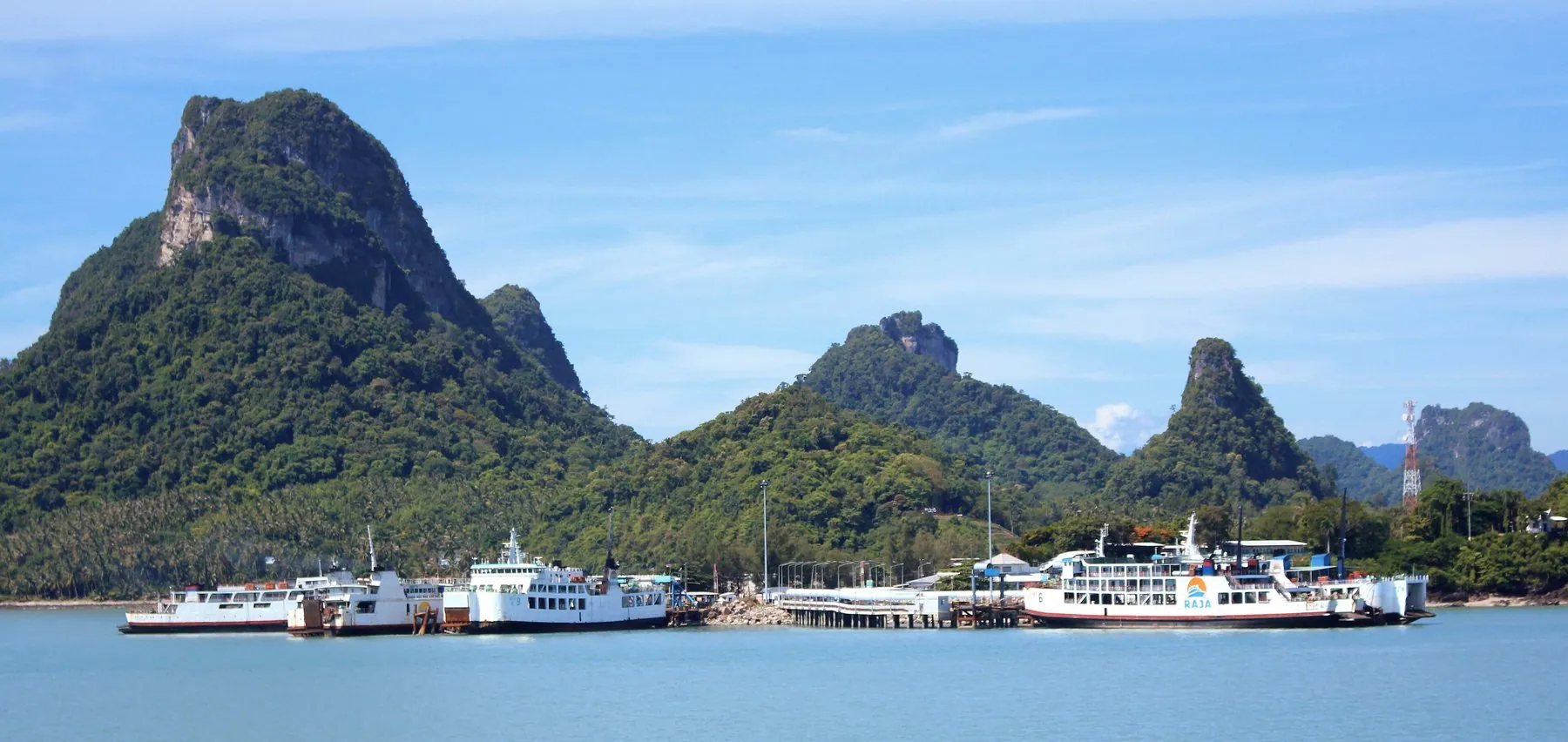
Samui's vehicle traffic goes through Don Sak, a purpose-built ferry port about sixty-five kilometres east of Surat Thani town on Highway 401. Two operators run roll-on services from adjacent terminals, and which one you use determines where you land.
| Operator | From | To | Crossing |
|---|---|---|---|
| Raja Ferry | Don Sak (Raja terminal) | Lipa Noi, south-west Samui | About 90 min |
| Seatran Ferry | Don Sak (Seatran terminal) | Nathon, west Samui | About 90 min |
Both run roughly hourly through the day, from early morning until early evening. Raja also runs the vehicle service on to Thong Sala on Koh Phangan, which is the only practical way of getting a vehicle to that island.
Not every boat to Samui takes vehicles. The fast catamarans — Lomprayah, and Seatran's Discovery service into Bangrak and Maenam — are passenger only, and they leave from different piers. If you turn up at the wrong terminal with a car you will be sent round to Don Sak. Check the operator and the pier, not just the destination.
Nathon is Samui's administrative town, so landing there puts you close to banks, the hospital and the ring road. Lipa Noi is quieter and a few kilometres further south, which suits the south and west of the island. Either way you are on the far side from Chaweng and Lamai, and the ring road takes another twenty-five to forty minutes.
Queueing, and the days it goes wrong
On an ordinary weekday both crossings are undramatic. The problems are concentrated in a handful of predictable periods: Songkran in April, New Year, Thai school holidays, and any long weekend. At those times vehicle queues at both ports run to one to three hours, and the ferries prioritise commercial traffic.
The rule of thumb is to be in the queue before eight in the morning on a holiday, and to accept that the last sailing of the day is not a plan. On the gulf side, weather is the other variable: in a bad northeast monsoon between roughly October and January, Don Sak services can be suspended outright for a day or more.
Motorbikes on both crossings
Motorbikes cross constantly and cost a fraction of the car fare. They are usually loaded first or last and parked along the side of the deck, sometimes with a rope or strap, more often just on the side stand with the front wheel turned. Take the luggage off and take it up with you, put the steering lock on, and do not leave a helmet hanging on the mirror.
The hire car question
Both piers see the same argument every day: a visitor at the ticket kiosk discovering that the rental contract they signed at the airport forbids taking the vehicle off the mainland. The ferry company does not care and will sell you a ticket. The rental company will care a great deal if anything happens afterwards.
Some Thai firms allow ferry crossings, some allow them with a supplement or an endorsement, and some prohibit them absolutely. The desks in Surat Thani deal with the question daily and tend to have a clear policy. Ask before you book, get the answer written on the agreement, and read taking a hire car on a ferry in Thailand for what a permission actually needs to say. The broader position on rental restrictions is in our renting section.
If the answer is no, both crossings have a sensible alternative: leave the car in secure parking near the pier, cross as a foot passenger, and hire locally on the island. On Samui in particular this is cheaper than the ferry fares and saves an hour at each end.
Frequently asked questions
Can I book a car onto the Koh Chang ferry in advance?
No. Vehicle tickets are sold only at the kiosks at Ao Thammachat and Ao Sapparot, in cash, on the day. Cards and QR payment are not accepted.
How often does the Koh Chang ferry run?
From about 06:30 to 18:30, nominally hourly, in practice every twenty to sixty minutes depending on demand. The crossing takes around half an hour.
Which Samui ferry takes cars?
Raja Ferry from Don Sak to Lipa Noi and Seatran Ferry from Don Sak to Nathon. The high-speed catamarans from other piers do not carry vehicles.
How long is the drive from Surat Thani to Don Sak?
About sixty-five kilometres on Highway 401, so an hour or a little more. Allow extra on holiday weekends when the approach roads back up.
Can I take a rented scooter to Koh Chang or Samui?
The ferry will carry it. Your rental shop may well have forbidden it, and island shops in particular expect their bikes to stay put. Ask first and get it in writing.
What if I miss the last ferry?
You stay on the mainland. Both Laem Ngop and Don Sak have modest accommodation near the piers, but there is no night service and no alternative crossing. Build the timetable into the day rather than treating it as a backstop.