The boat is not the problem. Thailand's vehicle ferries carry cars all day, every day, and the process at the pier is simple enough that nobody needs a guide to it. The problem is the rental agreement: a large proportion of Thai contracts prohibit taking the vehicle off the mainland, and a good many of the rest permit it only with prior notice. If your contract forbids it and you go anyway, you have removed your own damage cover for the duration — on the deck, on the island, and arguably for the whole hire.
So the question to settle is not "is there a ferry?" but "does my contract allow this, and can I get that in writing?" Ask before you book the car, not at the ticket kiosk with a queue behind you.
- Common positionProhibited or restricted on a large share of Thai rental contracts
- If permittedUsually requires prior notice, sometimes a supplement
- Vehicle bookingNot possible in advance on most routes — turn up and queue, cash at the pier
- The usual answerLeave the car at the pier and cross as a foot passenger
Why rental companies say no
The reasons are practical rather than arbitrary, and knowing them helps you have a sensible conversation with a branch manager rather than an argument.
Cover. Motor insurance is written around use on public roads. A vehicle deck is not a public road, and a company that permits ferry travel is taking on a risk its policy may not straightforwardly answer for. Some operators handle this with a specific endorsement; most handle it by saying no.
Recovery. A car that breaks down in Bangkok is a phone call. A car that breaks down on Koh Phangan is a recovery vehicle, a ferry crossing, a driver's day and a hotel. Rental firms price and permit accordingly.
Damage history. Vehicle decks are loaded to the centimetre by marshals who are quick and not gentle, and the steel bow ramps are steep at low tide — a low-slung car taken straight on will ground its front bumper. Add salt spray and the crossings have a real record of scrapes, most of which sit outside the waiver anyway, because bumper and undercarriage damage is usually an excluded category.
Do not simply put a hire car on a boat and hope. If the contract prohibits it, everything that happens from the moment you drive onto the ramp is yours: deck damage, an accident on the island, a breakdown, a theft. The company will not be persuaded afterwards that it was a small thing. This is the single most expensive assumption a visitor makes in this section of the site.
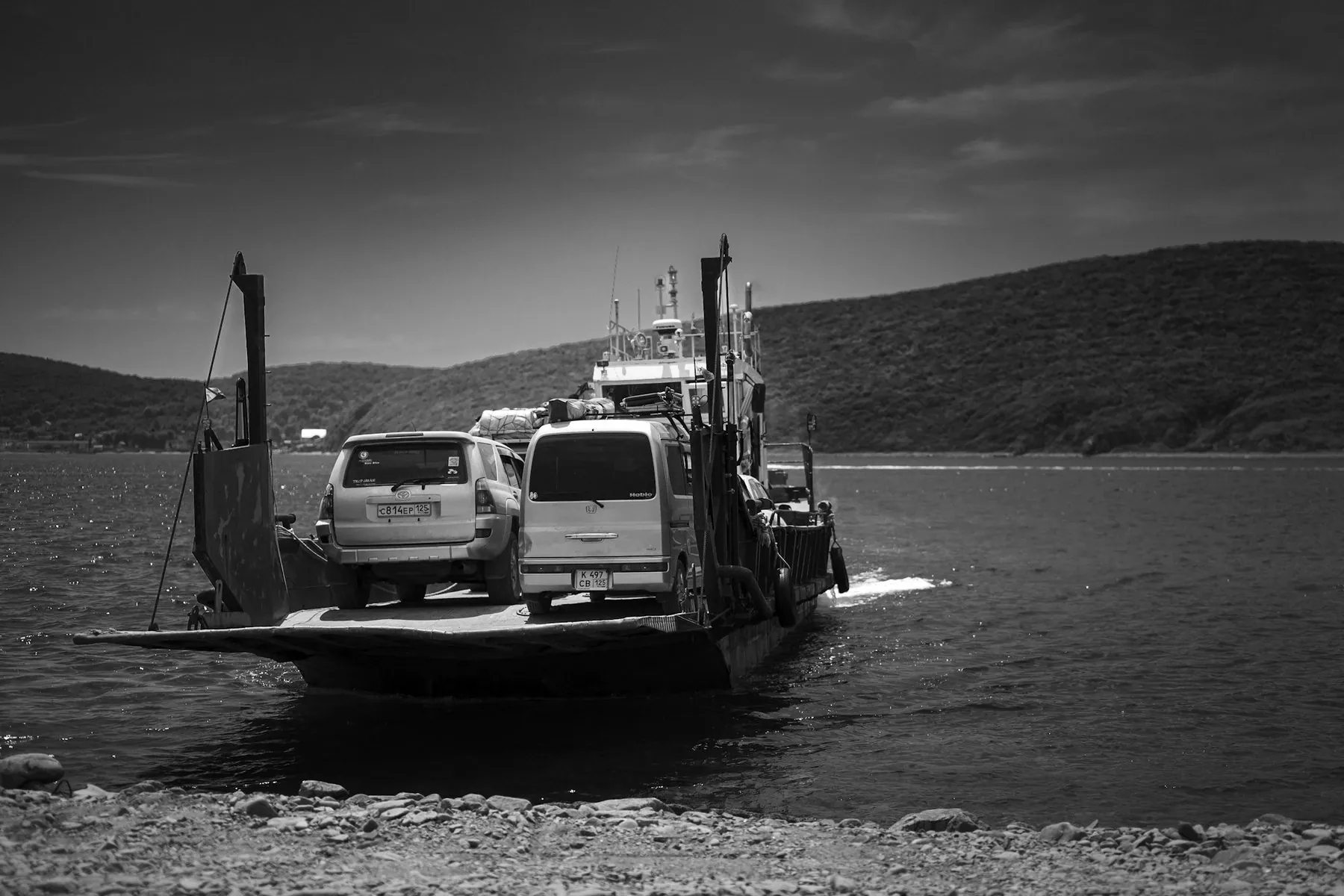
Getting permission properly
If you genuinely need the car on an island, do this in order.
- Ask before you book the car, naming the crossing: "Donsak to Lipa Noi, Koh Samui, three days in March." A general question gets a general answer.
- Get it in writing — an email from the operator, not a verbal yes from a counter clerk. Print it and keep it in the car.
- Ask whether cover continues during the crossing, or is suspended while the vehicle is aboard. These are different answers and both exist.
- Ask what the supplement is, if any, and whether an endorsement has to be added before departure.
- Ask what to do if the car is damaged on the deck — whose claim it is, and who you call first.
- Photograph the car at the pier before loading and again after unloading. This is the cheapest insurance available on the whole trip.
Desks in the towns that exist to serve island traffic — Surat Thani above all — are most likely to have a settled policy, because they are asked every day. A Bangkok airport desk may have to check with head office, and the default answer while somebody checks is no.
Which crossings this even applies to
| Island | Crossing | Notes for a hire car |
|---|---|---|
| Phuket | Sarasin Bridge — no boat | Not a ferry question at all; you simply drive on |
| Koh Chang | Ao Thammachat to Ao Sapparot | Short crossing; the island's steep west-coast road is a genuine case for four wheels |
| Koh Samui | Donsak to Lipa Noi or Nathon | The long one. A ring road and real distances make a car defensible |
| Koh Phangan | Donsak to Thong Sala | Longer again; most visitors are better off on a scooter once there |
| Koh Lanta | Ban Hua Hin to Koh Lanta Noi, then bridge | Minutes on the water; the shortest and least troublesome crossing |
| Koh Tao, Phi Phi, Samet, Lipe | Passenger boats only | No vehicle service exists. The question does not arise |
The mechanics of the crossings themselves — queueing, loading, the ramp, what the crew expect of you — are in taking a car or motorbike on a Thai island ferry, with the two main routes covered in the Koh Chang and Koh Samui vehicle ferries.
What the crossing costs, and how you pay
Not much, and rarely enough to be the deciding factor. On the short Koh Chang crossing a car costs in the low hundreds of baht each way, with a separate fare per passenger; the much longer Donsak to Samui run costs several times that. Fares are set by the operators, revised from time to time, and are cash at the pier kiosk.
Vehicle space is essentially not bookable in advance on the main routes: you drive up, buy a ticket at the booth beside the approach road, join the vehicle lane and wait. Online passenger tickets are a different product and do not hold a space for your car. Arrive early at weekends, on Thai public holidays and at the start of school breaks, when queues at Donsak and the Koh Chang piers can run to an hour or more.
The real cost is time. Budget an hour either side of a Samui crossing for queueing and loading, on top of the time at sea — and the drive from Surat Thani to Donsak is over an hour in itself.
Take the ramp at a slight angle at low tide, and follow the marshal. The steel bow ramps sit steeply when the water is down, and a grounded front bumper is a classic and entirely avoidable hire-car charge. The crew do this a hundred times a day and will wave you through it.
The alternative, which is usually the right answer
Leave the car on the mainland. Donsak has a large car park and it is entirely normal to leave a vehicle there for a few days; the Koh Chang piers have parking too. Cross as a foot passenger, and hire a scooter or a car on the island if you need one.
This is cheaper, faster and removes the contractual problem completely. On most Thai islands a car is a liability rather than an asset — parking is scarce, roads are narrow, and a scratch on an island is a claim conducted at arm's length from a mainland branch. The exceptions are Koh Samui, where a ring road and a villa up a hill make four wheels reasonable, and Koh Chang, whose west-coast gradients defeat small scooters.
If you do rent on the island instead, the local market has its own habits around deposits and damage. Read renting a motorbike on Koh Samui, Koh Chang and Koh Phangan before you hand anything over as security.
Weather, and building in a margin
Gulf crossings stop in bad weather. The northeast monsoon, roughly October to January, can suspend the Donsak services for a day or more, and vehicles pile up on both sides. If a flight depends on getting a car off an island, put a spare day in the plan — there is no alternative route and no compensation scheme. Driving in southern Thailand explains the two monsoons.
One more piece of arithmetic: some firms will accept a one-way drop at a pier for a fee, which can beat driving back. One-way car rental in Thailand covers those charges, and the wider contractual picture is in taking a hire car between provinces.
Frequently asked questions
Can I take a Thai hire car on a ferry?
Only if your contract permits it, and many do not. Ask the operator before booking, name the crossing, and get the permission in writing. Going without it puts you outside your damage cover from the moment you drive onto the ramp.
Can I book a car onto a Thai ferry in advance?
Rarely. Vehicle space on the main crossings is sold at the pier on the day, in cash, first come first served. Passenger tickets sold online do not reserve deck space for a vehicle.
How much does it cost to take a car on a Thai ferry?
In the low hundreds of baht each way on the short Koh Chang crossing, and several times that on the long Donsak to Samui run, plus a fare per passenger. Fares are operator-set, revised periodically, and cash only at the pier.
What happens if the hire car is damaged on the ferry?
If your contract permitted the crossing, it is a normal damage claim — though deck damage often lands in an excluded category such as bumper or undercarriage. If your contract prohibited it, expect to pay in full. Photograph the car before loading and after unloading, every time.
Can I take a rented scooter on the ferry instead?
Physically, easily — bikes cross constantly and cost a fraction of a car. Contractually, the same restriction applies, and island shops generally want their bikes to stay on the island. Ask, and get it written on the rental sheet.
Is it worth taking a car to Koh Samui at all?
Sometimes. Samui has a ring road and enough distance to justify one if you are staying somewhere awkward. For Phangan, Lanta and most other islands, leave the car at the pier and hire locally — it is cheaper and far less trouble.
Where do I leave the car if I cross as a foot passenger?
Donsak has a large terminal car park and the Koh Chang piers have parking; leaving a vehicle for a few days is normal. Confirm the daily rate at the terminal rather than assuming, and photograph where you left it.