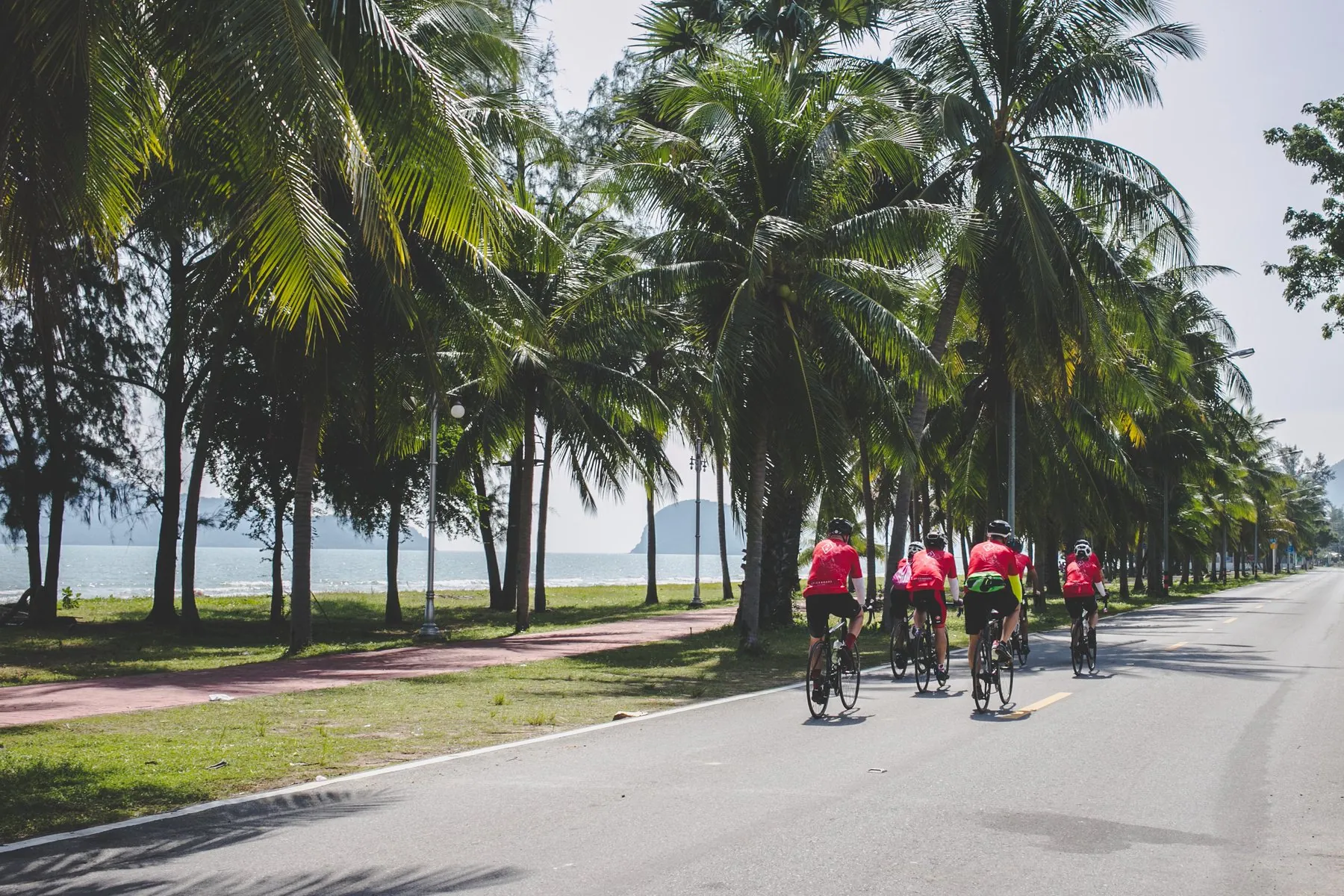
Thailand is a good country to cycle in and a frustrating one, often on the same day. The surfaces on the main network are better than most of Europe, the gradients across most of the country are gentle, food and water stops are constant, and nobody will hassle you for riding. What decides whether a Thai cycling trip works is not fitness. It is heat management, traffic sense, and being honest about which roads and which hours you ride.
That is the short answer. The rest of this page is the long one: where the riding is genuinely good, what the heat actually does to a riding day, how Thai traffic behaves around a bicycle, and the practical business of getting a bike — and then getting it around the country.
Where the riding is genuinely good
Thailand is not uniformly rideable, and the honest map is smaller than the tourist one. Four regions carry almost all of the good riding.
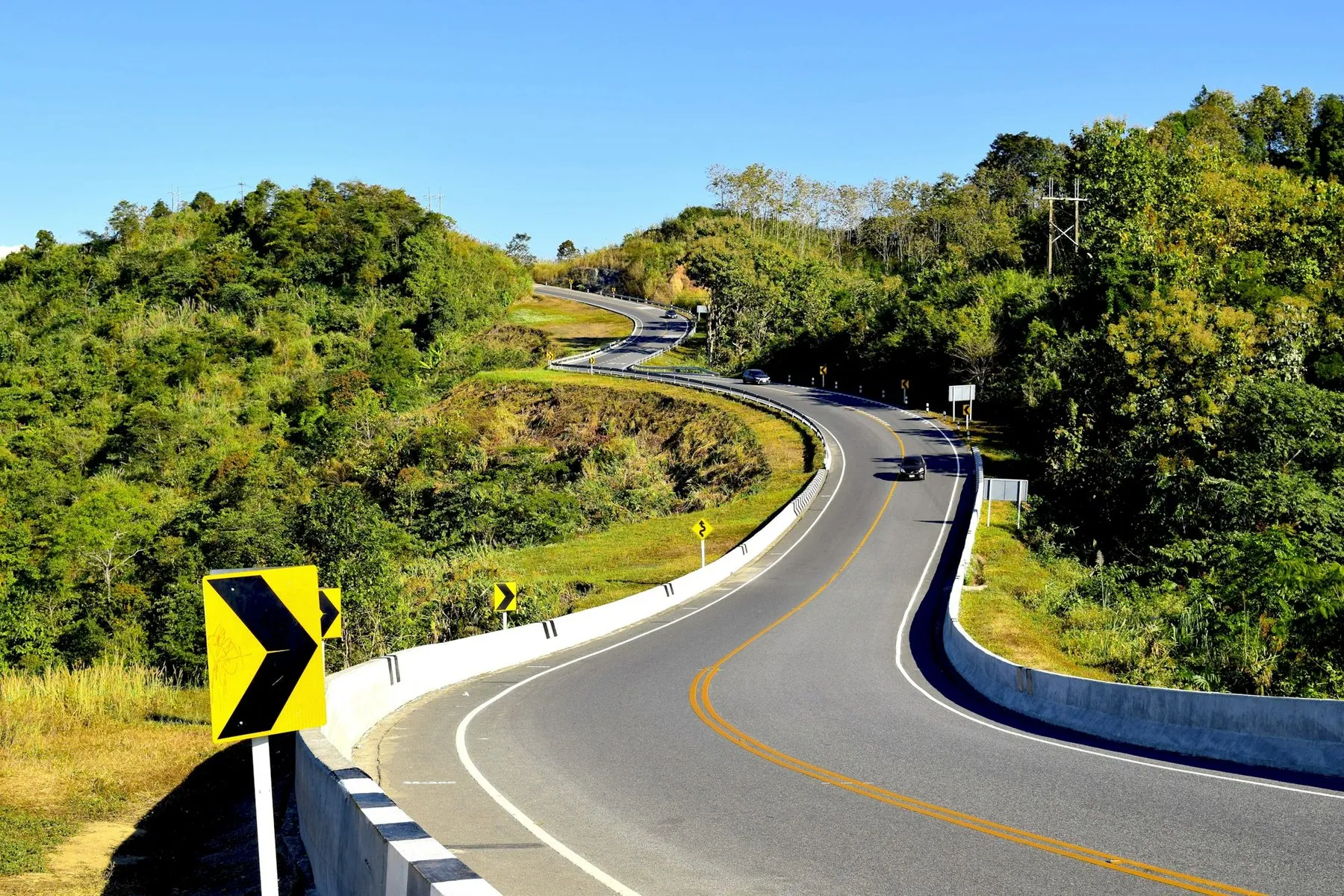
The north is the best of it, and it is not a close contest. Chiang Mai is the natural base: within an hour of the moat you have a hundred-kilometre mountain loop, a genuine hors-catégorie climb on the city's doorstep, and flat valley lanes for the days your legs have gone. Beyond it, the northern climbs would be famous if they were in Europe — Doi Inthanon is roughly 38 kilometres of ascent to 2,565 metres, with a final stretch above 11 per cent. And the Mae Hong Son loop by bicycle, 600 to 660 kilometres from Chiang Mai over the Pai mountains and along the Burmese border, is one of the great rides in South-East Asia for anyone with the gearing for it.
Isaan is the easiest place to tour, and the one most visitors never consider. The northeast is flat to gently rolling, the four-digit back roads are close to empty, guesthouses are cheap, and the Mekong road gives you a river on one side for days at a time. If you have never done a loaded tour before, this is where to do your first one.
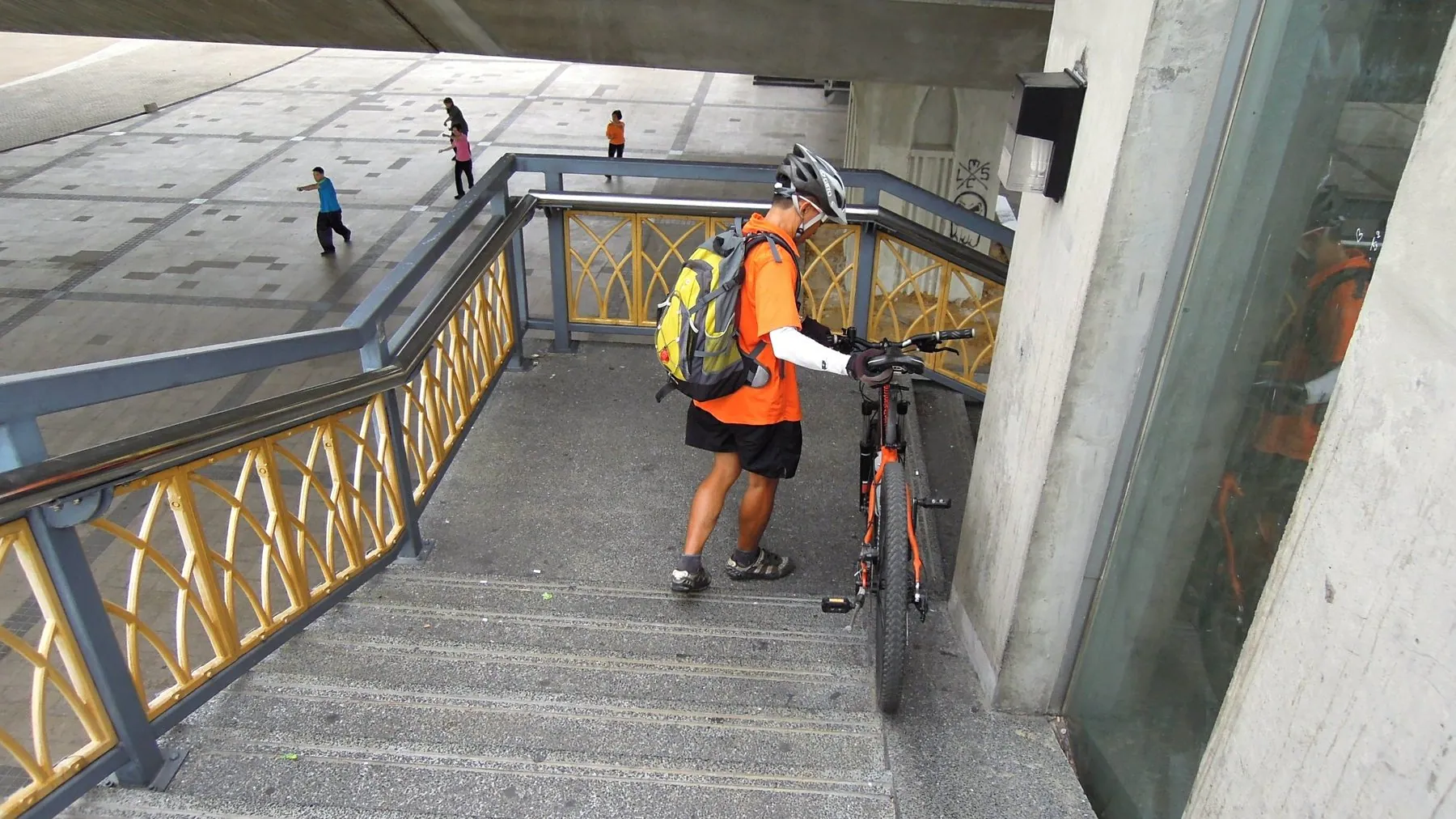
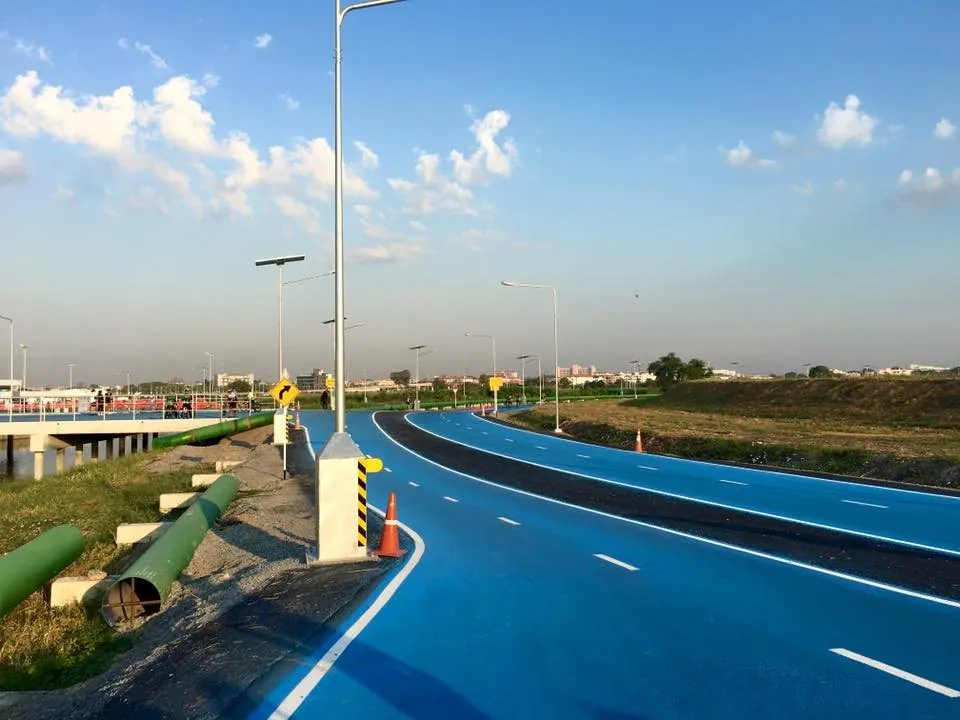
Bangkok is not a cycling city, but it has three or four places worth going out of your way for. The riding here is destination riding, not transport: Bang Krachao's elevated paths through the green lung, the riverside and the old city early on a Sunday, and the Sky Lane — a 23.5-kilometre asphalt circuit right around Suvarnabhumi airport, closed to motor traffic, free to ride, with its own rest stops and medical post. There is nothing else quite like it anywhere.
Some islands are lovely and some are a bad idea. Koh Yao Noi is the best of them; Koh Lanta works if you pick your hours; Koh Kood and Koh Mak are small and pleasant. Samui, Phangan and Phuket are hard work on a bicycle for reasons that have nothing to do with the hills.
The heat ends more trips than the traffic does
This is the part visitors underestimate, and it is worth putting plainly: humid heat is a different problem from Mediterranean heat. The humidity stops sweat evaporating, so the cooling mechanism you are relying on simply does not work as well. Riders who are perfectly comfortable at 35°C in Spain find themselves in trouble at 32°C here.
The structure that works is unglamorous: start at first light, drink far more than thirst suggests, take salt with it, and plan a riding day that is finished by late morning. Distances that are routine at home should be cut, at least until you have acclimatised. The gear list follows from the same logic — what you need here is water capacity, sun cover and light, not the warm layers and serious waterproofs a European tour would demand.
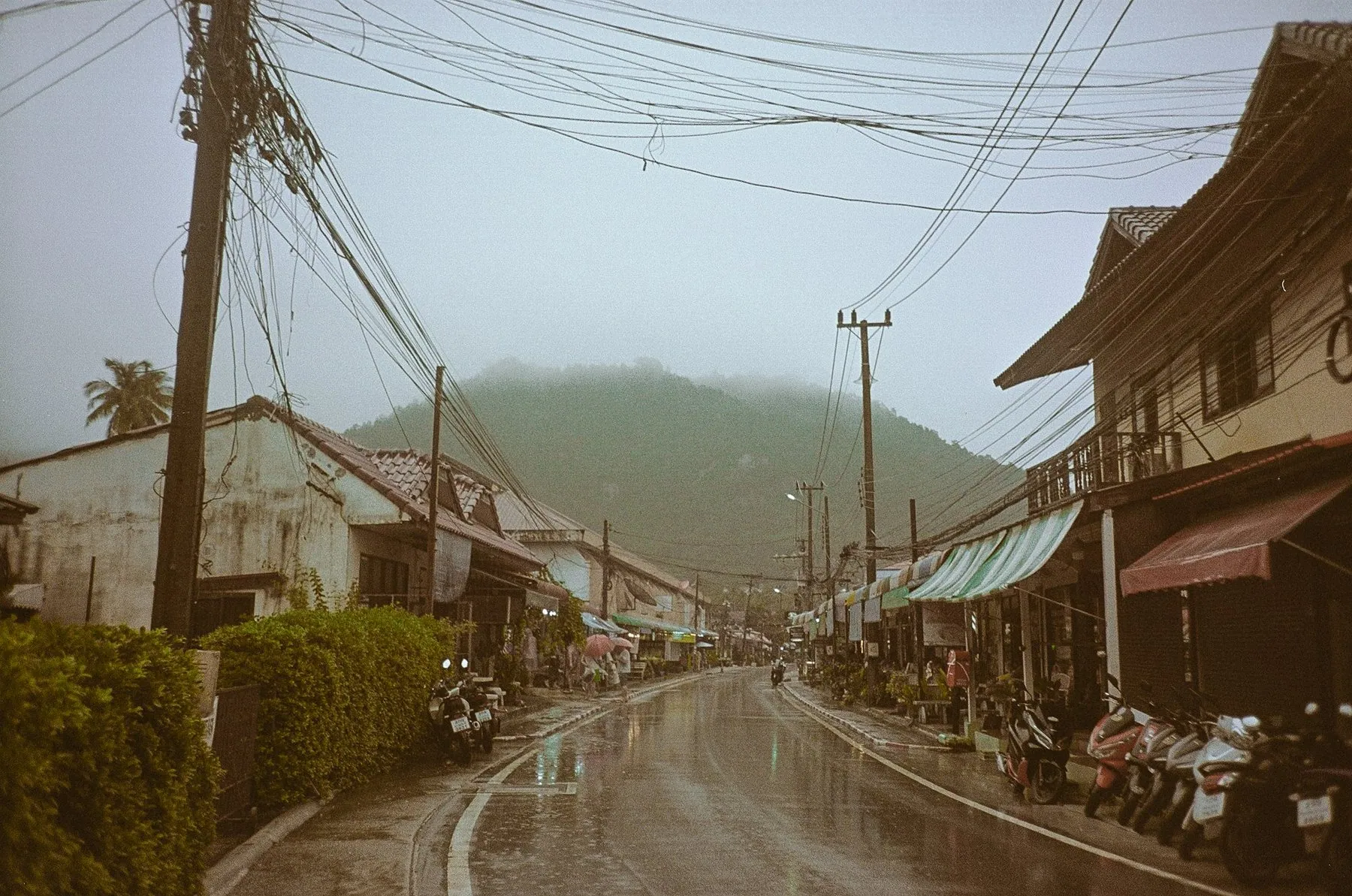
And the season is not the one people assume. The rainy season is not a write-off — for a lot of riders it is better than the hot season, because Thai monsoon rain tends to arrive as a concentrated downpour rather than all-day drizzle, and the temperature drops with it.
How Thai traffic behaves around a bicycle
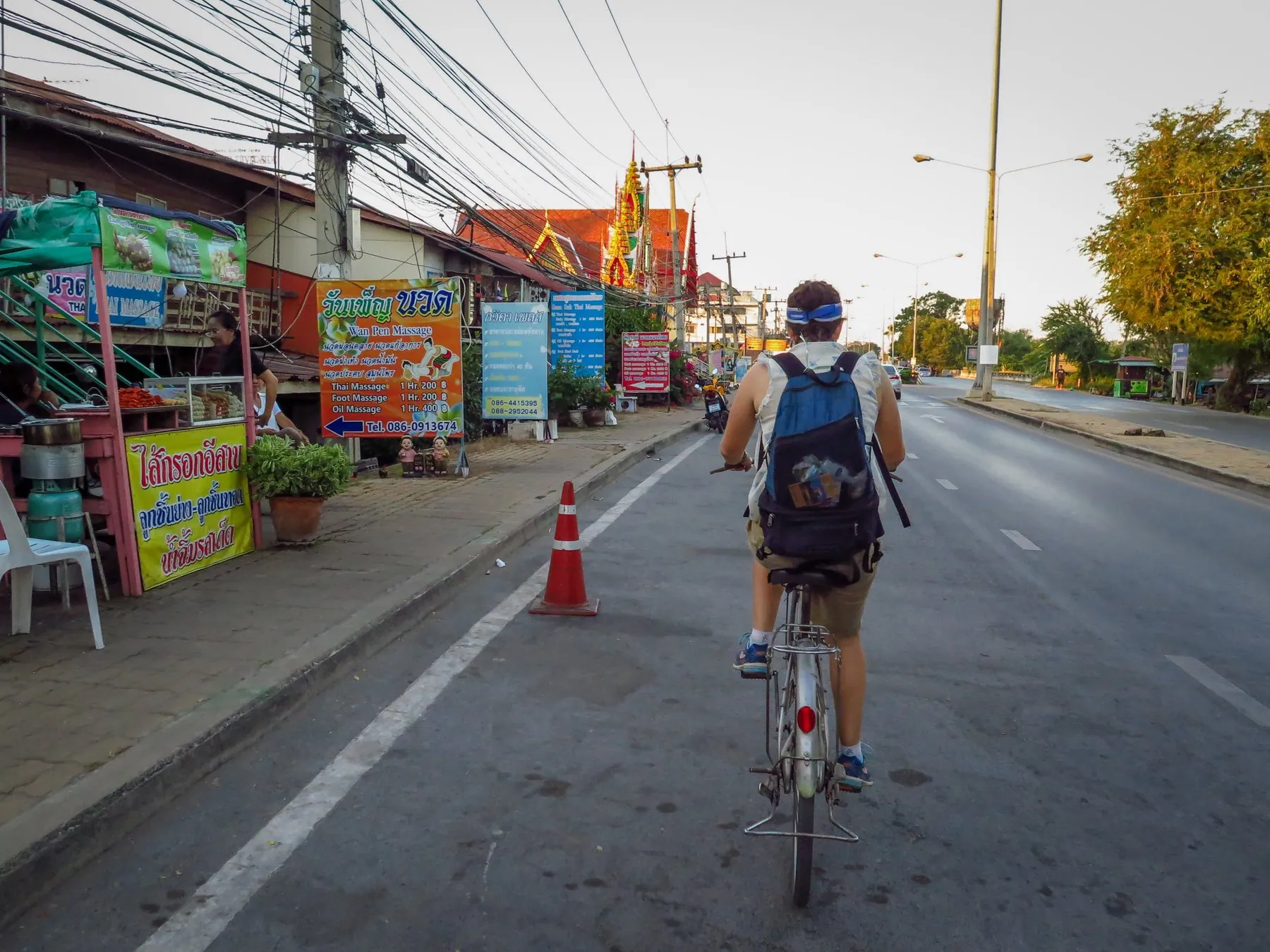
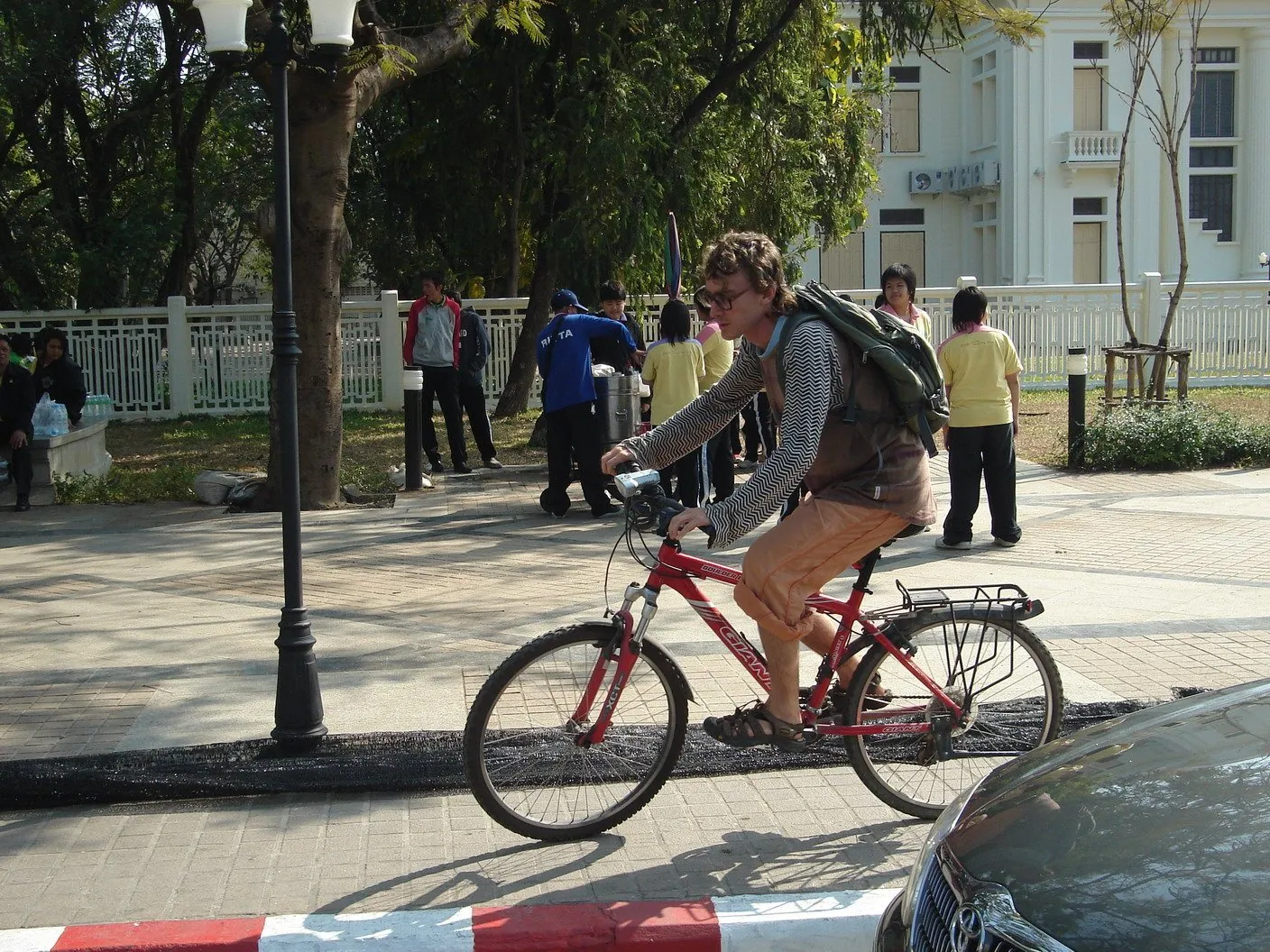
Thai drivers will not deliberately intimidate you, which is more than can be said for some countries. What they will do is not see you, and not expect you. The learnable skill comes down to a few things: ride predictably, ride far enough left that you have somewhere to go but not in the gutter, treat the hard shoulder as a two-way lane because that is how everyone else treats it, and light yourself like a vehicle rather than a pedestrian.
The hazards that actually hit cyclists are junctions, U-turns and vehicles emerging from side roads — not the fast traffic on the open highway that looks so frightening from the saddle. Night riding is the one thing to simply avoid.
Then there are the dogs. Every tourer here meets them, and the technique is counter-intuitive: stop pedalling, do not sprint, keep the bicycle between you and the dog, and continue past at a steady, boring pace. Sprinting is what turns a territorial bark into a chase.
What the law asks of you
Thai traffic law treats a bicycle as a vehicle, and almost everything else follows from that sentence: you obey signals and signs, you keep left, you signal your intentions, and the drink-driving provisions apply to you as they do to a driver. There are equipment requirements too — lights and reflectors — and a helmet position that surprises people. Enforcement against cyclists is, in practice, close to non-existent, but the law matters a great deal if something happens and fault has to be decided.
Getting a bike, and getting it around
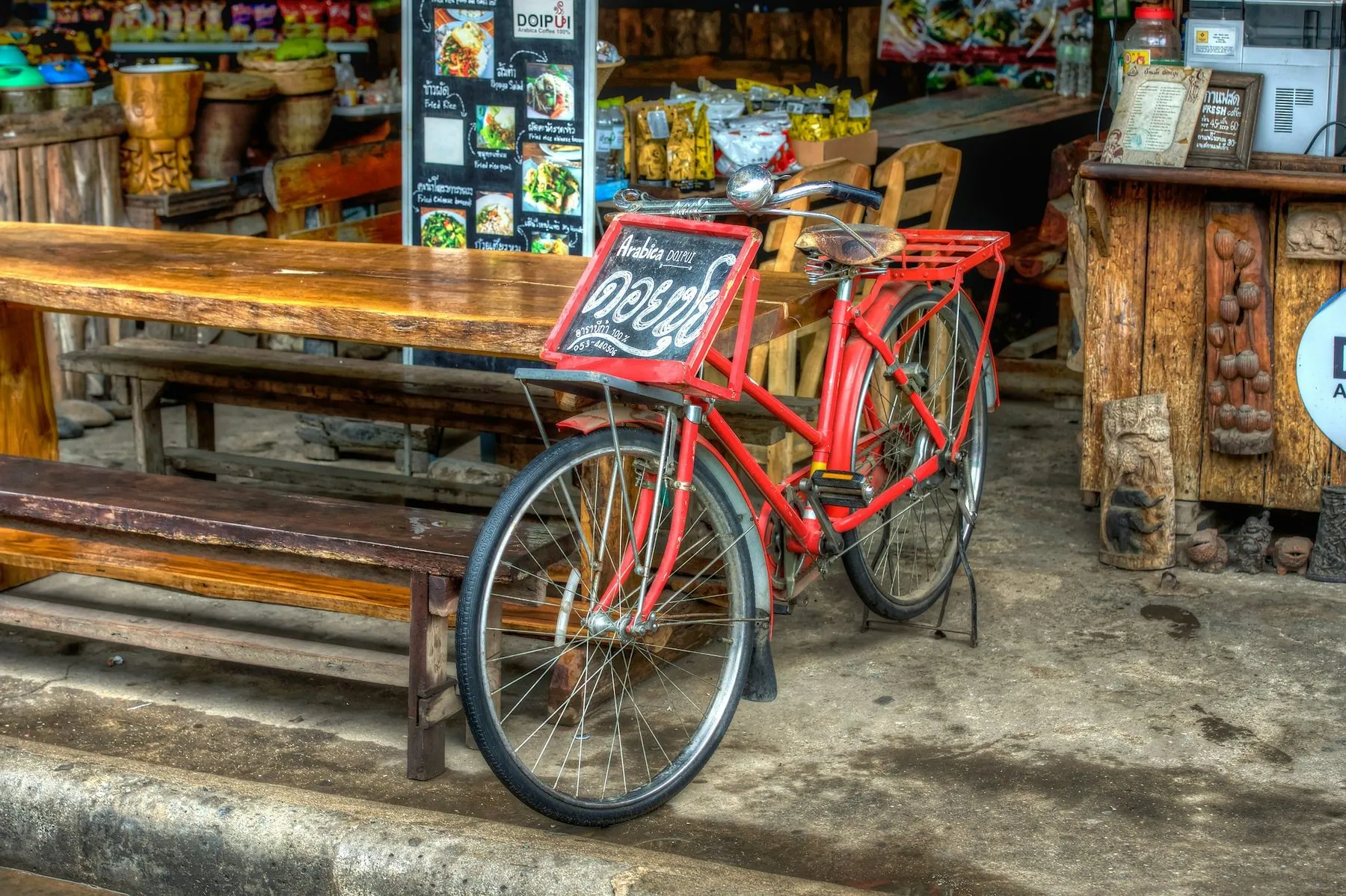
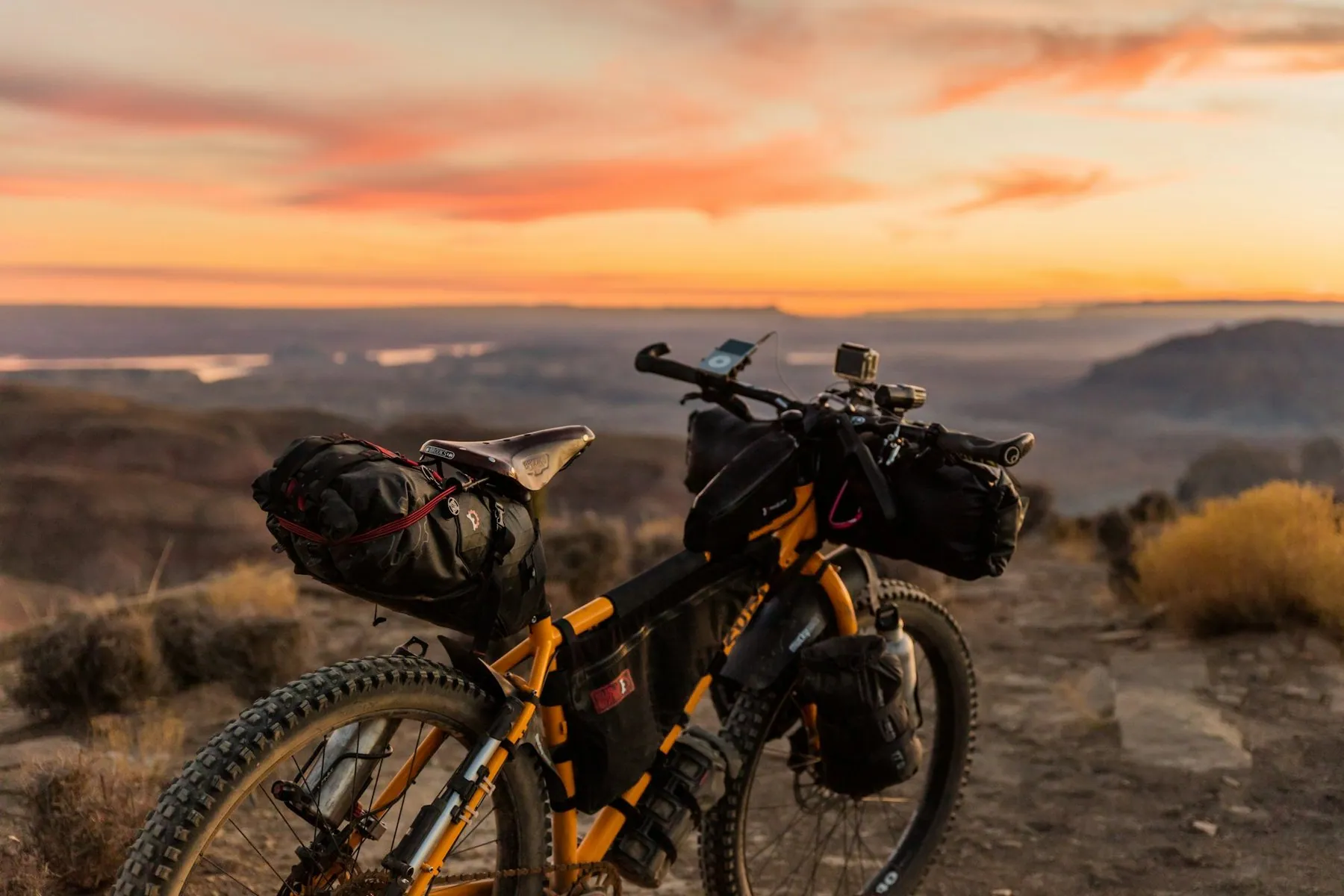
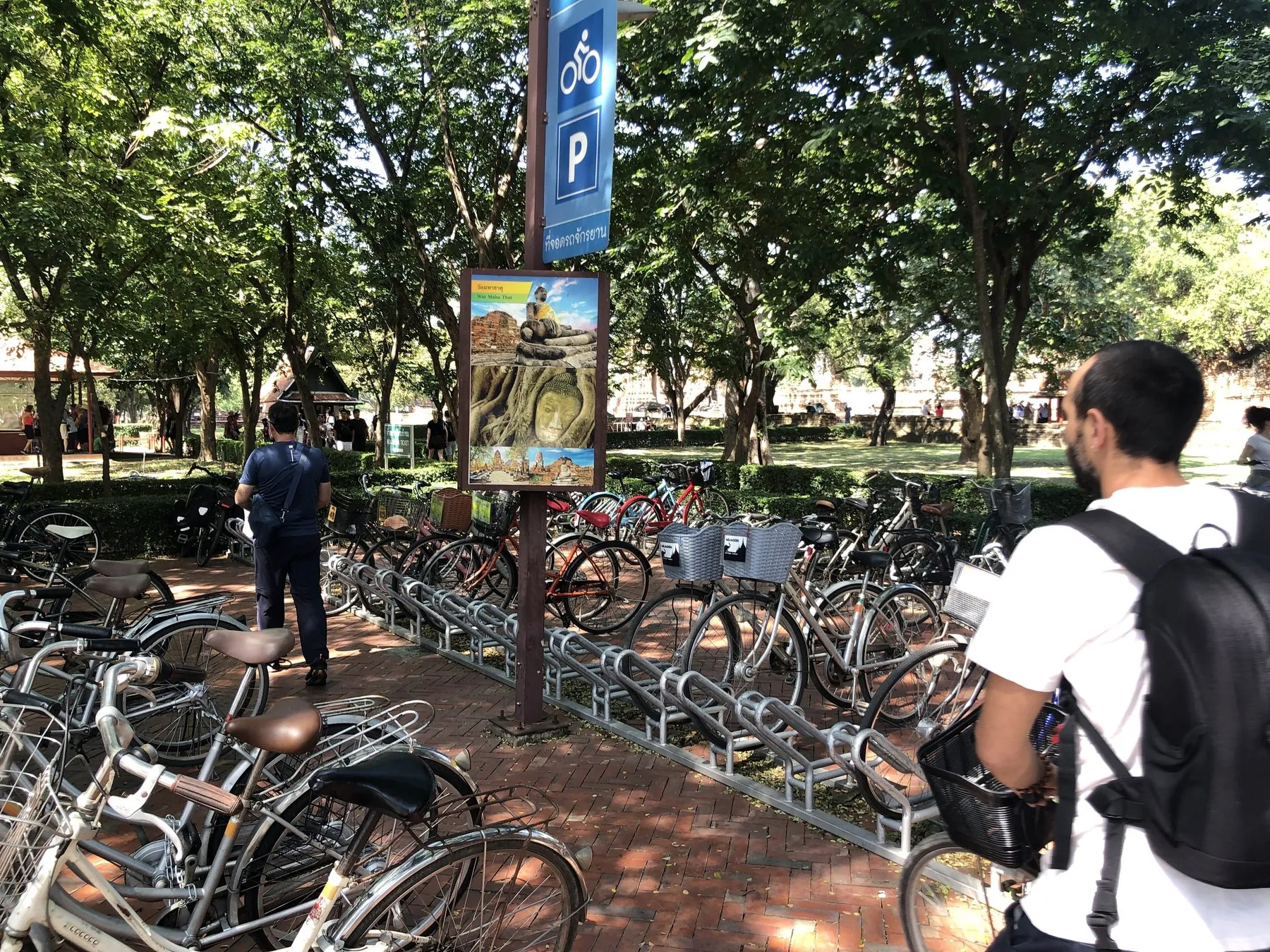
Hiring is cheap, informal and mostly fine: a basic town bike outside a historical park runs a few tens of baht for the day. It is the right choice for a day in Sukhothai or Ayutthaya and the wrong one for a tour, because hire fleets outside Chiang Mai and Bangkok are not built for loaded riding. For anything serious, bring your own — customs is not the obstacle, the airline is.
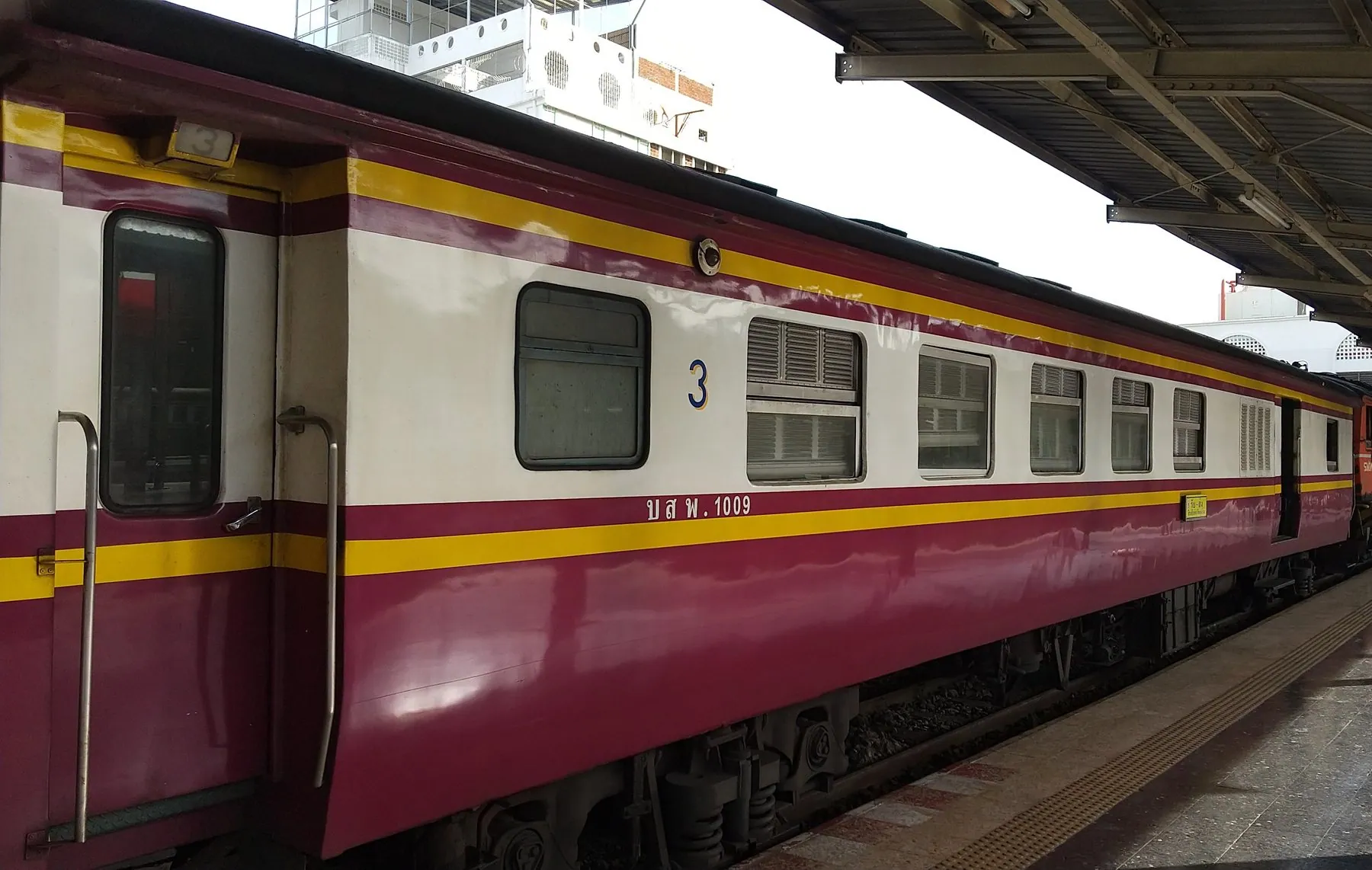
Once you are here, the country is easier to move a bicycle around than you would expect. Trains will carry one on services with a freight car if you do the paperwork at the station on the day; long-distance coaches will usually take one in the luggage bay for a negotiated fee. That makes escape routes possible, which matters more on a Thai tour than on a European one — planning around the road numbers is the single most useful routing skill here, and building in a way out is part of it.
For repairs, the real shops are in Bangkok and Chiang Mai, with decent ones in most provincial capitals and effectively nothing in between. Mainstream parts are fine almost anywhere; anything unusual should travel with you.
Where to start
If you want one page before anything else, read what to expect — it is the honest version of the trade-offs on this page, written for someone deciding whether to come at all. Families should start with cycling with children, which is candid about the small number of places it works well and the many where it does not. And anyone planning a first loaded tour should read the heat page before the route pages, in that order. It is the one that decides how the trip goes.