Isaan is the easiest and quietest place to tour by bicycle in Thailand, and it is the honest recommendation for a first loaded tour here. The northeast is flat to gently rolling, the four-digit back roads are almost empty, guesthouses and food are everywhere and cost very little, and the Mekong gives you 700-odd kilometres of border road with the mountains of Laos on the far bank. What it does not have is dramatic scenery on demand, a cycling scene, or anyone who speaks much English.
This is a touring cyclist's article. Isaan is not a day-hire destination in the way Sukhothai is — there is no rental infrastructure to speak of outside the bigger cities — and its appeal is precisely that it is the part of Thailand where a bicycle makes more sense than anything else.
- TerrainFlat to gently rolling
- TrafficThe lightest in Thailand
- Best seasonNovember to February
- Signature routeThe Mekong road, Nong Khai to Ubon
Why Isaan suits a loaded bike
The Khorat plateau is a broad, gently tilted expanse of rice country. There are hills — the Phu Phan range through the middle, the Dong Phaya Yen escarpment on the western edge — but for most of the region the day's profile is flat with a few rises, which means a loaded touring bike moves at the speed it was designed for rather than grinding.
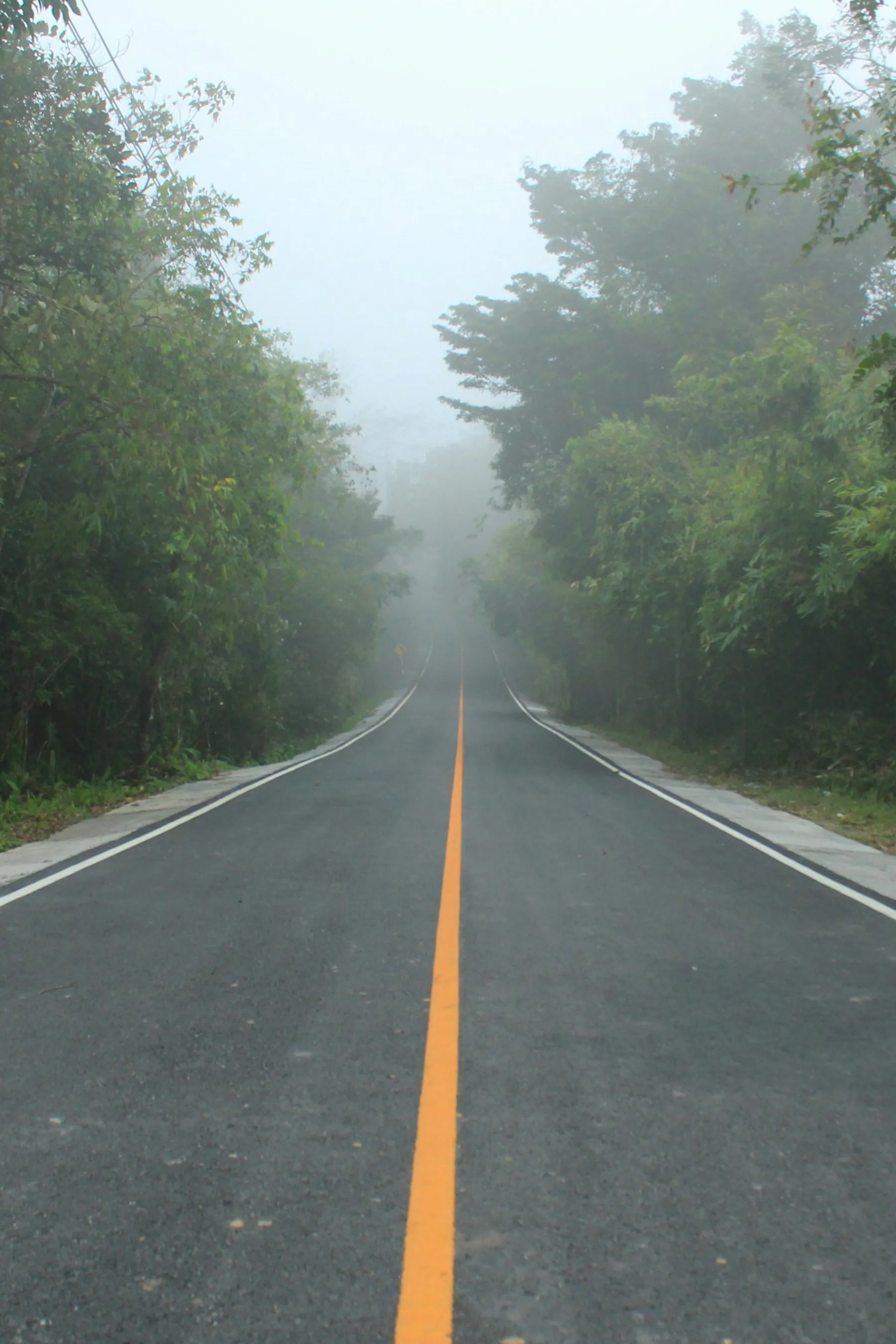
Traffic is the other half of it. Isaan is the least visited region of Thailand by international travellers, and the four-digit provincial roads carry farm pickups, motorbikes and very little else. You can ride for an hour and be passed by four vehicles. After a week on Highway 2 or the roads around Chiang Mai, this is a different sport.
The practical support is excellent. Every village has a shop with a fridge, every town of any size has a guesthouse, and Thai food in Isaan is cheap, distinctive and available from mid-morning onwards. Nothing about touring here is logistically difficult.
Isaan is where you find the version of Thailand that people say has disappeared. Ride into a small town on a loaded bicycle and you will be a genuine curiosity — invited to sit, fed, photographed. Almost nobody speaks English, a translation app on the phone does most of the work, and the experience is the reason to come.
The Mekong road
The signature ride. The Mekong forms Thailand's northeastern border for hundreds of kilometres, from Chiang Khan in Loei province in the west, through Nong Khai, Bueng Kan and Nakhon Phanom, down to Mukdahan and eventually Khong Chiam in Ubon Ratchathani. Route 212 carries much of it, joined by smaller riverside lanes.
The 212 itself is a decent road that mostly runs a little inland with only intermittent river views, and it carries more traffic than the back roads — through Nakhon Phanom and Nong Khai in particular. The good riding is on the smaller parallel lanes right on the bank, some sealed, some rough and unmetalled, which weave between villages and temples with the Laotian mountains across the water. Nakhon Phanom has built a riverside cycle path along its promenade, and it is a pleasant thing to arrive on.
Guesthouses appear regularly along the route. Chiang Khan, Nong Khai, Nakhon Phanom, That Phanom and Khong Chiam are all worth stopping in for more than a night. The same road as a driving route is covered in the Mekong river road.
Routes worth knowing
| Route | Roughly | What it is like |
|---|---|---|
| Nong Khai – Nakhon Phanom, along the river | ~300 km | The classic. Flat, quiet, riverside lanes with a big river on your left |
| Chiang Khan – Nong Khai | ~200 km | The prettiest stretch of Mekong road, with some genuine hills near Loei |
| Khon Kaen – Udon Thani – Nong Khai | ~180 km | Highway 2 corridor. Fast, direct, dull. Use the parallel back roads instead |
| Nakhon Ratchasima – Phimai – Buriram – Surin | ~250 km | The Khmer temple line. Flat rice country, Angkorian ruins, few tourists |
| Phu Phan crossing (Sakon Nakhon – Kalasin) | ~130 km | The one section with real climbing. Forested, quiet, a genuine day out |
| Ubon Ratchathani – Khong Chiam – Pha Taem | ~90 km | Cliffs above the Mekong, prehistoric rock paintings, a good end to a tour |
The road numbers
Isaan is where the Thai road-numbering system pays off best for a cyclist. Two-digit roads are national highways and generally to be avoided; four-digit roads are provincial and rural, and in Isaan they are sealed, quiet, and go everywhere. Almost any route you plan on four-digit roads here will be pleasant.
The two that matter to avoid are Highway 2, the Mittraphap road that runs Bangkok–Khorat–Khon Kaen–Udon–Nong Khai and carries most of the region's freight, and Highway 24 along the southern edge. Both are fast, busy and unpleasant. There is almost always a parallel four-digit alternative that adds ten kilometres and removes every lorry — see planning a quiet-road cycling route in Thailand and Highway 2: the Mittraphap road.
Heat and season
Isaan gets hot. Very hot. The plateau in April is one of the hottest places in the country, routinely past 40 degrees, and the flat open rice landscape gives almost no shade. The compensating factor is that the cool season here is the coldest in Thailand outside the northern mountains — December mornings in Nong Khai can be genuinely chilly, and riders regularly want a jacket at dawn.
That makes November to February the season, and it makes March to May the months to be somewhere else. The wet season, roughly July to September, brings short hard storms rather than persistent rain, the drainage is good and the rice is impossibly green, and it is a perfectly good time to ride if you accept the odd afternoon under a shop awning. Both the heat and the wet are covered properly in cycling in Thailand's heat and humidity and cycling in Thailand's rainy season.
The flat landscape is a wind problem. Open rice plains with nothing to break the airflow mean a headwind has nowhere to hide, and in the cool season the northeast monsoon blows steadily. Plan long stages in the direction the wind is going — generally that means riding east to west along the Mekong in December and January.
Practicalities
- Water. Never a problem; shops every few kilometres. Carry two bottles and fill often rather than carrying four.
- Money. ATMs in every town of any size. Small villages are cash-only and cheap.
- Sleeping. Guesthouses and small hotels in every town, rarely needing to be booked. Camping is unnecessary; temples will sometimes let a cyclist sleep in the grounds if asked politely.
- Language. Very little English, and Isaan's own language is closer to Lao than to central Thai. A translation app and a smile go a long way.
- Bike shops. Thin. Khon Kaen, Udon Thani and Ubon Ratchathani have real shops; smaller towns have motorbike mechanics who will help with anything mechanical but will not have your parts. See bike shops and repairs in Thailand.
- Getting there. Overnight trains from Bangkok to Nong Khai and Ubon carry bicycles in the freight car; see taking a bike on Thai trains and buses.
Hazards
Fewer than elsewhere, but not none. Farm vehicles drag mud and rice straw onto the road, which becomes grease in the wet. Buffalo and cattle wander onto rural roads and are moved along them by farmers — livestock and wildlife on Thai roads covers this. Village dogs are plentiful precisely because the roads are quiet and rural, so the routine in dogs and cyclists in Thailand gets used most days.
Drink-driving is a rural problem here as it is everywhere, and it is worse in the late afternoon and at festival times. That is another argument for being off the road well before dark, alongside everything in driving at night in Thailand.
Continuing into Laos
Isaan is the obvious jumping-off point for Laos, and the Friendship Bridges at Nong Khai, Mukdahan, Nakhon Phanom and Chiang Khong are the crossings. Bicycles cannot be ridden across the bridges themselves — you go over on a shuttle vehicle — but the crossings are otherwise straightforward for a cyclist with the right visa. The paperwork side, from the driving perspective, is at crossing into Laos by road.
Frequently asked questions
Is Isaan good for cycle touring?
It is the best region in Thailand for it. Flat, quiet, cheap, with food and accommodation everywhere and almost no traffic on the four-digit roads. The trade-off is that the scenery is agricultural rather than spectacular and there is very little English spoken.
How flat is Isaan really?
Mostly genuinely flat, with a few exceptions: the Phu Phan range through the middle of the region, the escarpment on the western edge near Khorat, and some real hills around Loei. Nothing that requires special gearing.
Can I ride along the Mekong the whole way?
More or less, from Chiang Khan down to Khong Chiam, on a mixture of Route 212 and smaller riverside lanes. Some of the lanes right on the bank are unsealed and rough, so wider tyres help. The views are worth the detour off the main road.
Is Isaan safe for a solo cyclist?
Yes — it is one of the safest and most welcoming parts of Thailand for a traveller on a bicycle. The realistic risks are traffic, heat and mechanical failure a long way from a bike shop, not people.
How do I get to Isaan with a bicycle?
The overnight trains from Bangkok to Nong Khai and Ubon Ratchathani take bicycles in the freight car, which is the classic approach. Buses will usually take one in the luggage bay. Domestic flights to Udon Thani, Khon Kaen and Ubon are the fast option with the usual sports-equipment arrangements.
What is the best time of year to cycle in Isaan?
November to February. Isaan has the coldest cool season in the country outside the northern hills and the hottest hot season anywhere in it. April on the plateau is genuinely dangerous for a cyclist.