Taking a vehicle from Thailand into Laos is possible, routine for Thai drivers, and almost entirely closed to visitors — because it requires the vehicle's registration book, and if you are in a hire car you do not have it and never will. Thailand and Laos have a land transport agreement that makes the crossing far simpler than most, but "simpler" still means customs paperwork on both sides, a temporary import permit, Lao insurance bought at the border, and an hour or two of counters.
If you own the vehicle, or can produce a notarised authorisation from whoever does, it is a genuinely enjoyable thing to do. If you are two weeks into a holiday with a car from an airport desk, park it on the Thai side and walk across.
- Crossings for vehiclesFive Thai–Lao Friendship Bridges, plus land crossings including Chong Mek
- Essential documentThe vehicle's registration book, in your name or with owner's authorisation
- Driving sideThailand drives on the left; Laos drives on the right
- Hire carsEffectively never permitted
The bridges
| Bridge | Thai side | Lao side | Opened |
|---|---|---|---|
| First Friendship Bridge | Nong Khai | Vientiane | 1994 |
| Second | Mukdahan | Savannakhet | 2006 |
| Third | Nakhon Phanom | Thakhek | 2011 |
| Fourth | Chiang Khong, Chiang Rai | Huay Xai | 2013 |
| Fifth | Bueng Kan | Bolikhamxay (Paksan) | December 2025 |
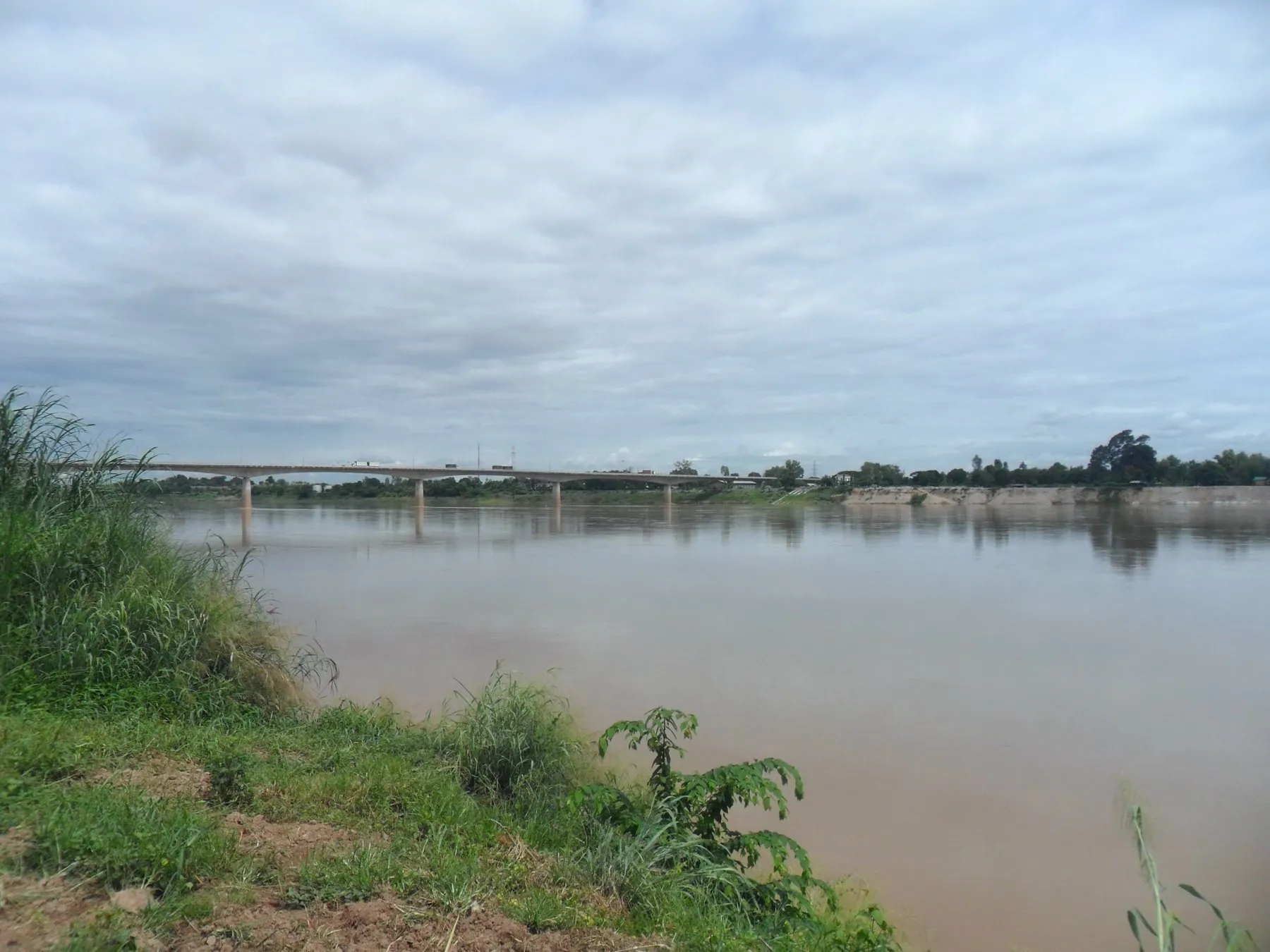
The First Friendship Bridge at Nong Khai is the busiest by a long way, sitting at the end of Highway 2, the Mittraphap Road, with Vientiane a few kilometres beyond it. The fifth, linking Bueng Kan with Bolikhamxay province, opened at the end of 2025 and runs on daytime hours.
Bridges are not the only option. Chong Mek in Ubon Ratchathani, opposite Vang Tao in Champasak, is a land crossing on the way to Pakse and the south of Laos. Huay Kon in Nan province and the Tha Li crossings in Loei are smaller again. Not every crossing is authorised for every category of vehicle or every nationality, and the smaller ones have limited hours — check the specific crossing rather than assuming.
The thing nobody warns you about: the sides swap
Thailand drives on the left. Laos drives on the right. The changeover happens on the bridge itself, at a marked crossover point where the carriageways swap under traffic-light control. It is well signed and entirely undramatic at walking pace, and it is also the moment at which a driver who has spent three weeks acclimatising to left-hand traffic has to reverse everything.
The first junction on the Lao side is where people get it wrong. Left turns and right turns are mirrored, roundabouts run the other way, and your instinct for which way to look at a junction is now backwards. Drive the first half hour in Laos deliberately slowly, and say the direction out loud at every turn. Our guide to adjusting to driving on the left covers the same problem in the other direction.
What the vehicle needs
The core requirement is proof that the vehicle is legitimately yours to take. For a Thai-registered vehicle that means the registration book — blue for a car, green for a motorbike — either in your name or accompanied by a signed and usually notarised letter of authorisation from the registered owner, plus a copy of the owner's identification. Our guide to the Thai registration book explains what the document is and which pages matter.
Alongside it you will need your passport and any visa, your driving documents, and the two Thai immigration forms used for vehicles: TM2, the information of conveyance, and TM3, the passenger list. Fill them in beforehand if you can; blank copies circulate widely online and having them completed saves a queue. What licence and permit you must be carrying is covered in the International Driving Permit for Thailand and which licence you can use.
The sequence at the border
- Thai immigration. Passports stamped out. The vehicle forms are checked here.
- Thai customs. A simplified temporary export declaration for the vehicle. Keep the copy they give you — you will need it to bring the vehicle back in.
- The bridge. Toll, and the carriageway crossover.
- Lao immigration. Visa on arrival if your nationality needs one, then entry stamps.
- Lao customs. A temporary import permit for the vehicle, valid for a limited period set at the counter. If you need longer than the default, ask at the time; extending later is harder.
- Insurance. Lao third-party cover is sold at the border complex and you are expected to have it.
The whole sequence takes anywhere from forty minutes at a quiet crossing to several hours at Nong Khai on a Friday. Counters keep their own hours and close for lunch. Arrive in the morning.
Insurance, and the gap in it
Two things stop at the border. Your Thai motor insurance does not follow the vehicle into Laos, and the Lao cover you buy at the frontier is a compulsory third-party product covering injury, not a comprehensive policy that will repair your car. Assume that any damage to your own vehicle in Laos is your own problem unless you have specifically arranged cover that says otherwise.
Your personal travel insurance is a separate question again, and driving your own vehicle in a second country is exactly the sort of scenario a policy may not have contemplated. Check the wording before you go — see does travel insurance cover driving in Thailand?
Rental vehicles: no
Thai rental contracts prohibit taking the vehicle out of the country, without meaningful exception in the mainstream market. The reasons are structural: the rental company holds the registration book and will not hand it over, the insurance is written for Thailand, and a hire car that goes missing in another jurisdiction is a recovery problem nobody wants. A handful of specialist operators arrange cross-border hire with the paperwork prepared in advance, at a price and with notice. The full picture is in can you take a rental vehicle out of Thailand? and in our renting section.
If your plan is simply to see Vientiane or Luang Prabang, leave the vehicle in Thailand. Nong Khai and Chiang Khong both have secure parking near the bridge, cross-border buses run through the formalities for you, and the practicalities of getting between the two countries without a car are the sort of thing Viamo covers in detail.
Coming back
The return is the same sequence in reverse, and the document that matters is the Thai customs paper issued on the way out. Lose it and re-importing your own vehicle becomes a genuine problem. Keep it with the registration book, not in the glovebox. If you are bringing a foreign-plated vehicle the other way for the first time, that is a different process again — see bringing a foreign-plated vehicle into Thailand.
Frequently asked questions
Can I drive a rental car from Thailand into Laos?
Practically no. Mainstream Thai rental agreements forbid it and the company will not release the registration book, without which customs will not process the vehicle.
Which is the easiest crossing with a vehicle?
The First Friendship Bridge at Nong Khai is the most used and the best staffed, but also the busiest. Mukdahan and Nakhon Phanom are quieter for the same procedure.
Do they drive on the same side in Laos?
No. Laos drives on the right and Thailand on the left. The carriageways swap on the bridge itself at a signed crossover.
Do I need an International Driving Permit for Laos?
Driving documents are one of the things checked at the frontier, and the requirements are not identical to Thailand's. See our IDP guide and confirm the Lao position with your own motoring organisation before travelling.
Can I take a motorbike across?
Yes, on the same basis: the blue registration book, owner's authorisation if it is not yours, and the same customs and insurance steps. Motorbike crossings are common at Chiang Khong and Nong Khai.
How long can the vehicle stay in Laos?
Lao customs issue a temporary import permit with a period set at the counter, and it varies by crossing. Ask for the duration you need at the time of entry rather than assuming you can extend it later.