Get one. If you plan to drive or ride in Thailand on a foreign licence, an International Driving Permit turns your national licence into something a Thai police officer, a rental desk and a claims handler can all read and accept. It costs a few pounds, takes minutes to arrange at home, and removes an entire category of argument at the moments you least want to be having one.
The complication — and the reason much published advice on this is now wrong — is that there are two different International Driving Permits, issued under two different United Nations conventions, and Thailand is a party to both. Which booklet you need depends on your own nationality, not on Thailand. A British, German or Nordic driver needs the 1968 permit. An American, Australian, Irish, Canadian, New Zealand or Japanese driver can only obtain the 1949 permit — and that is the correct document for them, not a second-best substitute.
- What it isA standardised translation of your national licence. Never a licence in itself
- Two versions1949 Geneva and 1968 Vienna. Thailand is a party to both
- 1949 permit lastsOne year from the date of issue
- 1968 permit lastsThree years from issue, or until your home licence expires — whichever comes first
- Where to get itIn your own country, before you fly. You cannot buy a valid one in Thailand
What an International Driving Permit actually is
An IDP is a small booklet reproducing the details of your national licence in a fixed international format, with your vehicle categories in a standard layout and the headings printed in several languages. It exists so that an official who cannot read your licence can look at one page and see what you are entitled to drive.
It is not a licence, and this matters more than any other single point on this page. The 1968 Convention says so in terms: an international permit "shall be issued only to the holder of a domestic permit", and "shall not be valid after the expiry of the corresponding domestic permit, the number of which shall be entered in the international permit". It has to be carried with the licence it refers to, and it dies the moment that licence does.
Two consequences follow. An IDP cannot add entitlements you do not already hold: if your home licence covers cars only, your IDP shows category B and nothing else, and no paperwork will make it authorise a scooter — see the Thai motorbike licence and engine sizes. And if you renew your home licence, the old IDP tied to the old licence number is finished.
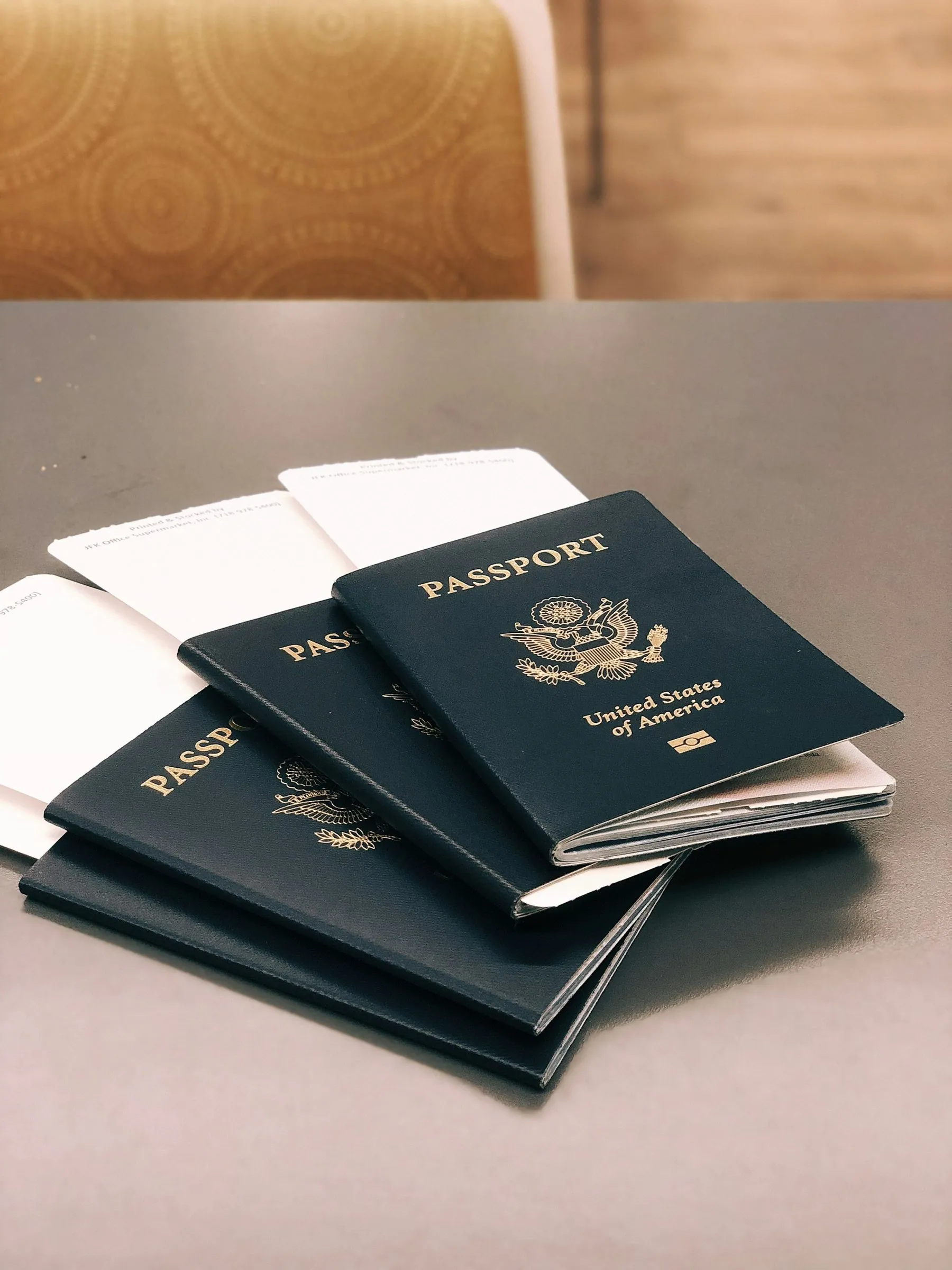
Thailand is a party to both conventions
This is the fact the internet most often gets wrong, usually because the source was written before 2021 and never updated.
The treaty position
Thailand acceded to the 1949 Geneva Convention on Road Traffic on 15 August 1962, and has been a party ever since.
Thailand also signed the 1968 Vienna Convention on Road Traffic on 8 November 1968 and ratified it on 1 May 2020. Under Article 47(2) it entered into force for Thailand twelve months later, on 1 May 2021.
The two do not simply stack. Article 48 of the 1968 Convention provides that it "shall terminate and replace, in relations between the Contracting Parties" the earlier road traffic conventions, including the 1949 Geneva Convention. So between Thailand and another 1968 party, the 1968 rules govern. Between Thailand and a country that joined only the 1949 Convention, the 1949 Convention still governs — because 1968 can only replace 1949 as between parties to 1968.
That single article is why the answer to "which IDP do I need for Thailand" depends on your passport, and why two readers can be given opposite answers and both be right.
Which permit you need, by the country that issued your licence
Your own country issues the booklet, so the permit you can obtain is determined by which conventions it has joined.
| Licence issued by | Permit you get | Why |
|---|---|---|
| United Kingdom | 1968 | Ratified the 1968 Convention on 28 March 2018; GOV.UK assigns Thailand the 1968 type |
| Germany | 1968 | A 1968 party, and not a party to the 1949 Convention at all |
| Norway, Sweden, Denmark, Finland | 1968 | All four are 1968 parties |
| France, Italy, Netherlands, Spain, Portugal, Poland, Austria, Switzerland | 1968 | All are 1968 parties |
| United States | 1949 | Never joined the 1968 Convention |
| Australia | 1949 | Not a 1968 party |
| Ireland | 1949 | Not a 1968 party |
| Canada | 1949 | Not a 1968 party |
| New Zealand | 1949 | Not a 1968 party |
| Japan | 1949 | Not a 1968 party |
If your country is not in the table, check the United Nations depositary record linked at the foot of this page rather than a blog. Otherwise start with your own national guide: UK, Ireland, United States, Canada, Australia, New Zealand, Germany, the Netherlands, France, Sweden, Norway and Denmark, India and China.
Why an American cannot simply get the 1968 permit
A common moment of panic goes like this. A US, Australian or Irish reader finds GOV.UK's line that Thailand takes the 1968 permit, goes to their own motoring organisation, and is told only the 1949 booklet is available. Nothing has gone wrong.
Your own country issues the permit, and can only issue permits under conventions it has actually joined. The United States, Australia, Ireland, Canada, New Zealand and Japan are 1949 parties and not 1968 parties, so a 1949 booklet is the only thing they can issue — and it is the right document, because Article 48 leaves the 1949 Convention fully in force between Thailand and those states.
The transitional rule people cite is forty years dead
You will sometimes see it claimed that a 1949 permit is "still accepted under the transitional provisions" of the 1968 Convention. That refers to Article 43, which gave 1949-format permits the same treatment as 1968 permits for five years from entry into force — a window that closed in 1982. The reason a 1949 permit works for an American driver in Thailand today is Article 48, not Article 43. Anyone quoting Article 43 at you is working from a source that has not been checked in decades.
How long your permit lasts
The two conventions set different validity periods, and the difference is worth knowing before you book.
- 1949 permit: valid for one year from the date of issue, in every contracting state except the one that issued it. The model permit itself carries that wording.
- 1968 permit: valid for three years after the date of issue, or until the date your domestic licence expires, whichever is earlier. The expiry is printed on the cover.
So a 1949 permit is spent within a year whether you use it or not, and a long-stayer replaces it annually. A 1968 permit usually runs the full three years unless the licence behind it expires first.
Check the date on the cover before you pack it
Nobody ever looks, and a permit that expired quietly in a drawer is the same as no permit at all. Photograph the inside pages too — a phone copy is no substitute at a checkpoint, but it is invaluable if the original is lost or taken.
Categories, engine size and the moped question
Both conventions use the same lettered categories. The two that matter to a visitor:
- Category A — "motor cycles with or without a sidecar, invalid carriages and three-wheeled motor vehicles with an unladen weight not exceeding 400 kg".
- Category B — passenger vehicles with, besides the driver's seat, at most eight seats; or goods vehicles up to 3,500 kg permissible maximum weight.
Note what is missing: there is no small-engine sub-category. Category A is a single motorcycle category, and engine size creates no lighter tier that a car licence covers. If your home licence carries no motorcycle entitlement, your IDP carries no category A — whether or not the machine is a 110cc automatic, and whether or not the rental shop looked at anything.
Thailand has closed the "it is only a moped" argument at source
When Thailand ratified the 1968 Convention it filed a declaration under Article 54(2) stating that "for the purposes of the application of this Convention, it treats mopeds as motor cycles (Article 1(n))".
For Convention purposes, then, Thailand operates no lighter moped tier at all: a moped is a motorcycle and needs category A. It is on the record in the United Nations depositary file, and it answers anyone who tells you a small step-through does not count.
Thai domestic licensing works the same way — a private car licence and a private motorcycle licence are separate documents, and one does not imply the other.
The "90 days" claim
You will read almost everywhere that an IDP is "valid in Thailand for 90 days", sometimes stated as though it were Thai law. We went looking for the basis and could not find one.
Neither convention contains such a provision. The 1949 permit is valid for a year from issue and the 1968 permit for three years or the life of the domestic licence, and Thailand entered no reservation creating a shorter one. Even the sources repeating the figure describe it as a "practical threshold". We could find no statutory or Department of Land Transport basis for a 90-day limit, and this site will not state one. The same goes for the variant claim that tourists may drive for 60 days.
What is true, separately, is that a foreign permit is designed for a temporary visitor: the 1968 Convention expressly allows a state to decline to recognise a permit held by someone normally resident there. If Thailand becomes your home, your paperwork changes — see which licence you can use in Thailand and how to get a Thai driving licence.
Getting one before you fly
An IDP is issued by an authority in the country that issued your driving licence, and only to the holder of a valid licence from that country. In the United Kingdom that means the Post Office; elsewhere it is usually a national motoring organisation or a government office. The application is short — your licence, a photograph, a small fee — and in many places you walk out with the booklet the same day.
The UK government puts the point bluntly: "You cannot buy an IDP outside the UK, so get one before you travel." The same logic applies wherever you are from. Once you have landed in Bangkok, no counter can issue you a valid permit for your home licence.
Ignore the websites selling "international driving licences" online. A genuine IDP comes only from the authority your own government has designated, on the strength of a real licence, and it is cheap. Anything sold as an "international driving licence", offered as a PDF, valid for ten years, or issued without sight of a national licence is worth nothing at a Thai roadside, a rental counter or a claims department.
What happens if you turn up without one
Two things need separating, because they carry very different consequences.
The legal position first. The offence in Thai law is driving without a valid driving licence, which sits in the Motor Vehicle Act rather than the traffic legislation; translations of section 64 give imprisonment of up to one month, a fine of up to about 1,000 baht, or both. We could not check the current amended text against the Royal Gazette, so treat that as reported rather than certified. About 1,000 baht is roughly £23 or US$28. The absence of an IDP is not itself the offence — an IDP is not a licence — so a driver who left the booklet in the hotel safe is in a much better position than one who never held the entitlement at all.
The practical position is where the real cost sits. Without the permit you are relying on an officer, a rental company and eventually a claims handler each accepting a document they may not be able to read. What a stop is actually like is covered in police checkpoints in Thailand, and riding with no entitlement at all in riding without a licence in Thailand.
The insurance consequence is the one that can bankrupt you. The UK government states plainly that "if you drive a car or ride a motorcycle in Thailand without a valid licence, it could invalidate your travel insurance and you'll be unable to claim if you have an accident or injury". Where a serious motorbike injury means a private hospital and possibly an air ambulance, that is a far bigger number than any fine — see does travel insurance cover driving in Thailand.
Policies vary on whether the IDP itself is named. The one wording we obtained in full — Fast Cover, an Australian travel insurer — requires a rider to hold both a current home licence for the class of machine and "a licence valid for the country that you are riding in", and does not mention an IDP at all. Others are widely said to require one. Since "a licence valid for the country you are riding in" is precisely the phrase an IDP exists to satisfy, the permit is the cheapest way to close the argument. Check your own wording; we cannot tell you what your insurer requires.
Carry the permit and the licence together
Whichever version you hold, carry it with your national licence. GOV.UK's instruction to British drivers in Thailand is explicit: "You'll need to carry both the 1968 version of the international driving permit (IDP) and your UK driving licence while driving." A permit on its own is incomplete by design — the licence number it refers to is printed inside it.
If you are not sure your paperwork adds up, work through the five-point legality checklist or use the licence checker. If you are hiring rather than bringing a vehicle, what you need to rent a car in Thailand covers what the counter asks for.
Frequently asked questions
Do I need an IDP to drive in Thailand?
In practice, yes — get one. The strict legal position is more nuanced: a domestic licence conforming to the 1968 Convention's Annex 6 is entitled to recognition on its own, and the Department of Land Transport said as much when the Convention took effect in 2021. But the UK government still tells British drivers to carry the IDP, rental companies ask for it, and it is the document that removes doubt at a claims stage.
Which IDP does Thailand accept, the 1949 or the 1968 one?
Both, because Thailand is a party to both conventions. Which one you can obtain depends on your own country: 1968 for the UK, Germany, the Netherlands, France and the Nordic countries; 1949 for the United States, Australia, Ireland, Canada, New Zealand and Japan.
Can I get an International Driving Permit once I am in Thailand?
No. It is issued by an authority in the country that issued your licence, and only to holders of that country's licence. If you have already landed without one, your realistic options are to have someone at home apply on your behalf where that is allowed, to not drive, or — for a longer stay — getting a Thai licence.
Is an IDP valid in Thailand for 90 days?
We could find no legal basis for that figure. Neither convention contains a 90-day limit, and Thailand made no reservation creating one. A 1949 permit is valid for one year from issue; a 1968 permit for three years or until your home licence expires.
Does my IDP let me ride a scooter?
Only if your home licence already carries motorcycle entitlement, in which case the IDP shows category A. If your licence covers cars only, you have no motorcycle entitlement in Thailand. Engine size makes no difference — there is no small-engine category, and Thailand has formally declared that it treats mopeds as motorcycles. See the Thai motorbike licence and engine sizes.
My IDP has expired but my licence is fine. What now?
You need a new permit, from home. The IDP is a time-limited document in its own right and a valid national licence does not extend it. This catches out long-stayers on 1949 permits most often, because theirs expire annually.
I live in Thailand. Can I keep renewing an IDP forever?
You can keep obtaining permits while you hold a valid home licence, but the 1968 Convention allows a state to decline to recognise a permit held by someone normally resident there. That is the real reason long-stayers convert — see converting a foreign licence to a Thai licence.
Does the IDP need translating into Thai?
No — that is the whole purpose of the document. It is a standardised multilingual format. A national licence in a language other than English is a different matter and may need a certified translation.