Four things: your passport, your home driving licence, an international driving permit, and a credit card in the driver's own name. That is what a mainstream Thai rental desk will ask to see, and all four must be originals rather than photographs on a phone. Avis Thailand's published requirements are typical — a valid passport for foreigners, an international driving licence, and the renter's credit card in the same name as the identity document, with enough limit to cover the pre-authorised deposit.
Local independent firms ask for less, sometimes much less, and that flexibility is a large part of why people use them. It does not change what you actually need in order to be legal on the road and covered by your own insurance, which is a separate question with a separate answer.
- PassportOriginal, with the entry stamp. A copy is not accepted at chain desks
- LicenceYour home photocard or paper licence, still valid
- PermitAn international driving permit — which type depends on your nationality
- PaymentA credit card in the main driver's name, for the deposit hold
The passport
Bring the physical passport. Rental desks record the number, the visa or entry stamp and the arrival date, and most will photocopy the relevant pages. That is routine and unobjectionable.
What is not routine is a request to keep it. Car rental firms rarely ask; scooter shops do, constantly. If one wants to hold your passport for the duration of the hire, decline and go elsewhere — the reasons are set out in passport as deposit for motorbike hire in Thailand, and they apply equally on four wheels.
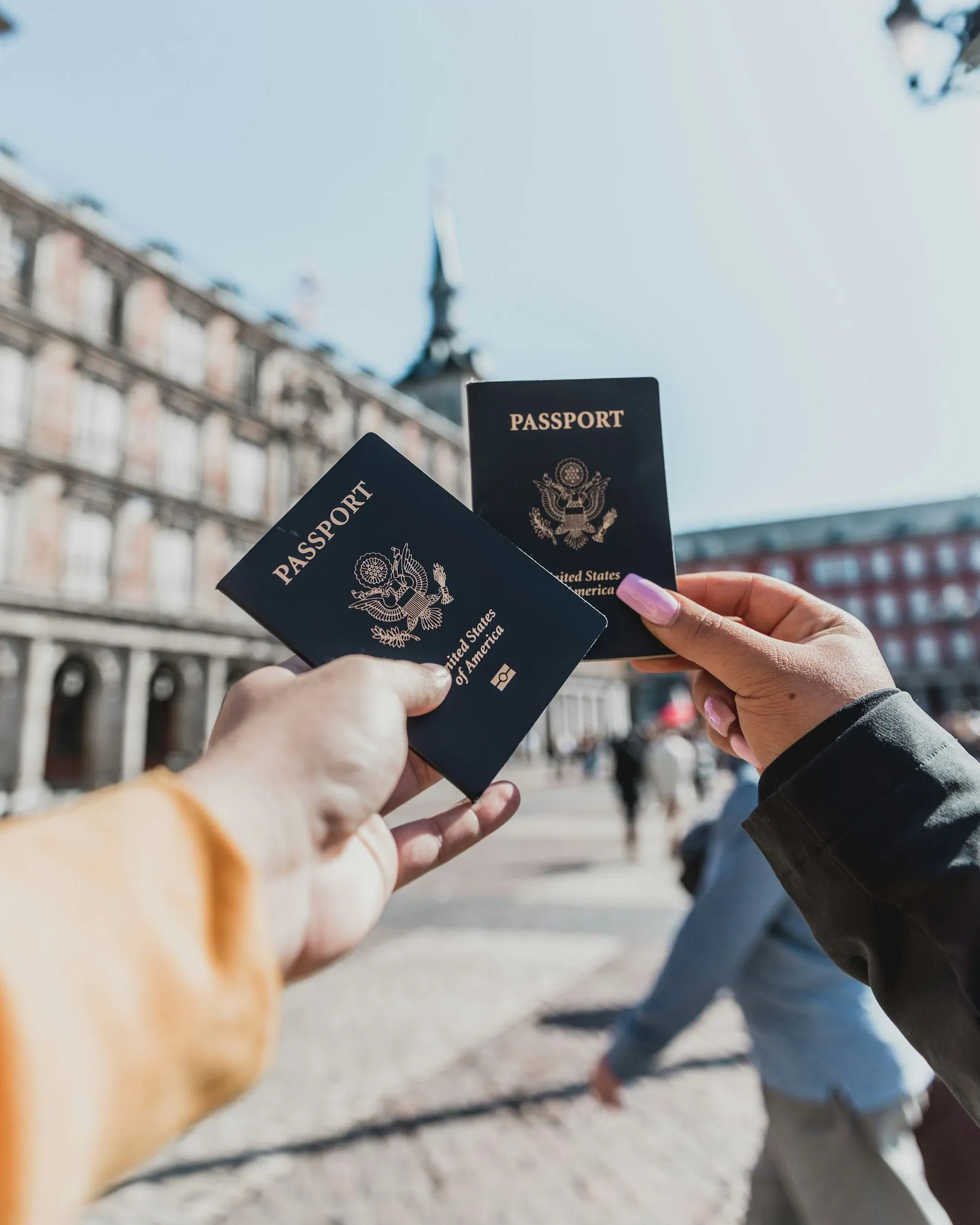
The licence, and the permit
You need your own national driving licence, valid, with a car entitlement on it. An international driving permit is not a licence: under the treaty that creates it, it can only be issued to someone who already holds a domestic permit, and it expires with that permit. It is a standardised translation, and its job at a Thai counter is to remove any argument about what your home licence says.
Which permit you need depends on where you are from, and this is the part almost every other source gets wrong. Thailand is a party to both the 1949 Geneva and the 1968 Vienna road-traffic conventions. British, German, Dutch, French and Nordic drivers should get the 1968 permit; American, Australian, Irish, Canadian, New Zealand and Japanese drivers can only be issued the 1949 version, because their own countries are not party to the 1968 Convention — and that is the correct document for them, not a second-best one. The full explanation is in the international driving permit guide.
You cannot buy an international driving permit after you land. The UK government states this plainly: you cannot buy an IDP outside the UK, so get one before you travel. The same is true of most issuing countries — the permit is issued by your own national motoring authority against your own licence. Turning up in Bangkok without one and hoping to sort it out locally does not work.
Whether a foreign photocard licence on its own is legally sufficient in Thailand is a genuinely awkward question, and the honest answer is that the law and the practical advice point in different directions. Do not resolve it by leaving the permit at home — which licence can I use in Thailand? sets out the position. One thing that is not awkward: a car licence covers a car, not a motorbike, whatever the engine size. See riding without a licence in Thailand.
The card
Mainstream firms want a credit card, in the main driver's name, with enough available limit to carry the security hold on top of the rental cost. The card is not primarily a payment method — it is the security. The desk places a pre-authorisation on it, which blocks funds without taking them, and releases the block after the car comes back clean.
A debit card usually will not do this: either the issuer does not support that kind of pre-authorisation, or it does so by actually debiting your account, leaving you several thousand baht down until the refund arrives. Prepaid and virtual cards are almost universally refused — see credit card holds on Thai car rentals.
The name matters too. If your partner is driving and your card is paying, the desk will want the card in the driver's name or the cardholder registered as a driver. Sort it out at booking, not at the counter.
Tell your bank you are going to Thailand, and check your card limit. A hold in the region of 8,000 to 20,000 baht (roughly £185–£460 / US$225–US$560 / €210–€520) plus the rental cost plus your holiday spending can quietly exceed a modest limit, and a declined pre-authorisation at an airport desk at midnight is a bad place to discover it.
Age and how long you have held the licence
Thai rental companies set their own age rules; there is no single national rental age. Avis Thailand publishes a minimum renter age of 21 and a maximum of 65, and Budget Thailand sets 21 for the renter and for any additional driver. Several firms also require the licence to have been held for a minimum period, commonly a year. Others set the age floor at 23 or 25, apply young-driver surcharges, or restrict which vehicle categories a younger driver may take. Upper age limits genuinely exist at some firms and are not always advertised.
If you are under 25 or over 65, do not assume. Get the answer in writing before you book, and read car rental age and licence rules in Thailand.
What else to bring, and what to have ready
- Your booking confirmation, on paper or a screenshot, including the rate you were quoted and what it included.
- A second driver's licence and permit if anyone else will drive. An unregistered driver behind the wheel voids the cover.
- Your travel insurance policy number and emergency line, saved offline. You will not want to be searching an inbox at a roadside.
- A phone with space on it for the handover video and photographs. People do run out of storage at the exact moment it matters.
- A child seat request already on the booking if you need one. Thai law requires a restraint for a child under six in a private car and supply is thin at peak times; see child car seats in Thailand.
- Cash in small notes for tolls and fuel. Attendants fill the car for you at Thai petrol stations.
What happens if something is refused
Three refusals account for nearly all of them.
The card is declined or is a debit card. Ask whether the branch will take a larger cash deposit instead — many Thai chains will, international brands often will not. Otherwise a local firm down the road almost certainly will, at the cost of a cash deposit you then have to get back. This is the most common reason a booking collapses at the counter.
The licence is not accepted, usually because it is not in Roman script, is provisional, or is a paper document the clerk cannot read. This is what the international driving permit exists to fix; if you do not have one, money will not solve it at that desk.
The driver is too young, too old, or has not held the licence long enough. Non-negotiable at chain desks, and set by the company's insurer.
If a booking fails at the counter for one of these reasons, most prepaid rates are non-refundable and the company's position is that you failed to meet published conditions. That is usually correct. Read the requirements at booking — the ten minutes it costs you is the cheapest part of the whole rental.
Once you have the keys
Getting the paperwork accepted is the beginning of the transaction, not the end of it. The part that decides whether you pay anything unexpected is the walk-round: film the car slowly, photograph every existing mark, photograph the odometer and fuel gauge, and check the company's own damage diagram before you sign it. See the car rental handover inspection in Thailand and take the printable checklist to the counter with you.
Keep a copy of the vehicle's registration document in the car and check that the windscreen tax and insurance stickers are current — police may ask, and you cannot produce what is not there. What Thai police can and cannot ask you for covers a roadside stop.
Frequently asked questions
Can I rent a car in Thailand with just my UK or US driving licence?
A local firm may well let you. A mainstream desk will ask for an international driving permit as well, and Avis Thailand's own requirements name one. More importantly, the permit is what settles the question at a police checkpoint and removes an argument at the claims stage. Which licence can I use in Thailand has the legal position.
Do I need to leave my passport with the rental company?
No, and you should not. A photocopy is reasonable; the document itself is not. Car rental firms rarely ask — if one insists, use a different company.
Can someone else pay for the rental with their card?
Usually only if they are present and registered as a driver, because the card carries the security hold. Arrange it at booking; the desk will not improvise.
What if my international driving permit has expired?
Then you are effectively without one. A 1949 permit runs one year from issue; a 1968 permit runs three years from issue or until your domestic licence expires, whichever comes first. Check the expiry date before you fly, not at the desk.
Is a digital copy of my licence acceptable?
No. Thai rental desks want originals; photographs and app copies are refused. Thailand's own digital licence exists only for holders of a Thai licence, which a visitor driving on a foreign one does not have.
Do I need a Thai driving licence to rent a car?
Not as a visitor. Long-stayers should, because a foreign permit stops being the right document once Thailand is where you normally live. See how to get a Thai driving licence.