The handover inspection is ten minutes of work that decides whether you pay anything unexpected on a Thai car hire. It is not a formality and not a courtesy the rental company extends to you — it is the moment the company's record of the car's condition is created, and once you sign the damage diagram, that record is the version of events you will be arguing against weeks later.
Do it before you sign, not after. Film it. And do not let a busy counter or a friendly member of staff hurry you through it, because those are present precisely when the inspection gets skipped.
- Time neededTen minutes, twelve if the car is dirty
- The single most useful thingA slow, narrated video of the whole car
- Do itBefore you sign the damage sheet
- Printable versionThe rental handover checklist
Start with the damage diagram
Every Thai rental agreement includes a line drawing of a car on which existing damage is marked. Some companies mark it up thoroughly before you arrive; many note two or three obvious items and leave the rest blank. A blank diagram is not a statement that the car is undamaged — it says nobody recorded anything, so every mark found at return will be new.
Ask for the diagram before you walk out to the car and keep it in your hand while you inspect. You are doing two jobs at once: finding damage, and checking that what you find is already on their sheet.
When you find something unmarked, point it out and have them add it. If a member of staff says a mark is "too small to matter", be politely immovable — it is too small to matter until it appears on the return inspection. If they will not add it, write it on the sheet yourself, with an arrow to the right position, and ask them to initial it. Then photograph the completed sheet.
Do not sign a blank or nearly blank damage diagram on a car that has marks on it. Your signature converts their sheet into an agreed record of the car's condition. A signed sheet showing no damage on a car with three kerbed wheels is the strongest piece of evidence anyone will have, and it will not be working for you.
Film the walk-round
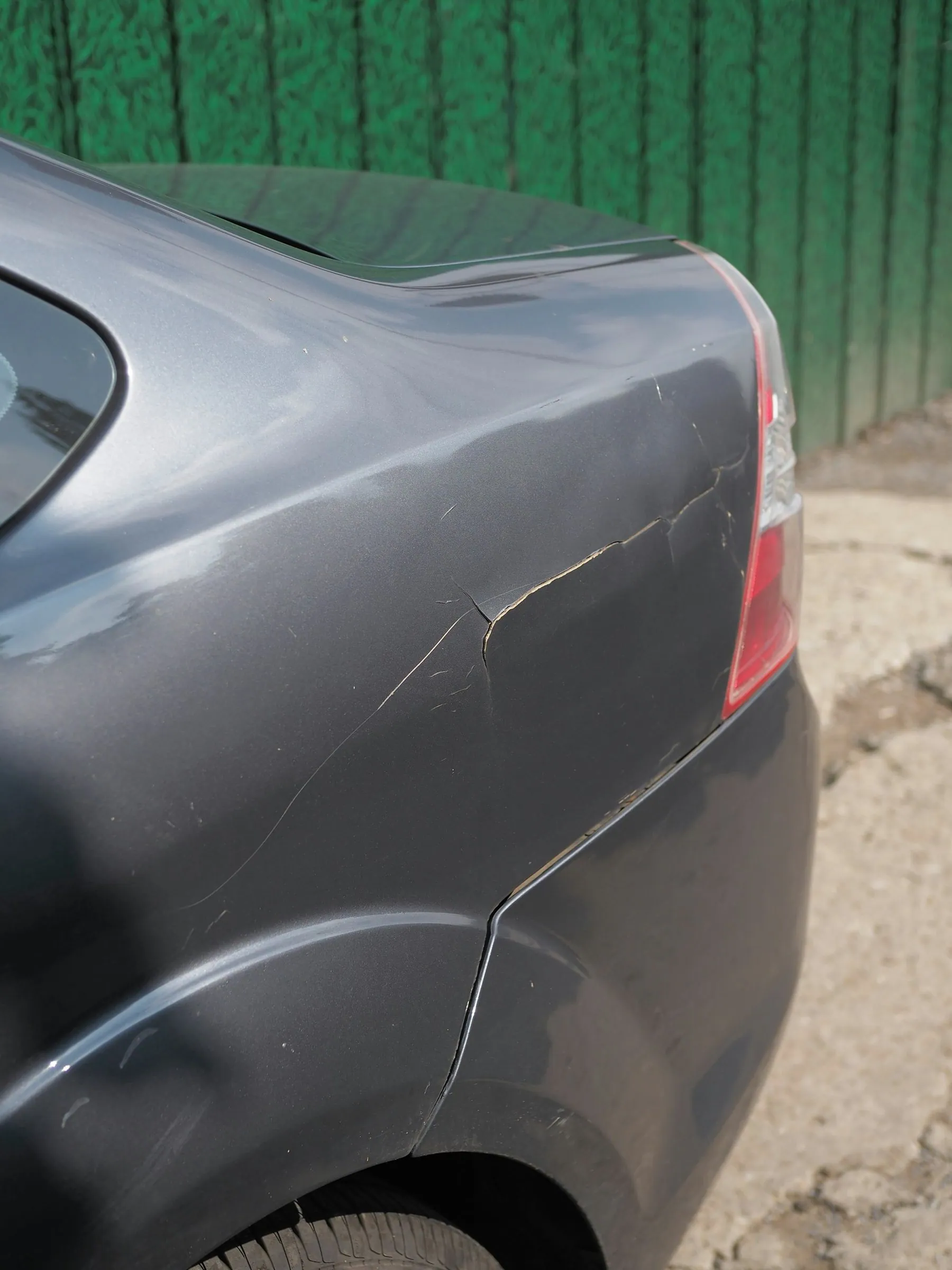
One continuous narrated video is worth more than a hundred photographs, because it establishes context and sequence that individual images do not. Say the date and the branch out loud at the start, then walk the car slowly — front, one side, rear, the other side — holding steady on each panel for a couple of seconds and saying what you see: "scratch on the rear door, about thirty centimetres", "kerb damage on the front near-side wheel".
Get down and film the bumper corners and the sill below the doors, where trolley and kerb damage lives and nobody looks. Film the roof — stand on the door sill if you have to. Roof damage from a car park barrier or a falling branch is common here and very rarely on anyone's diagram.
Then photograph individual items: each existing mark twice, once close enough to see it and once far enough back that its position is unambiguous. A close-up with no context proves the scratch existed but not where.
The things people miss
- The wheels, all four, including the inside face of the rim. Kerbing is the most commonly charged damage on a Thai hire car and the most commonly unrecorded.
- Tyre tread and condition. Tyres are excluded from most damage waivers, so a worn or damaged tyre is a bill waiting for you. Photograph the tread and the sidewalls.
- The spare wheel, the jack and the wheel brace. Open the boot floor. A missing jack found at return is charged for, and a missing spare is the thing you will need on a rural road at nine in the evening.
- The windscreen, at an angle. Chips are invisible face-on and glass is excluded from most waivers.
- The interior. Seat burns, tears, stains and a cracked dashboard trim are all chargeable, and interior damage is specifically outside Avis Thailand's published waiver cover.
- The boot floor and the parcel shelf. Both go missing between rentals.
- Underneath, as far as you can see. Squat at each corner: undercarriage damage is a common exclusion and a common charge.
Odometer and fuel, in one photograph
Turn the ignition to the accessory position so the instruments light up, and take one photograph showing the odometer and the fuel gauge together. That single image settles two separate arguments — whether you exceeded a mileage cap, and whether you returned the car with the fuel it left with.
Check the odometer against the figure written on the agreement; a mismatch is a clerical error worth correcting immediately on a contract with a distance limit, as taking a hire car between provinces explains. Then check the fuel level against the policy. "Full" means the needle at the stop, not near it: if the policy is full-to-full and the car is at seven-eighths, have it filled or have the actual level written on the agreement. Car rental fuel policies in Thailand explained covers why that is worth ninety seconds.
Does everything work?
Damage is the money question; function is the safety one, and it is easier to resolve on a forecourt than on a mountain road.
- Brakes. At walking pace before you leave the premises, not at the first junction.
- Lights. Headlights on both beams, brake lights, all four indicators, hazards, reversing light.
- Wipers and washers. Thai rain arrives suddenly and heavily; perished blades are common.
- Air conditioning. Not a luxury here. Run it for a minute and check it blows cold.
- Tyre pressures, by eye at least. Every Thai petrol station has an air line.
- Seatbelts, front and rear. Rear belts on older Thai cars are sometimes missing or buried in the seat — see seatbelt law in Thailand.
- The child seat, if you booked one: undamaged, fits the car, and you know how to fit it. Child car seats in Thailand.
The paperwork that travels with the car
Before you drive away, confirm three documents are in the vehicle or accounted for.
A copy of the vehicle registration document should be in the car — police at a checkpoint may ask, and you cannot produce what is not there. The compulsory insurance and road tax stickers on the windscreen should be current; an expired tax disc is the company's failure and your roadside problem. And you need the branch's direct number saved in your phone, along with a clear answer to "what do you want me to do if there is an accident?", in a message rather than verbally.
Photograph the whole signed contract, every page, including the small print. You will not read it now; you may badly need it later.
Back the photographs up before you leave the forecourt. Turn on cloud upload, or send the video to yourself on a messaging app. Phones get stolen, dropped and drowned here, and a handover video that exists only on a phone lost on day three protects nobody.
Where the money side of this sits
The inspection is about the physical car. Two related questions are settled at the same counter and covered separately: what you are liable for if the car is damaged, and what the company is holding as security.
Get the excess figure in writing and understand what falls outside the waiver even at zero excess — rental insurance excess in Thailand and what rental insurance does not cover. Get the deposit terms in writing: how much, held how, released when — rental deposits in Thailand explained. The whole transaction is in renting a car in Thailand.
If the shop will not let you inspect it
Some do resist: a busy counter, a driver waiting to take the car back to the compound, "it is all on the form already". Resistance to being photographed is different from being in a hurry, and worth acting on.
Be pleasant and be immovable; "I will be two minutes" is usually enough. If it is genuinely refused, and particularly if you are told you may not photograph the car or the damage sheet, do not take the car. There is another rental firm within a few hundred metres almost everywhere in Thailand, and one that objects to a record being made has told you how it intends to handle the return.
Frequently asked questions
How long should a car rental handover inspection take?
About ten minutes, including the video. Longer if the car is dirty, because dirt hides scratches — and a car still wet from a wash is worth noticing too, since water fills shallow scratches and disguises them.
What if the rental company has already marked the damage sheet?
Check it against the car anyway. A pre-marked sheet is a good sign, but it is their list rather than a complete one, and anything missing needs adding before you sign.
Do I need to inspect the car if I bought zero-excess cover?
Yes, and arguably more carefully. Zero-excess products still exclude tyres, wheels, glass, interior damage, keys and wrong fuel — exactly the items that get charged. Photographs are the only defence against being billed for an exclusion that was already there.
What do I do if I collect the car after dark?
Use the phone torch, film slowly, and write on the damage sheet that the car was collected in darkness and the bodywork could not be verified — then photograph that annotation. Re-inspect in daylight next morning and message any new findings to the branch, so they are timestamped.
Is the same inspection needed on a rented motorbike?
Yes, and it matters more, because bike damage claims escalate faster. The technique is the same but the items differ — see the motorbike rental inspection video.
What should I do at the return inspection?
Repeat the walk-round with a member of staff in shot, photograph the odometer and fuel gauge again, and get the deposit released or a written statement of what is withheld. Returning a hire car in Thailand has the detail.