Most Thai car rentals are full-to-full: you collect the car with a full tank, you return it with a full tank, and you buy the fuel yourself at ordinary pump prices. This is the fairest arrangement and the one to ask for by name. Where it goes wrong is at the two edges — a "full" tank that is not quite full when you collect, and a refuelling charge applied at the company's own rate when you bring it back short.
The second question, and the more expensive one, is which fuel goes in. Thai forecourts sell several petrol grades that are not interchangeable, and putting the wrong one in a hire car is a mistake that sits outside the damage waiver at every company we have looked at. Avis Thailand's published exclusions name wrong fuel explicitly, alongside tyres, glass and towing.
- Best policyFull-to-full, with the tank verified at collection
- Worst policyPrepaid tank with no refund for what you do not use
- Wrong fuelExcluded from the damage waiver — you pay the whole repair
- At the pumpAn attendant fills the car; you do not touch the nozzle
The three policies you will meet
| Policy | How it works | Verdict |
|---|---|---|
| Full to full | Collect full, return full. You buy the fuel at pump price | The one to want. Fair to both sides |
| Same to same | Collect at whatever level it happens to be, return at the same level | Workable, but the level must be photographed and written down |
| Prepaid / full to empty | You pay for a tank at the outset and return it as empty as you dare | Almost always poor value. You pay for fuel you do not burn |
Prepaid fuel is sold on convenience — no refuelling stop before you fly home — and priced accordingly, usually above pump price, with no refund for what is left in the tank. Since almost nobody returns a car genuinely empty, the company keeps the remainder. The sum is modest on a short hire; it is still money handed over for nothing.
"Same to same" produces the most arguments, because a fuel gauge is not a precise instrument and "three quarters" is a matter of opinion. Photograph the gauge at collection with the ignition on, get the level written on the agreement in words, and bring it back slightly above rather than slightly below.
A refuelling charge is not the price of fuel. When a car comes back short, the company charges for the missing fuel at its own rate plus a service fee, and both are set by the company rather than by the forecourt. Returning a car half empty on a full-to-full policy can cost several times what the same fuel would have cost you at a petrol station ten minutes earlier. Fill up before you get to the return point, and keep the receipt.
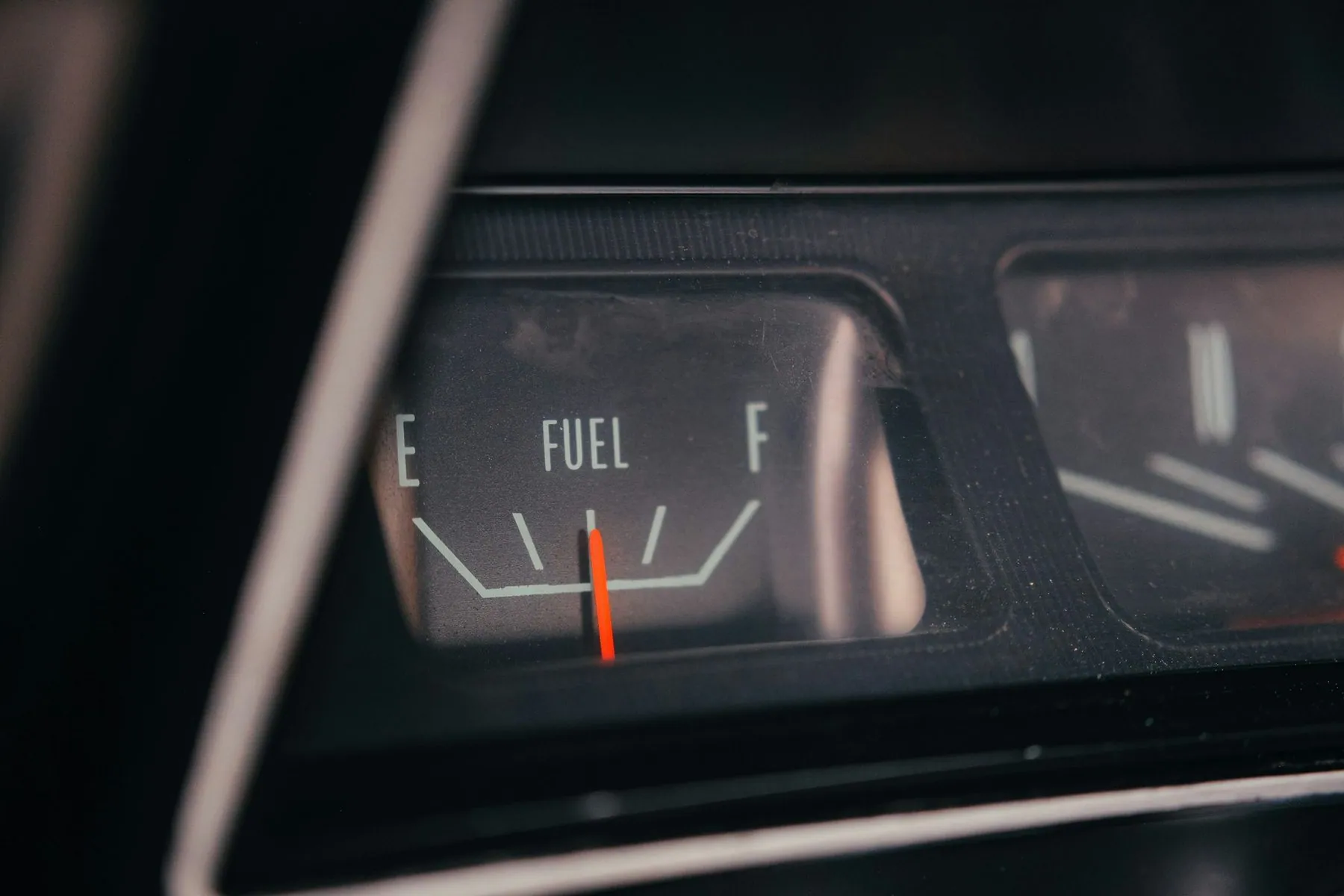
Check the tank before you drive away
Turn the ignition to accessory so the instruments light, photograph the fuel gauge and odometer in one frame, then look at where the needle actually is. "Full" means at the stop. A car handed over at seven-eighths on a full-to-full contract means returning it full, having given away an eighth of a tank.
If it is not full, ask them to fill it or have the actual level written on the agreement and initialled. Neither should cause an argument at a serious company. This is part of the handover inspection, and the photograph belongs with everything else you record — see what to photograph before you drive away.
Which fuel the hire car takes
This is the part that costs real money if you get it wrong. Thai forecourts typically offer, on the petrol side:
- Benzine 95 — 95-octane unleaded with no ethanol. The most expensive petrol grade, and the safe default if you have no other information.
- Gasohol 95 — 95-octane with 10% ethanol.
- Gasohol 91 — 91-octane with 10% ethanol.
- Gasohol E20 — a 95-octane base with 20% ethanol. Only for vehicles approved for E20.
- Gasohol E85 — 85% ethanol, for flex-fuel vehicles only. Thailand's largest retailer stopped selling it during 2026, and it is being phased out nationally.
Diesel is normally B7, containing 7% biodiesel; B20 exists but is intended for heavy vehicles. Most chains also sell premium petrol and premium diesel with additives at a noticeable markup, which a hire car does not need.
Thailand is mid-transition on all of this. Under the national energy plan, gasohol 91 and 95 and E85 are all scheduled to disappear, leaving E20 and B7 as the two main road fuels. What is on a given forecourt in a given year is therefore a moving target, which is another reason to go by what the car says rather than by a list.
The rule that protects you: put in what the fuel-filler flap says. Almost every Thai-market car carries a sticker inside the flap naming the acceptable grades — very often "E20" or "Gasohol 91/95/E20". If there is no sticker, ask the rental desk to write the correct grade on the agreement, and photograph it. If you are stuck with no information at all, benzine 95 will run in any petrol engine sold in Thailand; it costs more and it will not damage anything.
Filling a car not approved for E20 with E20 or E85 is the classic hire-car mistake, and it is not covered. Neither is putting petrol in a diesel or diesel in a petrol engine, which is an entire engine's worth of money. Full detail on the grades is in fuel in Thailand: which grade goes in your tank.
How a Thai petrol station works
You do not fill the car yourself. Pull onto the forecourt, an attendant comes to the window, and you tell them the grade and either an amount in baht or that you want it full. The Thai for full is tem tang, and holding up the fuel card or pointing at the pump you want works perfectly well. Payment is by card at the pump terminal or cash, sometimes at a kiosk.
Two practical points. The big chains — PTT, Bangchak, Shell, Esso, Caltex — keep long hours on main roads and have clean toilets and a coffee shop, which makes them the sensible stop on a long drive. And the roadside bottle and drum sellers you see in rural areas are for scooters in an emergency, not for a hire car whose fuel system you are responsible for.
Do not run the tank down looking for a cheaper station. Prices vary very little between brands, and rural stretches — parts of Isaan, the far northern mountains, the run out to Erawan — have long gaps. Fill at half a tank on a long day.
Diesel, EVs and other cases
If you have hired a pick-up, it is very likely diesel and takes B7. Pick-ups are the default vehicle in rural Thailand and are frequently the only thing available in some towns; the fuel policy works the same way but the tank is larger, so the difference between returning it full and returning it three-quarters full is bigger.
Electric hire cars have appeared in Bangkok and the main tourist centres, and they replace the fuel policy with a charge policy — normally return at the same state of charge, sometimes with a fee for returning below a threshold. Charging is good in Bangkok and along the motorway corridors and thin elsewhere, so plan the route around chargers and confirm the required return charge in writing.
Before you hand it back
Fill up within a few kilometres of the return point, keep the receipt, and photograph the gauge and odometer again once you are parked in the return bay. A receipt timestamped twenty minutes before the return, from a station near the airport, closes the fuel question completely. Without it, you are relying on the company's reading of a needle.
The rest of the return process — the inspection, out-of-hours drops and when the deposit clears — is in returning a hire car in Thailand without a dispute, and the overall shape of a Thai rental is in renting a car in Thailand.
Frequently asked questions
What fuel does a Thai hire car take?
Whatever the sticker inside the fuel flap says — commonly gasohol 91, 95 or E20 for petrol cars, and B7 for diesels. Do not guess. If there is no sticker and no note on the agreement, benzine 95 is safe in any Thai petrol engine, just dearer.
Is wrong fuel covered by rental insurance in Thailand?
No. Wrong fuel is a named exclusion in the published damage-waiver terms of the major operators, along with tyres, wheels, glass, keys and towing. You pay for the whole repair. See what rental insurance does not cover in Thailand.
Is prepaid fuel worth it?
Rarely. You pay above pump price for a full tank and get no refund for what is left in it, and almost nobody returns a car empty. It buys you fifteen minutes on the last morning.
What happens if I return the car with less fuel than I collected it with?
You are charged for the missing fuel at the company's rate, plus a service fee. Both are typically well above what the fuel would have cost you at a station on the way. Fill up before the return, and keep the receipt.
Can I fill the car myself in Thailand?
No — forecourts are attended and staff operate the pump. Tell them the grade and how much you want. Nothing is expected of you beyond that and the payment.
Should I use premium fuel in a hire car?
No. The premium grades are additive packages aimed at owners; a rental car wants the grade its manufacturer specified and nothing more expensive.
How far apart are Thai petrol stations?
Close together on main highways and in towns, sparse in parts of Isaan, in the northern mountains and on long national-park roads. Refuel at half a tank on rural days rather than waiting for a warning light.