The excess is the amount you pay before the rental company's damage cover does anything at all. On a Thai hire car it typically sits somewhere between 8,000 and 20,000 baht — roughly £180 to £450, US$240 to US$595, or €210 to €520 — and it is charged to your card the moment the company decides the vehicle came back damaged. It is not a fine and it is not negotiable at the counter. It is the number the whole rental transaction is really about.
Almost every reader arrives at this page from the wrong direction, having compared daily rates. That is the wrong comparison. A booking at 900 baht a day with a 20,000-baht excess and a long exclusion list is a far riskier product than one at 1,200 baht a day with an 8,000-baht excess, and the difference between them is invisible until something goes wrong. This page explains how the excess works, what sits outside it even after you have paid to reduce it to zero, and the three ways to bring your real exposure down.
- Typical car excessAround 8,000–20,000 baht, by vehicle category
- Avis Thailand, publishedStandard CDW caps liability at 8,000 or 15,000 baht
- Budget Thailand, publishedStandard LDW excess 10,000–20,000 baht, included in the rate
- Outside the waiverTyres, wheels, glass, interior, keys, plates, wrong fuel, towing
What the excess actually is, and what CDW actually is
Two words do most of the damage here, because neither means what a visitor assumes.
The waiver is not insurance. Avis Thailand says so in its own terms: its protections are "not insurance" but "products which reduce your damage responsibility". A collision damage waiver (CDW) or loss damage waiver (LDW) is a contractual promise by the rental company not to pursue you for the full repair bill. It is a cap on what you owe them. It protects nobody else, it pays nothing to anybody else, and it exists entirely inside the rental agreement.
The excess is what the waiver does not waive. Below the excess figure, you pay. Above it, the company absorbs the rest — subject to the exclusions, which is where this gets expensive. The excess applies per incident, not per rental, so two separate incidents in a fortnight can produce two separate charges.
In Thailand the standard waiver is normally bundled into the headline rate rather than sold as an extra, which is why so many people believe the car "comes with insurance". Budget Thailand confirms that its LDW is included in the rate, alongside compulsory third-party cover; Avis sells CDW as its baseline product. What varies enormously — between international brands, between local firms, and between vehicle categories at the same firm — is the excess figure and the exclusion list.
| Published Thai excess figures | Standard excess | Zero-excess upgrade |
|---|---|---|
| Avis Thailand CDW | 8,000 or 15,000 baht, depending on car type | Super CDW reduces the waiver excess to zero |
| Budget Thailand LDW | 10,000, 15,000 or 20,000 baht by vehicle category | Super LDW, around 200–220 baht a day |
Those are two international brands' own published Thai terms and they are a fair anchor for what "normal" looks like. Local operators differ widely in both directions, and a small island firm may set an excess that is effectively the value of the vehicle. Read the counter agreement; do not assume the figures above apply to your booking.
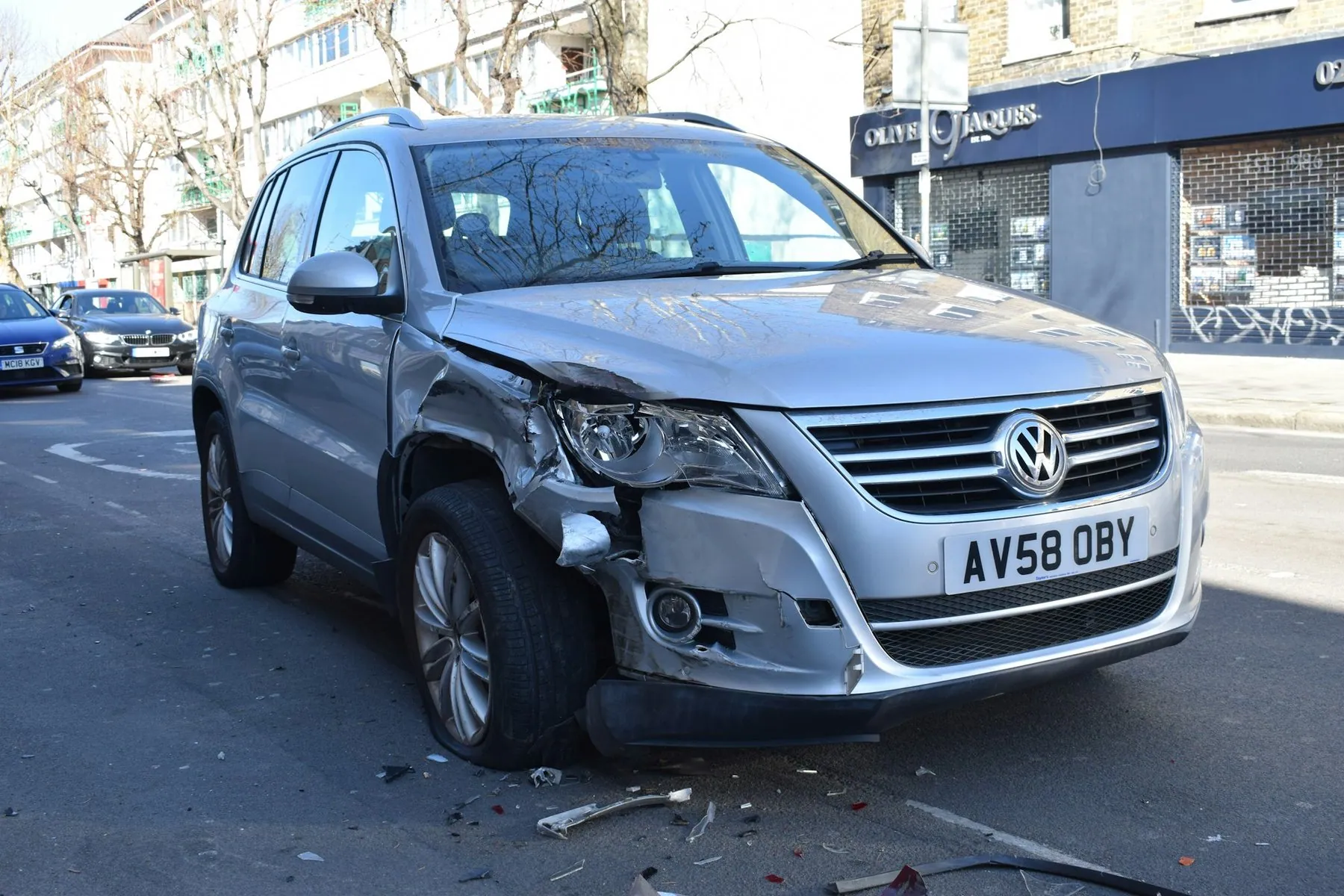
The exclusions matter more than the excess
This is the part that costs people money, and it is the part nobody reads. Buying the excess down to zero does not put you at zero liability, because a specific list of components sits outside the waiver entirely. Avis Thailand publishes its list: tyres, wheels, windows, interior damage, lost car keys, lost licence plates, filling the wrong fuel and towing fees.
Look at that list against the Thai road environment for a moment. Potholes and broken edges are ordinary on secondary roads; construction spoil and gravel wash across coastal roads; kerbs are high and often unpainted; flooded surfaces in the wet season hide everything underneath them. A kerbed alloy and a shredded sidewall are not exotic misfortunes here. They are the single most common way a "fully covered" hire car produces a bill.
A zero excess is not zero liability. If you buy the top waiver and then destroy a tyre and wheel on a pothole, you pay for the tyre and the wheel in full. If a stone from a truck stars the windscreen, you pay for the glass. If you put petrol in a diesel pick-up, you pay for the fuel system and the recovery. None of that touches the excess figure, because none of it was ever inside the waiver.
Two further categories deserve naming because they are excluded almost universally and cause the largest single bills: undercarriage damage and roof damage. Both are how a car gets hurt on an unmade access road, in a flooded soi, or in a car park with a low concrete beam. There is a full account of the exclusion list, including the licence and use clauses that void everything at once, at what rental insurance in Thailand does not cover.
The three ways to cut your exposure
1. Buy the desk's zero-excess product
The simplest option, and the most expensive per day. Budget Thailand publishes Super LDW at roughly 200–220 baht a day, and separate theft protection at roughly 69–99 baht a day; Avis sells Super CDW to take the waiver excess to zero. On a fortnight's hire that is a meaningful addition to the total, but it has one real advantage over every alternative: nothing is charged to you in the first place. There is no deposit to argue over, no reimbursement claim to file, and no gap between paying and being repaid.
It also has one obvious weakness. It does not extend the waiver to the excluded components. A zero-excess product plus a wrecked tyre is still a bill for a tyre.
2. Buy a standalone excess policy before you travel
A third-party excess reimbursement policy bought at home typically costs a fraction of the desk's daily charge — an annual worldwide policy is often cheaper than a week of counter cover — and the good ones extend to precisely the components the waiver excludes. One policy wording we read covers bodywork, windscreen, mirrors and lights, wheels and tyres, roof and underbody, towing, misfuelling and key replacement, with separate limits for loss-of-use and administration charges.
The catch is the mechanism, and it is a serious one: these policies reimburse you. The rental company still charges your card, you still have to fund the charge, and you claim it back afterwards with the rental agreement, the damage photographs, the itemised repair invoice and the card statement showing you paid. If your card cannot absorb a 20,000-baht charge while you are still travelling, this is not the product for you. It is explained in full at car hire excess insurance bought before you travel.
These policies are written for cars. Standard car hire excess insurance excludes motorcycles, mopeds, scooters and quad bikes by definition — one wording we read defines the covered vehicle as a private car of up to eight seats and lists motorcycles, scooters and mopeds among the vehicles that are not covered. If you are renting a scooter, this product does nothing for you at all.
3. Rent from somewhere the excess is small in the first place
Underrated, and often the cheapest answer. If one firm's excess on the car you want is 8,000 baht and another's is 20,000, you have removed 12,000 baht of exposure for free by choosing the first, and you may not need a zero-excess product at all. Compare excess figures at the quote stage, in writing, before you compare daily rates. Big chains or local firms looks at how the two ends of the market differ on this and on who you can complain to afterwards.
Why a cheap headline rate often means a punishing excess
The mechanics are not sinister, they are just commercial. Rental firms compete on the number that appears in a comparison list, which is the daily rate. Excess sits in the terms, where it does not affect ranking. A firm that wants to be cheapest on the page can lower the rate and raise the excess, and the average customer will never notice, because the average customer returns the car undamaged.
The customers who do notice are the ones who did not return it undamaged, and by then the terms are signed. This is why an unusually low quote deserves a look at the excess figure and the exclusion list before it deserves a booking — the same instinct that applies to a suspiciously cheap scooter quote in scooter rental prices in Thailand.
Ask three questions before you book, and get the answers in writing. What is the excess on this vehicle category? What does the waiver exclude? And is the excess charged as a deposit at pickup, or only if there is damage? Email works better than the counter, because it produces a document. Car rental prices in Thailand by season covers the other charges that appear after the headline rate.
How the excess and the deposit interact
Most Thai car rentals secure the excess with a credit card pre-authorisation rather than a cash deposit, and the two are frequently confused. Avis Thailand requires a credit card in the renter's own name with enough limit to cover a pre-authorisation of 8,000 or 15,000 baht plus the rental cost, and states that cash and debit cards are not accepted for this purpose. The block is a hold, not a payment: it reserves funds without taking them, and it is released when the rental closes cleanly.
A cash deposit is a different animal — the money has actually left you, and getting it back depends on the firm handing it over. That is more common at local car firms and near-universal at scooter shops. The differences are set out at rental deposits in Thailand explained and credit card holds on Thai car rentals.
Excess on a rented motorbike is a different, worse problem
Everything above describes hire cars, because hire cars are where published terms and structured products exist. Scooter hire in Thailand mostly does not work this way. A typical shop has no waiver, no excess and no product to sell you: the agreement simply makes you responsible for damage to the machine and for its full replacement value if it is stolen or written off. There is no cap.
What the bike does carry is the compulsory Por Ror Bor cover, which pays for injury to people and nothing at all for property — see compulsory vs voluntary insurance in Thailand. Voluntary cover on a rental scooter is rare, and where it exists it is usually one of the "+" classes that exclude a single-vehicle fall, which is the crash a visitor is most likely to have.
So the practical protections on a bike are different ones: rent from an operator that takes a modest cash deposit rather than your passport, film the machine before you ride away, and understand that the licence question decides whether your travel insurance responds to your injuries at all. Thailand treats mopeds as motorcycles under a declaration it made when it ratified the 1968 Vienna Convention, so a car-only entitlement covers nothing on a 110cc scooter — what voids your motorbike cover in Thailand is the page that matters most before you rent one.
What to do if a charge lands anyway
- Ask for the itemisation. An excess charge should be supported by a damage description, photographs and a repair quote or invoice. A number with no paperwork is not a claim, it is an assertion.
- Compare it with your own handover evidence. This is what the pre-drive photo set is for — see what to photograph before you drive away.
- Report damage immediately if it happens. Rental agreements commonly make the waiver conditional on prompt notification and on the renter cooperating with the company's own investigation — read yours, because the clause varies and it is the one most often relied on to refuse cover. Silence is the fastest way to lose protection you had paid for.
- Work the sequence, not the counter. The rental damage claim playbook for Thailand and disputing a rental charge in Thailand set out what to ask for and where a complaint actually goes.
Frequently asked questions
What is a typical excess on a hire car in Thailand?
Broadly 8,000 to 20,000 baht, depending on the firm and the vehicle category. Avis Thailand publishes 8,000 or 15,000 baht; Budget Thailand publishes 10,000, 15,000 or 20,000 baht by category. Local operators vary widely and some set much higher figures, so check the specific agreement.
Does the collision damage waiver mean I am insured?
No. Avis Thailand states in its own terms that its protections are not insurance but products that reduce your damage responsibility. The waiver caps what you owe the rental company. It is not motor insurance, it is not your travel insurance, and it protects nobody else.
If I buy the zero-excess upgrade, can I still be charged?
Yes. Tyres, wheels, glass, interior damage, lost keys, lost plates, wrong fuel and towing sit outside the waiver on Avis Thailand's published terms, and undercarriage and roof damage are excluded almost everywhere. A zero excess means zero excess, not zero liability.
Is it cheaper to buy excess cover before I travel?
Almost always, and a good standalone policy also covers the components the desk's waiver excludes. The trade-off is that it reimburses you rather than paying the rental firm, so you must be able to fund the charge yourself first and claim it back with full documentation.
Does excess insurance cover a rented scooter?
Standard car hire excess policies do not. They define the covered vehicle as a private car and expressly exclude motorcycles, mopeds, scooters and quad bikes. If you intend to ride, your protection comes from your travel policy's motorcycle terms and from renting carefully, not from this product.
Can I use my credit card's built-in car hire cover instead?
Sometimes, but read the wording rather than the marketing summary, and check three things: whether Thailand is inside the territorial limits, whether the cover applies when the rental was paid on that card, and whether it operates by reimbursement. Card-linked cover is also written for cars and normally excludes two-wheelers.
Who pays if someone else hits the hire car?
You will usually still meet the excess up front, and the rental company recovers from the other party's insurer afterwards — which is why a police report and the insurance surveyor's attendance matter so much. See accident in a rental car or scooter in Thailand and how fault is decided after a crash.