A small automatic hire car in Thailand typically costs somewhere around 800 to 1,600 baht a day on a short booking — very roughly £18 to £37, US$22 to US$45, or €21 to €42 — with the same car cheaper in the wet months and dearer over Christmas, New Year and Songkran. Those are typical ranges rather than a price list, and they move by season, by location and by how long you keep the car.
The headline daily rate is also the least useful number in the transaction. What decides whether a Thai car hire ends up cheap is the excess, the deposit and the list of extras that arrive after the quote — and none of those appear in the price you compared.
- Small automatic, typicalAround 800–1,600 baht a day, seasonal
- Dearest weeksChristmas and New Year; Songkran in April
- Cheapest monthsThe wet season, roughly May to October
- Biggest single savingHiring by the week or the month
What the different classes cost
The Thai rental fleet is dominated by small automatic saloons and hatchbacks — Toyota Yaris and Vios, Honda City and Jazz, Mazda 2, Nissan Almera and the eco-car classes around them. Above that sit compact SUVs, then pick-ups, then seven-seat MPVs, which are popular with Thai families and often scarce at short notice.
| Class | Typical daily rate, short booking | Notes |
|---|---|---|
| Eco-car / small automatic | Around 800–1,400 baht | The default. Automatic almost without exception |
| Compact saloon or estate | Around 1,100–1,800 baht | More boot space, similar running costs |
| Compact SUV | Around 1,500–2,600 baht | Ground clearance is genuinely useful in the wet season |
| Pick-up (Hilux, Ranger, D-Max) | Around 1,400–2,500 baht | Common, cheap to run, poor to park in a city |
| Seven-seat MPV | Around 2,000–3,500 baht | Books out first in the school holidays |
Treat every figure above as an indication of what normal looks like, not a quote. The spread between an airport branch of an international brand and a small local firm on the same island can be wide in both directions, and the two are not selling the same product — big chains or local firms sets out where the differences actually sit.
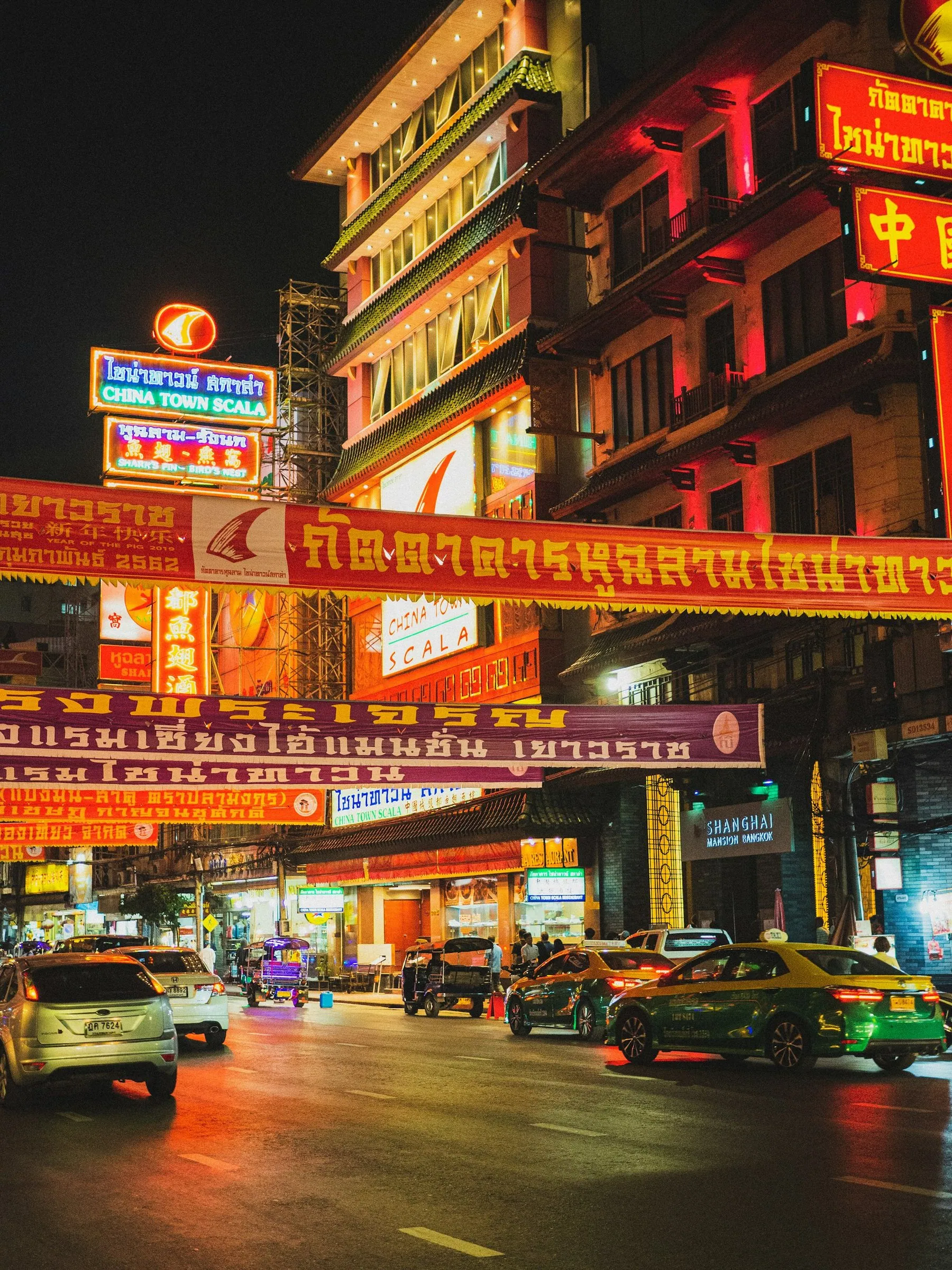
The seasons that move the price
Thai rental pricing follows tourism, not the calendar year, and it moves in three broad bands.
Peak. The fortnight around Christmas and New Year, and the Songkran week in April, are the two genuine peaks. Rates rise, minimum hire periods appear, and on the islands and in Phuket, Krabi and Samui the fleets sell out. This is the one time of year when booking early is not just about price — it is about whether a car exists at all.
High season. Roughly November to March on the Andaman coast and in the north, when the weather is dry and the resorts are full. Rates sit at the top of the ranges above without the peak-week scarcity.
Green season. Roughly May to October, when rain is frequent and demand falls. This is when a hire car is cheapest and, arguably, most useful — see the rainy season and flooded roads in Thailand for what the driving is actually like.
The Gulf coast runs on a different clock: Samui, Phangan and Tao are wettest around October to December, so the two coasts' high seasons do not line up.
Location matters nearly as much as season. Island and resort branches are dearer than Bangkok, Chiang Mai or the north-east, partly because the fleet has to be ferried across and partly because demand is concentrated. Renting on the mainland and taking the car over is sometimes cheaper, but only if the contract allows it — see taking a hire car on a ferry in Thailand.
Length of hire changes the price more than anything else
Weekly rates typically fall well below seven times the daily rate, and a monthly contract usually costs a fraction of thirty daily rates — often the equivalent of ten to fifteen days' hire for a whole month. If your trip is longer than about ten days, price a month before you price the days, even if you do not need all of it. Monthly car rental in Thailand covers what a long-term contract asks of you in return.
The extras that appear after the headline price
This is where a quote turns into a bill. Not every firm charges every item, and the amounts vary widely, but these are the ones that appear most often.
| Charge | What it is |
|---|---|
| Airport surcharge or premium location fee | A percentage or a flat sum added to any hire starting at an airport terminal. See airport car rental in Thailand |
| Out-of-hours collection or return | Charged when a desk has to open outside its published times |
| Delivery and collection | Bringing the car to a hotel or taking it back; common with local firms, often free within a small radius |
| Additional driver | Per day, per driver. An unnamed driver is not covered by anything |
| Young-driver surcharge | Applies below a firm's threshold age — see car rental age and licence rules |
| Child seat | Per day, and worth booking rather than assuming |
| One-way fee | Sometimes large, sometimes waived on longer hires — one-way car rental in Thailand |
| Excess reduction | Budget Thailand publishes its zero-excess Super LDW at roughly 200–220 baht a day, theft protection at roughly 69–99 baht a day, and bundles at 199 or 289 baht a day |
| Personal accident and effects | Budget Thailand publishes this at 150 baht a day |
| Refuelling charge | Applied when the car comes back short — car rental fuel policies in Thailand |
| Administration fee on a traffic fine | Charged for processing a ticket that arrives after you have gone |
Two of those deserve a second look before you dismiss them. The excess-reduction products are the only extras that change your exposure rather than your comfort, and on a two-week hire they can add more to the total than the car itself costs for two days. Whether they are worth buying at the desk is the subject of rental insurance excess in Thailand — there are usually cheaper routes to the same protection.
The number that is not in the price at all
Every quote hides a figure that matters more than the rate: the excess, meaning the amount you pay before the rental company's damage waiver does anything. Avis Thailand publishes a standard waiver that caps liability at 8,000 or 15,000 baht depending on the car; Budget Thailand publishes 10,000, 15,000 or 20,000 baht by vehicle category. Local operators vary far more widely.
A cheaper daily rate frequently means a larger excess. Rental firms compete on the number that appears in a comparison list. The excess sits in the terms, where it does not affect ranking, so a firm can lower the rate and raise the excess and almost nobody notices — until they return the car with a mark on it. Ask for the excess figure in writing at the quote stage, before you compare prices.
The deposit is a separate question again, and a bigger one than most people expect: Avis Thailand requires the renter's own credit card with enough limit for a pre-authorisation of 8,000 or 15,000 baht plus the rental cost, and states that cash and debit cards are not accepted. That block sits on your card for the trip and for some time afterwards. See credit card holds on Thai car rentals and rental deposits in Thailand explained.
Prepaid or pay at the desk
Prepaid broker bookings usually show the cheapest headline figure, at two costs. The money is committed before you see the car, so walking away from a vehicle you do not like is expensive; and when something goes wrong you have two companies to deal with rather than one, each able to point at the other.
Compare totals, not daily rates. Build the real number for each quote: rate multiplied by days, plus airport or delivery fees, plus any excess reduction you actually intend to buy, plus the fuel policy's effect. Then note the excess and the deposit next to each total. A 20-minute spreadsheet regularly changes which booking is cheapest. If you are weighing a car against two wheels, scooter rental prices in Thailand has the other half of the comparison.
Frequently asked questions
How much does it cost to rent a car in Thailand for a week?
For a small automatic, typically somewhere in the region of 5,000 to 9,000 baht for seven days outside the peak weeks, because weekly rates fall below seven times the daily rate. Add airport fees, any excess reduction and fuel on top. Island and peak-season bookings run higher.
When is car hire cheapest in Thailand?
The green season, roughly May to October, when rain suppresses demand. The most expensive periods are the Christmas and New Year fortnight and the Songkran week in April, when island fleets also genuinely run out.
Is it cheaper to rent a car at the airport or in town?
In town is usually cheaper on paper, because airport branches add a premium location fee. Whether that survives the cost and hassle of getting into town with luggage is another question, and airport desks tend to have larger fleets and longer opening hours.
Why is one quote so much cheaper than the others?
Usually because something has moved into the terms — a larger excess, a cash deposit, a restrictive fuel policy, a mileage cap or a region the car may not leave. Occasionally it is simply an older car. Check the excess and the deposit before you assume you have found a bargain.
Do Thai rental prices include insurance?
The rate normally includes compulsory third-party cover and a standard damage waiver — Budget Thailand confirms that compulsory cover is in all its rates. That is not the same as being insured for everything: the waiver leaves you liable up to the excess and excludes specific items entirely. See what rental insurance in Thailand does not cover.
How far in advance should I book?
For an ordinary week in the green season, a few days is enough. For Christmas, New Year or Songkran on an island, book weeks ahead — the constraint at that point is availability rather than price. The general shape of the whole transaction is in renting a car in Thailand.