Hua Hin is one of the easiest places in Thailand to drive, and one of the best places for a nervous first-timer to collect a hire car. The town is laid out as a grid of sois running down to the sea off Phetkasem Road, traffic moves at sensible speeds, parking is generally findable, and the roads out of town — north to Cha-am, south to Pranburi and Sam Roi Yot, west into the hills towards Pala-U — are wide, well surfaced and quiet by Thai standards.
Everything about the rental process itself is covered in renting a car in Thailand: documents, deposits, insurance excess and the handover. What this page covers is what is specific to Hua Hin — where the cars actually are, what the run down from Bangkok involves, where to leave the car in town, and why almost everyone here ends up wanting four wheels rather than two.
- Typical daily rateRoughly 900–1,500 baht for a small automatic; more on peak weekends and over New Year
- TerrainFlat coastal plain; gentle hills inland towards Kaeng Krachan
- Best vehicleSmall automatic. A pickup only if you are heading into the national parks
- Nearest airportsBangkok's two, about 200–230 km north; Hua Hin's own airport has very limited service
Where to pick the car up
Hua Hin has no significant airport rental operation, so there are two realistic options. Collect at Suvarnabhumi or Don Mueang and drive down — a straightforward three-hour run that means you have the car for the whole stay. Or rent locally, from a branch along Phetkasem Road or by delivery to your accommodation, which most local firms will do and which is usually cheaper than the international brands.
The trade-offs are set out in big chains or local firms. If you collect at a Bangkok airport instead, airport car rental in Thailand covers the desks and shuttle lots, and one-way car rental covers dropping the car elsewhere.
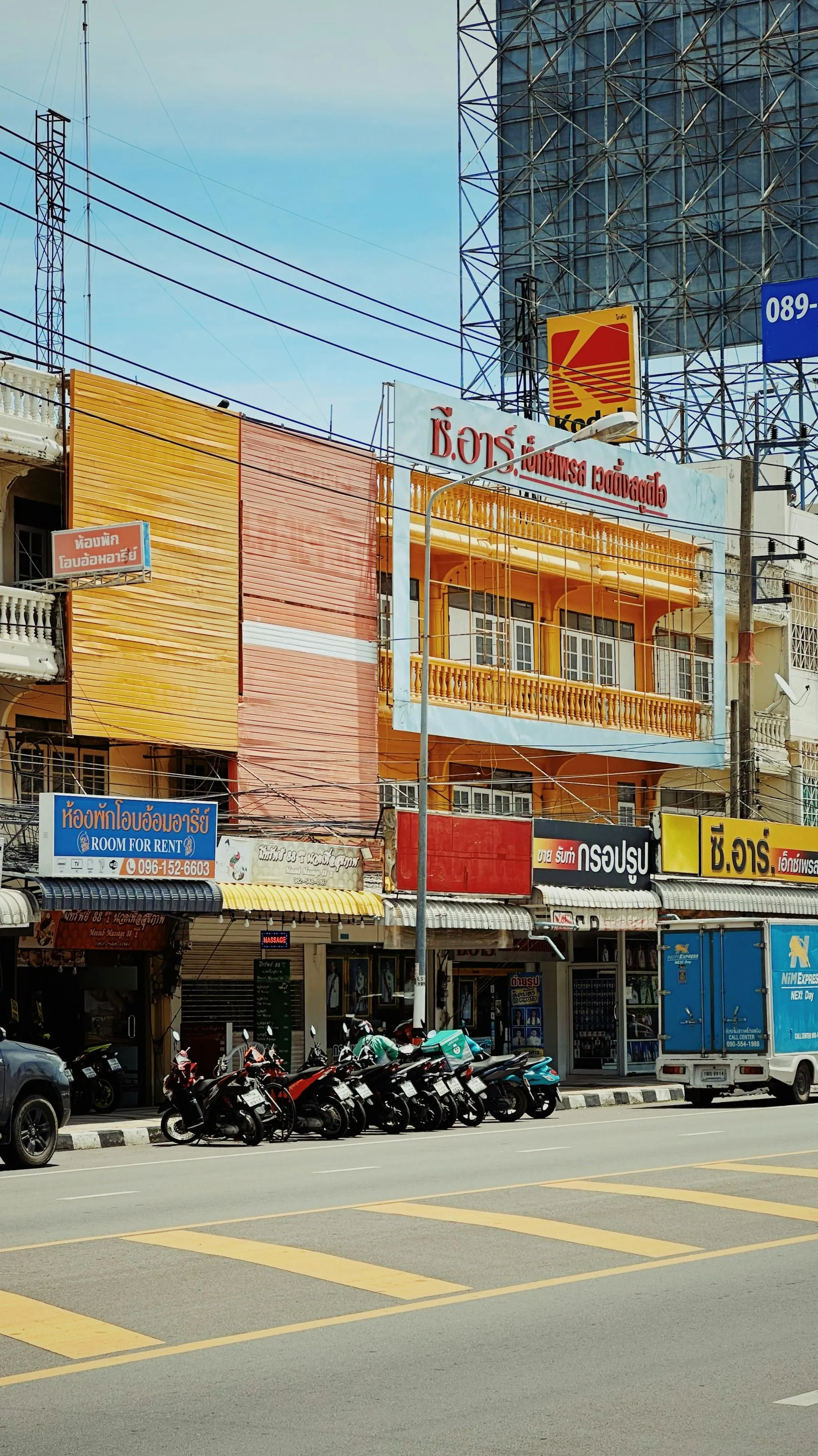
The run down from Bangkok
This is the part of a Hua Hin trip that needs planning. The direct route leaves Bangkok on Highway 35, the Rama II road, which has been a long-running construction site — elevated works, lane closures and queues that add hours at the wrong time of day. The alternative goes inland via Nakhon Pathom and Ratchaburi on Highway 4: longer in distance, often shorter in time.
Weekend timing matters enormously. Hua Hin is Bangkok's weekend coast, and Friday evening southbound and Sunday evening northbound are the worst slots. Driving Bangkok to Hua Hin covers both routes and timings, and Highway 4, Phetkasem explains the road through the middle of town.
Check the toll and expressway arrangements at the desk. Getting out of Bangkok southbound involves expressway sections, and how your hire car handles tolls varies by firm. Ask whether an Easy Pass or M-Flow tag is fitted and how charges are settled, and keep small notes for the cash lanes. See toll roads in Thailand.
Driving and parking in the town
Hua Hin's centre is compact. Phetkasem Road runs north–south through it, the railway line runs parallel just inland, and the numbered sois run east to the sea. Most of what visitors want — the night market, the station, the beach, the older hotels — sits within a few blocks of the Phetkasem and Dechanuchit junction.
Parking is easy compared with anywhere else on this list, with two exceptions. The first is the area around the night market in the evening: the market runs along Dechanuchit Road from about 18:30, the small car parks nearby fill quickly, and the streets close to it are congested until late. Arrive before the market opens or leave the car further out and walk. The second is the beachfront sois on a Thai public holiday weekend, when Bangkok arrives en masse.
Elsewhere, kerbside parking is generally available, but kerb colours mean something and enforcement exists — see parking rules in Thailand. Malls and larger hotels have proper car parks, and driving in Hua Hin covers the town layout.
Where the car actually earns its keep
| Destination | Rough distance | Why drive |
|---|---|---|
| Khao Takiab | About 6 km south | Temple hill at the end of the beach; easy half-hour |
| Cha-am | About 25 km north | Quieter beach, easier parking, good seafood |
| Pranburi and the mangroves | About 35 km south | Awkward by public transport, simple by car |
| Sam Roi Yot National Park | Roughly 60–70 km south | Phraya Nakhon cave; the park is spread out and needs a vehicle |
| Pala-U waterfall | About 60 km west | Narrow winding road into the hills; the drive is the point |
| Kaeng Krachan National Park | Roughly 60–70 km north-west | Thailand's largest national park; internal roads need care |
The monkeys at Khao Takiab are a vehicle hazard, not a photo opportunity. The macaque troop on the temple hill climbs on parked cars, and visitors regularly report scratched paintwork, torn wiper blades and mirrors pulled off. A rental firm will happily bill you for all three. Park away from the base of the hill, close the windows, and leave nothing visible inside. Damage of this kind is exactly the sort of thing a rental excess does not usefully cover.
Car or scooter?
Both work here. Hua Hin is flat and its traffic is mild, so it is a more forgiving place to ride a scooter than Phuket or Samui — but the good days out are 60 kilometres away in strong sun, and air conditioning genuinely improves the holiday. Families almost always want the car. See our scooter or car tool and renting a motorbike in Thailand.
Whichever you take, roadside checks happen on Phetkasem and on the approaches to town like everywhere else, so be clear about which licence you can use in Thailand before you drive.
Seasons and prices
Hua Hin's peak is the cool season from November to February, plus every long Thai holiday weekend all year round. Rates for a small automatic typically sit around 900–1,500 baht a day (roughly £20–£35 / US$27–US$45) through most of the year, climbing over New Year and Songkran. Weekly rates are notably better value and monthly car rental better again — Hua Hin has a large long-stay foreign community and the long-term market reflects it.
The wet months, roughly May to October, are the cheapest and are not a bad time to be here — this coast gets far less rain than the Andaman side. Watch for standing water on the inland roads after heavy rain; see the rainy season and flooded roads.
Frequently asked questions
Should I rent in Bangkok and drive down, or rent in Hua Hin?
If you want the car for the whole trip, collect at a Bangkok airport and drive down — you avoid a transfer fee and get more choice of vehicle. If you only want a car for a couple of days of excursions, rent locally and have it delivered to your hotel.
How long does the drive from Bangkok take?
About three hours in good conditions, and considerably longer on a Friday evening or a holiday weekend, largely because of the Rama II road. The inland route via Nakhon Pathom is often quicker despite being longer. See driving Bangkok to Hua Hin.
Is parking difficult in Hua Hin?
Generally no, with two exceptions: the streets around the night market after 18:30, and the beachfront on Thai holiday weekends. Malls and larger hotels have car parks.
Is Hua Hin a good place to drive for the first time in Thailand?
It is one of the best. Speeds are moderate, the grid is legible, and there is nothing here as demanding as Bangkok's expressway ramps or Phuket's hills. Read driving on the left in Thailand first if you normally drive on the right.
Can I take the hire car into the national parks?
Yes for Sam Roi Yot and the main roads in Kaeng Krachan, but some park interior tracks are rough and a few sections are restricted to high-clearance vehicles. Damage from unsealed roads is a common exclusion — see what rental insurance in Thailand does not cover.
Do I need a 4x4 or a pickup?
Almost never. A small automatic handles everything most visitors do here. A pickup only makes sense if you are going deep into Kaeng Krachan or carrying a lot of gear.