An airport is the easiest place in Thailand to collect a hire car and, for most trips, the only one worth considering. The desks sit together on the arrivals level, the fleets are the biggest in the country, the opening hours are the longest, and you go straight out onto a main road instead of threading a city with your luggage. Airports of Thailand lists the car rental counters at Suvarnabhumi, Don Mueang, Phuket and Chiang Mai on the arrivals floor of the terminal, and its own app carries advance bookings for the brands that operate there.
The trade-off is money and a small amount of walking. Airport rentals usually carry a premises surcharge, and several operators — including some of the cheapest — do not keep a car park at the terminal at all, so collection means a shuttle to an off-site lot. Neither is a problem if you know about it before you land.
- Where the desks areThe arrivals floor at Suvarnabhumi, Don Mueang, Phuket and Chiang Mai
- SurchargeAlmost always applied; check whether it is in the quoted rate
- Off-site lotsCommon with cheaper operators — allow 20–40 minutes
- Out of hoursNot universal. Confirm the desk is staffed for your flight
Where the desks actually are
| Airport | Where the counters sit | Notes |
|---|---|---|
| Suvarnabhumi (BKK) | Arrivals floor, counters grouped together and signposted from baggage reclaim | The widest choice of operators in Thailand; several desks keep very long hours |
| Don Mueang (DMK) | Passenger terminal, floor 1 — operators are spread between Building 1 and Building 2 at specific gates | Check which building your operator is in before you walk; the two are a long way apart |
| Phuket (HKT) | Arrivals floor; some operators sit in the domestic terminal rather than international | The two terminals are adjacent but not the same building |
| Chiang Mai (CNX) | Arrivals hall, ground floor | Compact terminal; the desks are easy to find |
| Krabi, Surat Thani, Udon Thani, Hat Yai and other regional airports | A handful of desks in the arrivals hall | Thinner fleets and shorter hours; book ahead |
Airports of Thailand publishes the current counter locations and operating companies for each of its airports, and it is worth checking the page for your airport shortly before you fly, because desks move and operators change. If the company you booked with is not in that list, you are probably dealing with an off-site operator — see below.
Photograph the desk and the operator's name when you collect. At a busy airport with a dozen counters in a row, a photograph of the signage, with your paperwork visible, removes any later confusion about which company you actually rented from. This matters most with broker bookings, where the name on the contract may not be the name you paid.
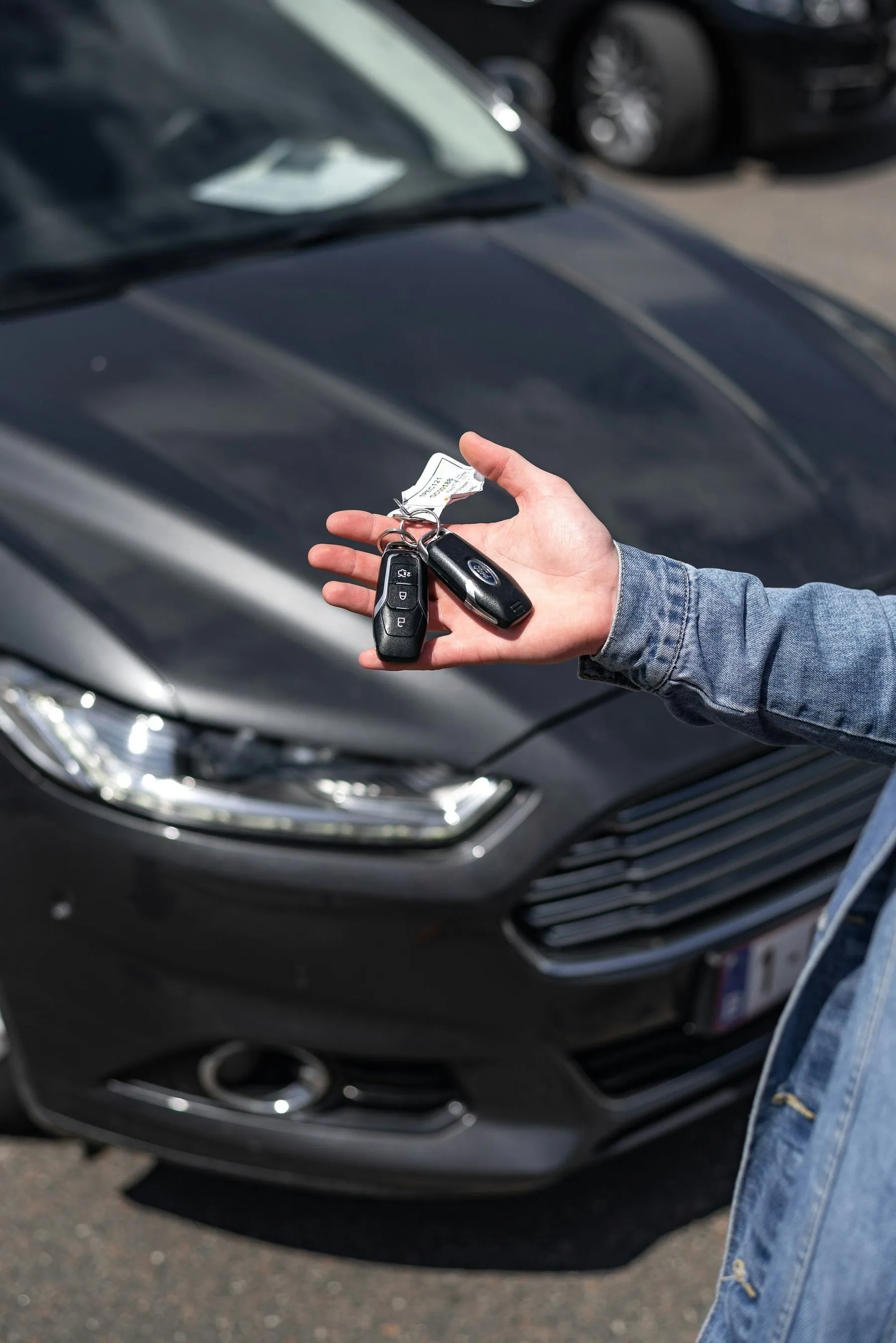
The airport surcharge, and what it is
Airport rentals cost more than town-centre ones. Rental companies pay concession fees for a terminal counter and a bay in the car park, and that cost is passed on either as a percentage uplift on the daily rate or as a separate line described as an airport or premises fee. It is legitimate, it is normal worldwide, and it is not usually large enough to be worth avoiding.
What is worth doing is checking whether it is inside or outside the quoted price. Some booking flows show an all-in figure; others add it at the final screen or at the counter. Ask for the total including tax and surcharges, and compare that against a city branch rather than comparing base rates. On a hire of a week or more, the surcharge is small next to the taxi fare and the hour spent collecting in town.
Other line items that appear on airport bookings and are not the surcharge: a young-driver supplement (see age and licence rules), a one-way fee if you are dropping elsewhere (one-way car rental), and an out-of-hours collection fee. Get the breakdown, not the total.
Off-site lots and how they work
Not every operator with an airport booking has a car at the airport. The cheaper end of the market — and some large Thai chains — hold their fleet in a compound a few minutes from the terminal, meet you at a desk or a designated pillar in arrivals, and shuttle you out in a minibus.
The process is respectable, but it changes your timings and your handover. Add twenty to forty minutes to the collection, and expect the walk-round to happen in a yard rather than under terminal lighting. That last point matters: an off-site lot at night is a bad place to inspect a car, and exactly where unrecorded damage surfaces on a return inspection weeks later.
Never accept a car in the dark without filming it. If you collect at an off-site lot after sunset, use the phone torch, film every panel slowly, and photograph the roof, the wheels and the bumper corners individually. If you genuinely cannot see the car properly, say so, write "collected in darkness, unable to verify bodywork" on the damage sheet before signing, and photograph that too. See the handover inspection.
Collecting on a late or delayed flight
Airport desks in Thailand are not all 24-hour, and the regional airports certainly are not. A delayed inbound flight arriving at 02:00 can mean an unstaffed counter and a car you cannot collect until morning.
Three things reduce the risk. Give the company your flight number at booking — most track arrivals and will hold the car, but only if they know which flight you are on. Check the branch's hours for your actual arrival day rather than the general opening times. And if you land after midnight, consider collecting the next morning: a night in an airport hotel is cheaper than a wasted rental day, and driving unfamiliar Thai roads off a red-eye is a poor idea. Fatigue on long drives and rides in Thailand is not abstract here.
Out-of-hours collection is offered by some operators for a fee. It usually means a member of staff comes in for you rather than a key safe, so confirm it is a real service at your branch and not just a tick-box.
Driving out of the airport
Suvarnabhumi and Don Mueang both put you onto motorway and expressway networks within a few minutes, which is the main reason to collect there. Keep small notes to hand for toll booths, and be careful about barrier-free M-Flow lanes on the motorways, which do not take cash and bill by camera — a charge picked up in a hire car reaches you later with a handling fee. Easy Pass and M-Flow explains the difference, and toll roads in Thailand covers what they cost.
Set your navigation before you move. The car's built-in unit may speak only Thai, and airport exit systems are multi-level with quick decision points. A phone on a good navigation app is better. If Bangkok is your first Thai driving, read your first day driving in Bangkok before you turn the key.
Returning at the airport
Allow more time than feels necessary. Airport returns involve finding the rental return level of a large car park, a queue at the desk in high season, and a fuel stop before you get there if your policy is full-to-full — and forecourts close to airports are not always where the map thinks they are. Two hours before check-in for an international flight is comfortable; an hour is not.
Return in daylight and with a member of staff present if you possibly can. If the drop is out of hours, film the car in the bay with the terminal recognisable in shot, photograph the odometer and fuel gauge, and photograph the key going into the box. Avis Thailand publishes that a return outside station business hours attracts an additional full day's rental, which is worth knowing before you plan a dawn drop-off. The whole procedure is in returning a hire car in Thailand without a dispute.
Frequently asked questions
Where are the car rental desks at Suvarnabhumi Airport?
On the arrivals floor, grouped together and signposted from baggage reclaim. Airports of Thailand publishes the current counter list for each airport, and it is worth a look shortly before you fly, because operators and locations change.
Is it cheaper to rent a car away from the airport in Thailand?
On the base rate, usually — airport bookings carry a premises surcharge. Once you add the taxi into town and the time, the saving is often gone, and city branches keep shop hours with smaller fleets. For a hire of several days, the airport normally wins.
Do Thai airport rental desks open 24 hours?
Some at Suvarnabhumi do; many elsewhere do not, and regional airports certainly do not. Give the company your flight number at booking so a delay does not cost you the car, and check the branch hours for your actual arrival day.
What if my rental company has no desk in the terminal?
Then it is an off-site operator: you will be met in arrivals and shuttled to a compound nearby. This is normal and usually fine, but allow twenty to forty minutes extra and be rigorous about the walk-round, especially at night.
Can I collect at one airport and return at another?
Often yes, for a fee that varies a great deal by route and company. Bangkok to Phuket or Chiang Mai is a common one-way; obscure combinations get refused. See one-way car rental in Thailand.
How early should I get to the airport when returning a hire car?
Add at least half an hour to whatever you would normally allow, plus a fuel stop if your policy is full-to-full. Airport return car parks are large, the desks queue in high season, and a missed flight costs more than every other item in this article combined.
Which airport is best for starting a Thai road trip?
Suvarnabhumi for the widest choice and immediate motorway access; Chiang Mai for the north; Phuket for the Andaman coast and the run up to Khao Lak; Surat Thani for the Gulf, though the islands raise a ferry question — car hire in Surat Thani covers it.