A day's driving in Thailand takes more out of you than the same distance at home. Heat, glare, humidity, long straight roads with nothing to look at, traffic that demands constant low-level vigilance, and — on a bike — the wind that quietly dehydrates you all bring fatigue on earlier than the odometer suggests. Plan shorter days than you would in Europe, Australia or North America, and build the stops in before you set off rather than taking them when you feel you need them.
A useful working figure for a full day is around 400 km in a car and 250–300 km on a motorbike, and considerably less on mountain roads. Those are not limits, they are the distances at which most people are still driving well at the end.
- Comfortable day, carAbout 400 km
- Comfortable day, motorbikeAbout 250–300 km
- Break intervalEvery 2 hours, or every hour on a bike
- Recorded crash peaks, Songkran 202609:01–12:00 and 15:01–18:00
What makes Thai driving tiring
It is worth naming the specific factors, because several of them are invisible until you know to look for them.
- Heat and dehydration. The single biggest factor, and on a bike the wind hides it completely. Fluid loss degrades concentration well before it produces any symptom you would notice — sunburn and dehydration on a motorbike covers it in detail.
- Glare. Tropical sun on a pale concrete road surface is genuinely punishing, and squinting for three hours is fatiguing on its own.
- Constant low-level vigilance. Motorbikes filtering, motorbikes riding against the flow on the shoulder, songthaews stopping without warning, pick-ups pulling out. None of it is dramatic; all of it consumes attention continuously.
- Long, featureless straights. The trunk roads through the central plains and Isaan run dead straight for tens of kilometres. Monotony is a recognised fatigue driver, and the campaign statistics record 87.80% of Songkran 2026 crashes on straight roads rather than bends.
- Heavy meals in the middle of the day. A big lunch at the hottest hour, then straight back into the driving seat, is a reliable way to lose the next hour.
- Air conditioning. In a car, hours of dry cold air dehydrates you almost as effectively as the heat outside.
The dangerous hours here are not the small hours. Recorded crash peaks during the Songkran 2026 campaign were 09:01–12:00 and 15:01–18:00 — mid-morning and late afternoon, when the roads are busiest and the heat is at its worst. That mid-afternoon slot is also when the post-lunch dip lands. It is a good argument for making your long stop at two o'clock rather than pushing through.
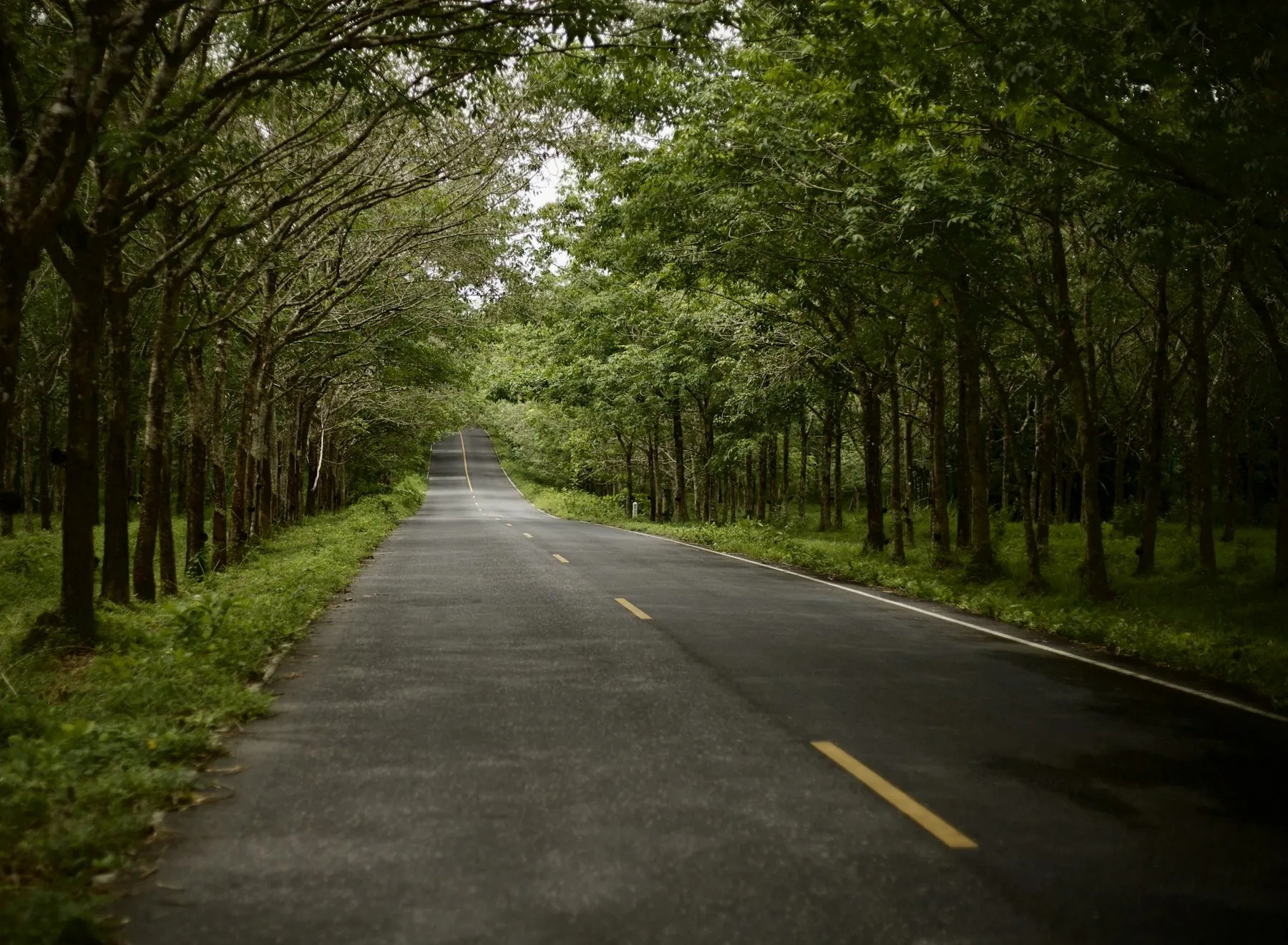
How far to plan
| Road type | Car, comfortable day | Motorbike, comfortable day |
|---|---|---|
| Motorway and main trunk highway | 400–500 km | 300 km |
| Ordinary two-lane highway with towns | 300–400 km | 250 km |
| Mountain roads and hairpins | 200 km | 150 km |
| Anything at night | Shorten sharply, or do not | Avoid |
Average speeds are what people get wrong. Between towns you might average 70–80 km/h in a car on a good highway, but the average collapses the moment the road runs through a village or into a U-turn-only stretch. On a small scooter, an honest planning figure is 50–60 km/h including stops — the Thai driving time calculator does the arithmetic for a specific route.
Two routes are worth calling out because they are the ones visitors habitually underestimate. Bangkok to Chiang Mai is a long day even in a car and a two-day ride on a bike. And Chiang Mai to Pai is only about 130 km, which sounds like a morning — but it is 762 bends of concentration, and the distance tells you nothing about how long it takes or how tired you will be.
Breaks: how often and what to do with them
Take a break every two hours in a car and every hour on a bike, on a schedule rather than when you notice you need one — fatigue impairs the judgement you would use to assess your own fatigue, which is the whole problem. A break that works is fifteen minutes minimum, out of the vehicle, in the shade, with a drink. Thirty seconds at a pump with the engine running is not one.
Thai highway petrol stations are good for this — the larger ones have shade, a shop, coffee, toilets and often food stalls. Service areas and rest stops on Thai highways covers what to expect and where they thin out.
The twenty-minute nap works and is worth the time. If you are genuinely struggling, pull off somewhere safe, set an alarm and sleep for twenty minutes. It is far more effective than coffee alone, and the combination — coffee, then the nap while it takes effect — is the standard trick for a reason. Do not do this on the hard shoulder of a highway; use a petrol station or a proper rest area.
Recognising it in yourself
The signs are the same everywhere and drivers routinely dismiss all of them.
- Missing a turning you were looking for, or realising you do not remember the last few kilometres
- Drifting within the lane, or a wheel touching the shoulder
- Heavy eyelids, repeated yawning, rubbing your eyes
- Fidgeting, adjusting the seat, opening the window, turning the music up — your brain looking for stimulation
- Braking later than you meant to, or gear changes and throttle inputs getting clumsy on a bike
- Irritability, or arguing with a passenger about the route
Microsleep is the failure mode, and you do not experience it as falling asleep. A two-second lapse at 90 km/h covers 50 metres with nobody driving. The people it happens to almost never believe they were about to fall asleep, which is why "I'll be fine, it's only another hour" is the sentence to be suspicious of. Stop.
Riders: the extra factors
Fatigue on a motorbike behaves differently from fatigue in a car, in ways worth knowing.
You are physically working the whole time — holding a riding position, bracing against the wind, absorbing vibration — so you tire faster before heat and dehydration are even counted. Against that, you are far more engaged than a driver, so you are less likely to fall asleep and more likely to simply degrade: slower reactions, sloppier lines, later braking, no obvious moment when it went wrong.
The specific danger is the last hour of a long ride, when you are tired, the light is going and you are close enough to push on. That is the hour where a mountain road and riding at night stack on top of fatigue you already had. On a multi-day tour the fix is structural: plan to arrive by mid-afternoon every day, and treat that as the real constraint rather than the distance.
Planning a long day properly
- Leave early. A 06:30 or 07:00 start gives you three good hours before the heat, and it is the single most effective change you can make to a long day here.
- Take the hottest hours off. Long lunch, shade, a proper rest between roughly 12:00 and 15:00. You will ride better at four for it.
- Plan to arrive before dark. Not "hope to". Build the schedule backwards from the arrival time.
- Book somewhere in advance on a long transit day, so that the temptation to push on to a better town does not arise.
- Split the driving if you have two licensed drivers, and swap every two hours rather than when one of you is flagging.
- Eat lightly during the day and drink continuously. Big meal at the end, not the middle.
- Have a fallback. Thailand has cheap accommodation everywhere along the main routes. Stopping a hundred kilometres short of the plan costs a few hundred baht and solves the whole problem.
Fatigue rarely appears on any list of the reasons visitors crash, because it is not what gets written down afterwards — it shows up as "lost control" or "left the road". It belongs alongside the more obvious items in the biggest risk factors for visiting drivers, and it is the one that most reliably converts a good day into a bad one.
Frequently asked questions
How far can I drive in a day in Thailand?
About 400 km in a car on decent roads, and 250–300 km on a motorbike, is a day that leaves you still driving well at the end. On mountain roads, halve both. Distances mean less than the road type — 130 km of hairpins takes longer and costs more concentration than 300 km of highway.
Is it worse on a motorbike or in a car?
Different. On a bike you tire faster physically and dehydrate without noticing, but you are engaged enough that outright falling asleep is unlikely. In an air-conditioned car on a straight highway the risk is microsleep, which is the more dangerous of the two failure modes.
What time of day is worst?
Mid-afternoon, roughly between two and four, when the post-lunch dip lands on top of the day's heat. The Thai holiday campaign data records crash peaks at 09:01–12:00 and 15:01–18:00, which are also the busiest hours. If you are going to take one long stop, take it in the early afternoon.
Does coffee help?
For a while, and less than people hope. The version that actually works is coffee immediately followed by a twenty-minute nap, so that you wake as the caffeine takes effect. Coffee alone, on a driver who is already gone, buys perhaps half an hour.
Where can I safely stop for a rest in Thailand?
Petrol stations on the main highways are the best option — shade, shops, toilets, food, and safe to leave a vehicle. Larger ones on the trunk routes are effectively service areas. Avoid stopping on the hard shoulder, which is where motorbikes ride and where breakdowns get hit.
What if I have to drive at night?
Shorten the distance sharply, drop your speed, increase your following distance, and expect unlit vehicles, animals and drink-drivers. On a bike, the honest advice is to avoid it where you can — driving at night in Thailand sets out what actually changes after dark.