Northern Thailand has some of the best motorcycling roads in Asia, and they will catch out a rider who treats them like a flat coastal loop. The gradients are steeper than the photographs suggest, the hairpins tighter and more numerous, the surface carries gravel washed down from cut slopes, and a rental scooter with a continuously variable transmission gives you almost no engine braking on a long descent. Most mountain incidents involving visitors happen going down, not going up.
- The classicRoute 1095, Chiang Mai to Pai, 762 signed bends
- The main riskBrake fade and gravel, both on the way down
- The main mistakeRiding down in the wrong gear, or none
What Thai mountain roads are actually like
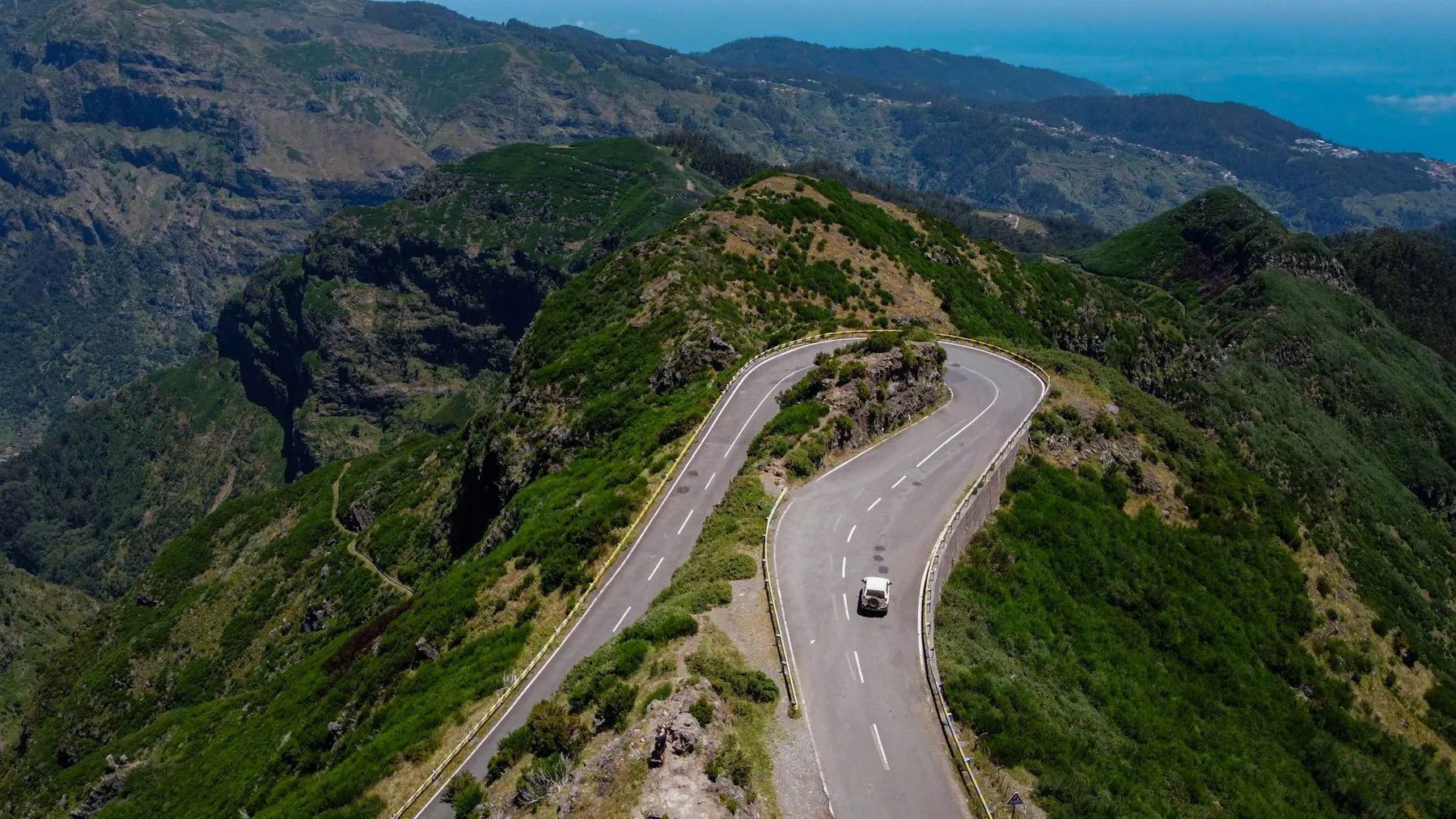
The northern roads are generally well surfaced asphalt, properly engineered, and signed with bend counts and gradient warnings. What makes them demanding is geometry: sustained climbs and descents of many kilometres, hairpins with a very small radius, blind crests, and long stretches with no barrier and a substantial drop on the outside. Traffic is light but mixed — loaded trucks at walking pace uphill, pickups making impatient overtakes, minibuses running to a schedule, and other visitors on rental bikes with a similar amount of experience to yours.
The best-known routes are Route 1095 from Chiang Mai to Pai with its signed 762 bends, the full Mae Hong Son loop, the climb to Doi Inthanon, and the roads around Doi Suthep and Samoeng. Outside the north, the hills on Koh Chang, Koh Phangan and Phuket are short but genuinely steep, and cause a disproportionate number of rental crashes.
Going up
- A small scooter with a pillion will struggle. A 110cc or 125cc automatic carrying two adults and luggage will slow to a crawl on a sustained climb. If you are two-up in the mountains, hire something bigger — choosing a rental scooter covers what the engine sizes deliver.
- Overheating is real. If the bike loses power or runs rough on a long climb, stop in the shade for ten minutes.
- Take a run at the steep bits. Losing momentum on a gradient in an automatic drops the transmission into its lowest ratio and you crawl.
- Blind crests hide oncoming vehicles cutting the corner. Stay left, and never sit on the centre line over a crest.
- Slow vehicles pull out without looking. A truck edging out to pass another on a climb has very little acceleration and very little rear visibility.
Going down: where it goes wrong
Brake fade
This is the mechanism behind most serious mountain incidents on rental bikes, and it is entirely preventable. Riding a long descent on the brakes puts continuous energy into them; they get hot; hot brakes fade — the lever travels further, the bite goes soft, and eventually there is very little braking left. The fix is to let the engine do the work instead.
The specific problem with automatic scooters. A twist-and-go scooter with a CVT gives you almost no engine braking when you close the throttle — the transmission simply freewheels the engine to idle. The brakes are therefore doing all of it, on a bike whose brakes are small. This is why so many rental crashes on Koh Chang, Koh Phangan and the Samui hills involve a bike that "would not stop". Go down slowly enough that you can brake in firm, short applications with gaps between them, rather than dragging the levers the whole way, and if the brakes start to feel soft, stop and let them cool.
Use the gears if you have them
On a semi-automatic step-through or a manual, select a low gear at the top and stay in it all the way down. The engine holds your speed and you use the brakes only to adjust. If you are having to brake constantly, you are in too high a gear. The same applies in a car — hold a low gear, or on an automatic use L, S or the manual paddles rather than sitting in D with your foot on the brake.
Brake before the bend, not in it
The classic error on a hairpin is arriving too fast, braking hard mid-corner, and either running wide into the oncoming lane or losing the front. Do all your braking upright and in a straight line, then coast or gently drive through the bend. It is very easy to get wrong when the bends arrive every few seconds and you are tired.
Hairpins: the technique
A Thai hairpin is often tighter than 180 degrees, frequently on a gradient, and sometimes with a completely blind entry because the cut slope rises vertically on the inside.
- Set up wide, turn in late. Approach a left-hand hairpin from the middle of your lane rather than hugging the inside; you get a longer sightline and a smoother arc. Never cross the centre line.
- Slow more than you think you need to. You can always add speed on the exit. You cannot remove it once you are leant over.
- Look through the bend to where you want to go. Not at the barrier, not at the drop, not at the gravel. The bike follows your eyes.
- Expect the apex to be dirty. Gravel and mud collect on the inside where water runs off, and on the outside where vehicles throw it.
- Assume something is coming, in your lane. Trucks cannot take a Thai hairpin without the full width of the road, so on a blind left-hander expect a lorry across the centre line.
The convex mirrors on posts at Thai hairpins genuinely work. They are mounted on the outside of the bend, angled back up the road you cannot see, and a glance shows whether anything is coming round. Learn to use them and you get a second of warning you would not otherwise have.
Gravel, mud and what is on the road
Mountain roads collect debris continuously. Water running off a cut slope carries soil and stone onto the carriageway, usually in a fan spreading from the inside of a bend; landslips leave rocks; farm vehicles bring mud out of field entrances. So you cannot assume the surface at the apex matches the surface on the approach: ride so that you have already seen the exit of the bend before you commit to it. The technique for a patch you cannot avoid is the same as in sand and gravel on Thailand's coastal roads — upright before you reach it, no braking, no throttle, no steering input, let it roll through. After rain, add mud and the possibility of a slip having come down since the last vehicle passed.
Fatigue, and why 762 bends is a lot
Concentration is the resource that runs out first. Every bend takes a decision, and several hundred bends take several hundred decisions in a couple of hours, in heat, on a bike with no wind protection. Riders who crash on Route 1095 very often do it in the last third, when the bends have stopped being fun and started being work. Stop often, and plan half the daily distance you would on flat roads.
In a car, and on the islands
Most of the same applies. Use a low gear on descents, do not sit on the brakes, give trucks room to cut hairpins, and stay left because oncoming vehicles will use your lane on tight bends. Distances in the north are longer than the map suggests and fuel stations further apart — driving in northern Thailand covers the route planning.
Koh Chang's spine road, the hills between Thong Sala and Haad Rin on Koh Phangan, and the climbs around Patong produce a steady stream of injured visitors: short but very steep, often with a tight bend at the bottom, ridden on cheap scooters by people on their second day of riding. Renting a motorbike on Koh Chang deals with the local specifics.
If you have never ridden a motorbike before, a mountain road is not where to learn. Get comfortable on flat, quiet roads for a few days first. A first-time rider, a steep descent and a scooter with tired brakes is the most reliable way to end a Thai holiday in a hospital.
Frequently asked questions
Can a 125cc scooter do the Mae Hong Son loop?
Solo, with light luggage, yes — plenty of people do it. Two-up with bags, it will be slow on the climbs and hard on the brakes coming down. A 150cc automatic or a semi-automatic with gears is a much better tool for the job.
What do I do if my brakes fade?
Stop as soon as you safely can and let them cool — do not pour water on them. Then change technique for the rest of the descent: lower gear if you have one, firm intermittent braking rather than dragging. If the lever comes all the way to the bar, the bike needs a mechanic.
Should I ride mountain roads at night?
No, if you have any choice. No lighting, no barrier in places, blind bends, animals, debris and a long wait for help. Be off the mountain before dark — see driving at night in Thailand.
What about cycling these roads?
Superb cycling, and a serious undertaking: long climbs in tropical heat, and descents where the same brake-fade physics applies. Cycling northern Thailand covers the gradients and where to break the days.