A 110–125cc automatic scooter in Thailand typically costs somewhere between 150 and 300 baht a day on the mainland — roughly £3.50 to £7, US$4.50 to US$9, or €4 to €8 — and 200 to 350 baht a day on the busy islands. Weekly rates cut that considerably, and a monthly deal usually costs a fraction of thirty daily rates. Those are typical seasonal ranges, not a tariff.
Scooter hire is cheap enough that price should almost never decide where you rent. The money in a scooter rental is not in the daily rate at all — it is in the deposit, the damage terms and what happens if the machine comes back marked. A quote that is well below everyone else's is usually telling you something about the second half of the transaction rather than the first.
- 110–125cc automatic, mainlandAround 150–300 baht a day
- Same machine, popular islandsAround 200–350 baht a day
- By the monthCommonly around 2,500–4,000 baht
- Where the real money sitsThe deposit and the damage terms, not the rate
What each class of machine costs
Almost every rental scooter in Thailand is one of a handful of models — the Honda Click, Scoopy and PCX, the Yamaha Mio, Fino, Aerox and NMAX, and the semi-automatic Honda Wave. What you pay tracks engine size and how new the machine is.
| Machine | Typical day rate | Typical week | Typical month |
|---|---|---|---|
| 110–125cc automatic (Click, Scoopy, Mio) | 150–300 baht | 900–1,800 baht | 2,500–4,000 baht |
| 150–160cc automatic (PCX, Aerox, NMAX) | 250–450 baht | 1,500–2,500 baht | 3,500–6,000 baht |
| Semi-automatic Wave-type | 150–250 baht | 900–1,500 baht | 2,500–3,500 baht |
| 300cc and above | 800–2,000 baht | Negotiated | Negotiated |
The larger machines are a different rental market with different requirements, including real licence checks and much bigger deposits — see renting a big bike in Thailand. For everything else, the choice between a 110 and a 150 is about your route and your load rather than your budget: 110cc or 150cc: choosing a rental scooter.
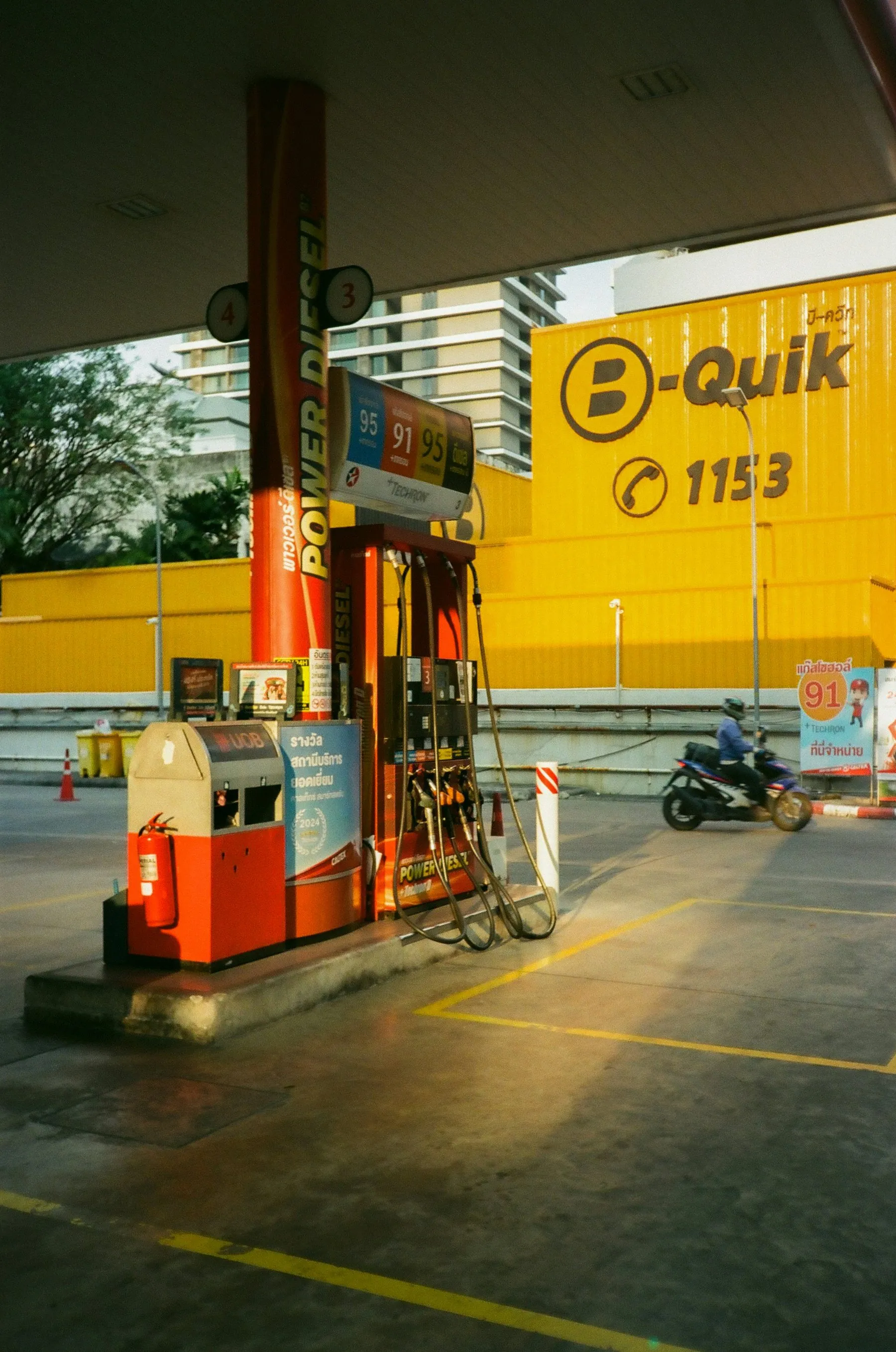
Why island prices run higher
Three things push island rates up. Every machine had to arrive on a ferry and every part for it still does, so maintenance costs more. Demand is concentrated into a small area with no alternative transport, which is exactly the position a scooter shop wants to be in. And island roads are harder on machines — salt air, sand, steep climbs and short, hard journeys — so bikes wear out faster and are replaced sooner.
The same forces push the damage terms in an unhelpful direction. Koh Tao, Koh Phangan and Samui all have long-standing reputations for deposit and damage disputes, which is a pattern worth knowing before you hand over money rather than after: renting a scooter on Koh Tao and renting a motorbike on Koh Phangan cover the local picture.
Seasonal movement
Scooter rates move less dramatically than car rates, because the fleet is large and cheap to hold. Expect the top of each range over Christmas, New Year and Songkran, and the bottom of it in the wettest months. On the Andaman side the wet months are roughly May to October; on the Gulf islands they run later, roughly October to December, so the two coasts do not price in step.
Where season really shows is in bargaining power. In April on Phuket you take what is available. In September you can walk between three shops in the same street and ask each of them what they will do on a two-week hire.
What is actually included
- The machine and one helmet. A second helmet for a pillion is usually free but frequently has to be asked for. Both riders are legally required to wear one — see Thailand's helmet law — and the shop helmet is typically a thin open-face shell of unknown standard. Rental helmets in Thailand covers how to judge it.
- Not fuel. Bikes are almost always handed over close to empty and expected back the same way. Budget a little for petrol; a 110cc scooter costs very little to fill.
- Not damage cover. This is the important one. A typical Thai scooter rental has no waiver, no excess and no product to sell you — the agreement simply makes you responsible for damage and for the machine's full replacement value if it is stolen or written off.
- Compulsory third-party cover on the vehicle, in principle. Por Ror Bor pays for injury to people and nothing at all for property, including the bike you are sitting on. Compulsory vs voluntary insurance in Thailand explains the shape of it.
Your own cover is the thing that matters, and it turns on your licence. Thailand declared when it ratified the 1968 Vienna Convention that it treats mopeds as motorcycles, so there is no lighter "it is only a scooter" tier — a car-only entitlement does not cover a 110cc automatic. Travel policies apply their own licensing test regardless of what the shop asked for. Read what voids your motorbike cover in Thailand before you decide the 200 baht is the expensive part.
When a cheap quote is a warning
A shop 50 baht a day below the street is competing normally. A shop half the going rate is usually recovering the difference somewhere else, and the recurring patterns are well documented enough to name.
- The deposit becomes the product. A low rate paired with an unusually large cash deposit, or with a demand for your passport, shifts the risk onto you. Never hand over a passport — passport as deposit for motorbike hire sets out why, and what to offer instead.
- Damage is priced afterwards. If nobody will tell you what a scratched panel or a replacement mirror costs before you ride away, the number is being kept flexible on purpose. Ask, and ask for it in writing.
- No written agreement at all. A verbal hire with no contract and no condition record is the version of this transaction with the least protection for the renter.
- An old, hard-used machine at a new machine's price. Bald tyres and spongy brakes are a safety problem first and a damage-argument problem second, because worn parts fail and failures get charged to whoever was riding.
Rental scams in Thailand and how to spot them goes through the recurring mechanisms in detail. The single best protection costs nothing: a slow, narrated video of the machine before you ride away, described in the motorbike rental inspection video.
The deposit is part of the price
Thai scooter shops usually secure the bike with cash — commonly a few thousand baht — occasionally with a card, and disgracefully often by asking for a passport. A cash deposit is real money that has left you, and getting it back depends on the shop handing it over. That makes the deposit terms a bigger part of the true price than the rate, and it is worth choosing a shop on that basis. Rental deposits in Thailand explained compares the three forms.
Ask four questions and write the answers on the agreement. What is the daily, weekly and monthly rate? What is the deposit, in what form, and when do I get it back? What do you charge for a scratched panel, a broken mirror and a bent lever? And what happens if the bike is stolen? A shop that answers all four in front of you is the shop to rent from. Hotel desks or street shops explains why it can be hard to tell who you are actually renting from.
Frequently asked questions
How much should I pay to rent a scooter in Thailand?
Around 150 to 300 baht a day for a 110–125cc automatic on the mainland, and 200 to 350 baht on the popular islands. A 150–160cc machine costs more. All of these move with the season and are highest over Christmas, New Year and Songkran.
Is renting by the month much cheaper?
Yes, substantially — a month commonly costs the equivalent of ten to fifteen days at the daily rate, often in the region of 2,500 to 4,000 baht for a small automatic. Monthly motorbike rental in Thailand covers what a long-stay agreement should include.
Does the price include insurance?
Almost never in any useful sense. The machine should carry compulsory Por Ror Bor cover, which pays for injury to people and nothing for property. Damage to the bike is normally yours in full, with no cap. Whether your own travel policy responds depends on your licence and your policy's motorcycle clause.
Should I pay for the whole hire up front?
Not usually. Paying daily or weekly keeps a shop interested in the relationship and keeps your exposure small if the machine turns out to be poor. Paying a month in advance in cash, with a deposit on top, concentrates a lot of your money in one place.
Do I need to haggle?
Politely, and mostly on longer hires. A week or a month is where a shop has room to move; a single day rarely is. Asking what the weekly rate is will often get you a better price than asking for a discount on the daily one.
Why is petrol not included?
Because it is a small amount of money and shops prefer not to administer it. Bikes are handed over nearly empty and expected back the same way. Fill it yourself at a proper station rather than a roadside bottle where you can — fuel in Thailand covers which grade goes in the tank.
Is the rate different if I have no licence?
No, and that is precisely the problem: shops price the machine, not your entitlement to ride it. The consequences arrive from the police and your insurer instead. See renting a motorbike without a licence in Thailand and the broader picture in renting a motorbike in Thailand.