Koh Tao is about 21 square kilometres of steep granite hills with a fringe of beaches, and it has a rental reputation that precedes it. Search for scooter hire on this island and you will find years of complaints about disputed scratches, inflated repair bills and passports held until someone pays. That does not mean you cannot rent here — plenty of people do, and there are shops that behave properly, including operators who advertise explicitly that they do not take passports. It means you rent on your terms, or you do not rent at all.
The general rules on deposits, contracts and damage claims are covered in renting a motorbike in Thailand. This page covers what makes Koh Tao different: the terrain, the fact that there is no practical way to bring your own vehicle, and how the island's dispute pattern actually works.
- Typical daily rateRoughly 200–350 baht for a 125cc automatic; higher in peak weeks
- TerrainVery steep. Concrete ramps, loose dirt and sharp descents
- Best vehicle125cc minimum; for the rough tracks, not a scooter at all
- Getting therePassenger catamarans to Mae Haad. No drive-on vehicle service
The island is smaller and steeper than you expect
Everything arrives at Mae Haad pier, and from there the island splits three ways: north along the flat road to Sairee, south over the ridge to Chalok Baan Kao, and east over the spine to Tanote Bay and the viewpoints. The Sairee run is easy. The other two are not.
Koh Tao's access roads are short, steep concrete ramps, sometimes grooved for grip and sometimes not, and several are steep enough that a rented automatic will not climb them with a passenger aboard. The tracks east to Tanote Bay and Hin Wong, and the routes up to the viewpoints, degrade into loose dirt and washed-out sections after rain. Several are excluded by the rental agreement in any case.
The steep descents are what hurt people here. Going up a Koh Tao ramp badly means stalling and rolling back. Going down one badly means locking the front wheel on loose grit with a drop on one side. If you find yourself at the top of something that looked fine on the way up and does not look fine now, park the bike and walk down to look at it before you ride it. Nobody will think less of you.
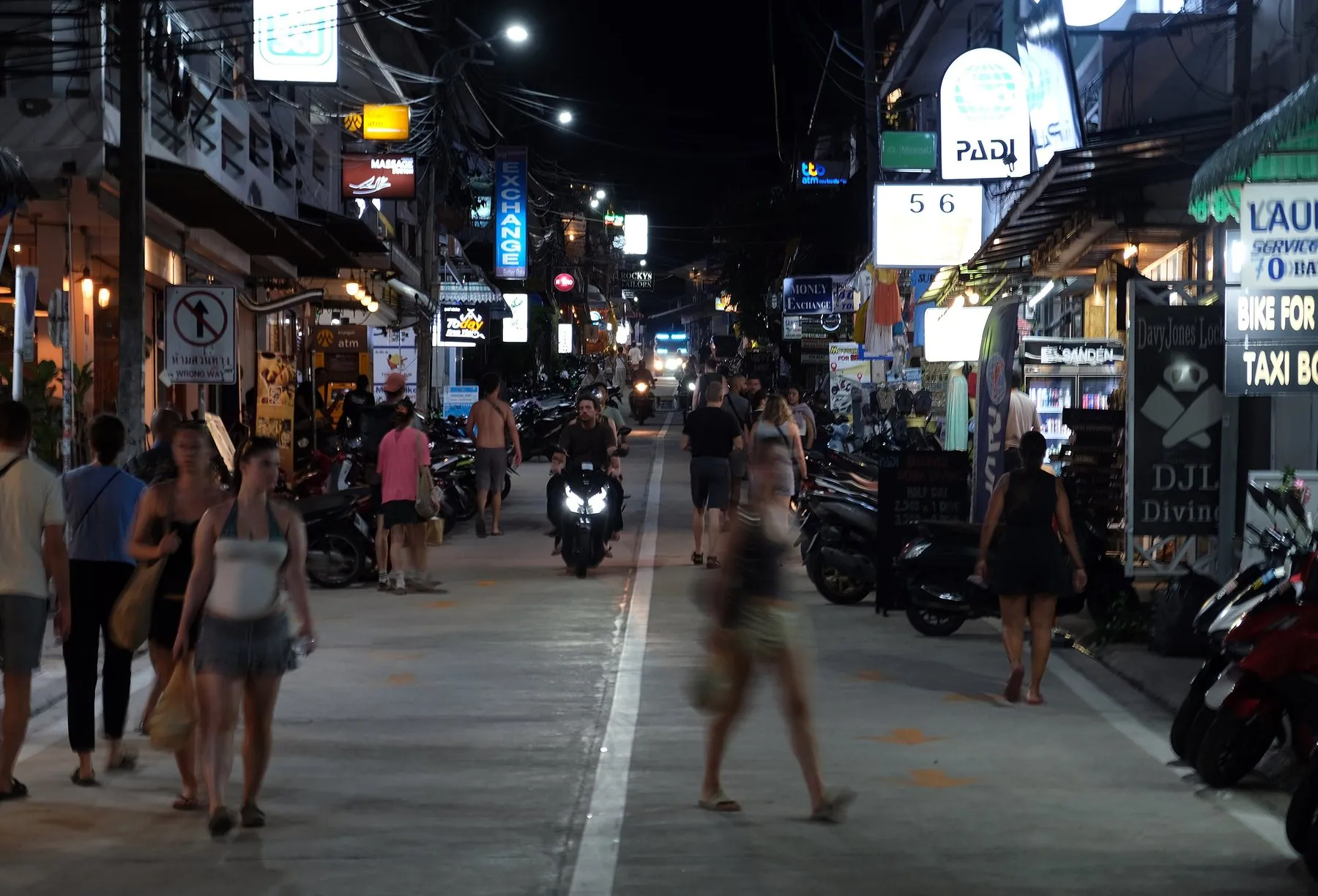
Because the island is small, many visitors decide they do not need a bike at all. Sairee and Mae Haad are walkable, taxis run everywhere, and the dive schools run their own transport — a perfectly sensible answer that removes the deposit problem in one move.
You rent on the island; you do not bring a bike
The ferries serving Koh Tao — the catamarans from Chumphon, Surat Thani, Samui and Phangan — are passenger services. There is no roll-on vehicle ferry of the kind Samui, Phangan and Koh Chang have, and the island has very few cars for exactly that reason. If you want wheels here, you rent them on the island.
That also means your journey plan matters. The crossings are exposed and are cancelled in bad weather, most often from October to December. Build a buffer day into any plan involving a flight after Koh Tao; see taking a vehicle on a Thai island ferry.
Deposits: the one decision that matters
The Koh Tao dispute pattern, as described repeatedly by travellers, runs like this. The shop holds the original passport as security. On return it points at marks on the bodywork and quotes a repair figure far above what the work would cost. The renter has a boat to catch and no passport, and pays.
Every part of that depends on the passport. Take it away and the dispute becomes an ordinary commercial argument you can walk away from. Reputable Koh Tao shops accept a cash deposit — a few thousand baht is normal — or a photocopy, and several advertise a no-passport policy as a selling point. Ask first, before anything else; if they must hold the original, go to the next shop. See passport as deposit and rental deposits explained.
Film the bike, out loud, in daylight. A slow walk-round on video with you naming every existing scratch is the thing that collapses a false damage claim. Get the shop's own frontage in shot so the location and time are obvious. The motorbike rental inspection video explains the order to film in; it takes three minutes and it is the cheapest insurance on this island.
If a claim does land, do not settle it standing at the counter with a ferry leaving. The rental damage claim playbook sets out what to ask for, and disputing a rental charge in Thailand covers escalation, including the tourist police. Rental scams in Thailand lists the warning signs.
What to rent, if you rent
A 125cc automatic is the minimum that works on the hills; the smaller step-throughs are a poor choice here with a passenger, and semi-automatics are better on the descents. Check the brakes and the tyres before you accept anything — Koh Tao's terrain punishes both and the fleets are worked hard.
Quad bikes and small side-by-sides are also rented here and are popular with visitors who do not want to ride a scooter. They are more stable but not immune to the terrain, and the damage-claim dynamics are identical with a larger bill attached. Same rules: cash deposit, video, no passport. The shop helmet is usually a thin open-face item, and on an island of steep descents and loose surfaces this is one of the better places to buy your own — see rental helmets in Thailand and choosing a helmet that actually protects you.
Injuries, and why they matter more here
Koh Tao is a diving island, and there are two consequences. Medical facilities are limited — there are clinics and a hyperbaric chamber, but anything serious goes to the mainland by boat or helicopter. And a road-rash injury and a diving holiday do not mix: an open graze means no diving for the rest of the trip, and in this climate those wounds infect readily. Road rash and exhaust burns and riding a scooter in flip-flops explain how most of these injuries happen, which is at very low speed. Check your cover first: does travel insurance cover driving in Thailand? and medical evacuation insurance.
Seasons and price
Koh Tao is busy from December to April and again in July and August, and quietest in the wet months from October to December when the sea gets rough and ferries become unreliable. Rates for a 125 typically sit around 200–250 baht a day (roughly £4.50–£6 / US$6–US$8) in quiet weeks and 300–350 baht at the peak; ask for a weekly rate, since most visitors here stay longer than they planned. See scooter rental prices in Thailand.
Frequently asked questions
Do I need a scooter on Koh Tao?
Often not. Mae Haad and Sairee are walkable, taxis cover the rest, and dive schools run transport. Renting is worth it for the eastern bays and viewpoints — which are also the roads that need the most care.
Is the passport deposit really the problem?
It is the mechanism that makes a disputed claim work: a shop holding your passport controls whether you leave the island. Offer cash and a photocopy instead.
Can I bring a motorbike to Koh Tao on the ferry?
Not in any practical way. The services to Mae Haad are passenger catamarans, and the island has almost no cars as a result. Rent on the island.
Which roads should I avoid?
The rough tracks east towards Tanote Bay and Hin Wong, the routes up to the viewpoints, and any steep concrete ramp that is wet or covered in grit. Most rental agreements exclude these anyway.
What should I do before I ride away?
Film the bike, note the fuel level, check both brakes and tyres, and confirm in writing what happens if it is damaged. What to photograph before you drive away is the checklist.
What if a shop refuses to return my passport?
Do not escalate at the counter. Contact the tourist police using our Thailand emergency numbers card and follow disputing a rental charge. The reliable answer is not to hand it over at all.