Mostly, no. The helmet handed over with the key at a Thai scooter shop is generally a thin open-face shell, often a size or two out, frequently with a perished strap and a visor you cannot see through. It satisfies a police checkpoint. What it does at 40 km/h on tarmac is a different question, and one the shop has no reason to think about.
That is not a reason to refuse the free helmet — take it, wear it, and fasten it. It is a reason to look at what you have been given, to ask for something better, and, if you are here for more than a few days, to spend a few hundred baht on your own.
- What you are usually givenAn open-face shell with a scratched visor or none at all
- The lawRider and passenger must both wear one; maximum fine 2,000 baht
- Second helmetAsk for it. Shops often have one and do not offer it
- Buying your ownWidely available at Thai motorcycle shops from a few hundred baht
What you will actually be handed
Rental helmets in Thailand live outdoors, get worn by several hundred strangers a year, and are replaced when they break rather than when they age. The common failings are predictable:
- Open-face or half-shell. Nothing in front of your face. The chin and jaw are the most frequently struck part of a helmet in a frontal impact, and this design leaves them out.
- One size, roughly. A helmet that rocks when you shake your head is doing much less than it looks like it is doing.
- A tired strap. Sun-perished webbing, a buckle that will not hold, or a quick-release that has stopped releasing.
- A visor that is opaque with scratches, or missing entirely — which matters more than people expect on a road full of grit, insects and afternoon rain.
- An unknown history. A helmet that has been dropped hard or crashed in has done its job once and is finished, and nothing about that is visible from the outside.
None of this makes the shop dishonest. A rental helmet is a compliance item to them, thrown in free with a 250-baht-a-day machine, and it is priced accordingly.
The law, in one paragraph
Thai law requires a crash helmet for the rider and for the passenger, and a rider commits a separate offence by carrying an unhelmeted passenger. The maximum fine has been 2,000 baht since September 2022, and helmets are one of the ten offences the Royal Thai Police singled out for strict enforcement from April 2026. The specification itself is set by ministerial regulation. The full position, including how it is actually policed, is on Thailand's helmet law, and the passenger side on passenger helmets in Thailand.
The fine is not the reason to wear one. Riding without a helmet breaches local law, and travel policies commonly make helmet use a condition of motorcycle cover as well as excluding injury sustained while breaking the law. A ticket costs a few hundred baht; an uncovered head injury in a private Thai hospital does not. See what voids your motorbike cover in Thailand.
How to judge the helmet you are handed
- Fit. With the strap done up, shake your head firmly. The helmet should move your skin, not slide on it. If it rocks or lifts, it is too big.
- Strap and buckle. Fasten it. If the webbing is cracked or stiff, or the buckle slips under a firm pull, ask for another.
- Shell. Look for cracks, deep gouges and any place where the outer shell has separated from the liner.
- Liner. The polystyrene inside should be intact and firm, not crumbling, and not compressed on one side.
- Visor. Hold it up to the light. If you cannot see clearly through it, ride with it up and accept the grit, or ask for a different helmet.
- Smell. Unpleasant, but a helmet that has been wet for weeks has usually been neglected in other ways too.
Film the helmet as part of your handover walk-round, along with everything else — the motorbike rental inspection video explains the order, and it also means the shop cannot later claim you damaged it.
Ask for a better one, and ask for the second one
Two requests that cost nothing and are refused surprisingly rarely.
"Do you have a bigger one?" Most shops keep a small stack out of sight, and the one on the counter is simply the one nearest the door. Some also keep a full-face helmet or two, occasionally for a small extra charge, and will bring it out if asked.
"Can we have a second helmet?" Shops routinely hand over one helmet even when they can see two of you standing there. The passenger legally needs one, and it is the rider who commits the offence if they do not have it. If you will be carrying anyone at all, get the second helmet at the counter rather than discovering the problem at a checkpoint. Riding two-up on a rented scooter covers the rest of what a pillion changes.
When to just buy your own
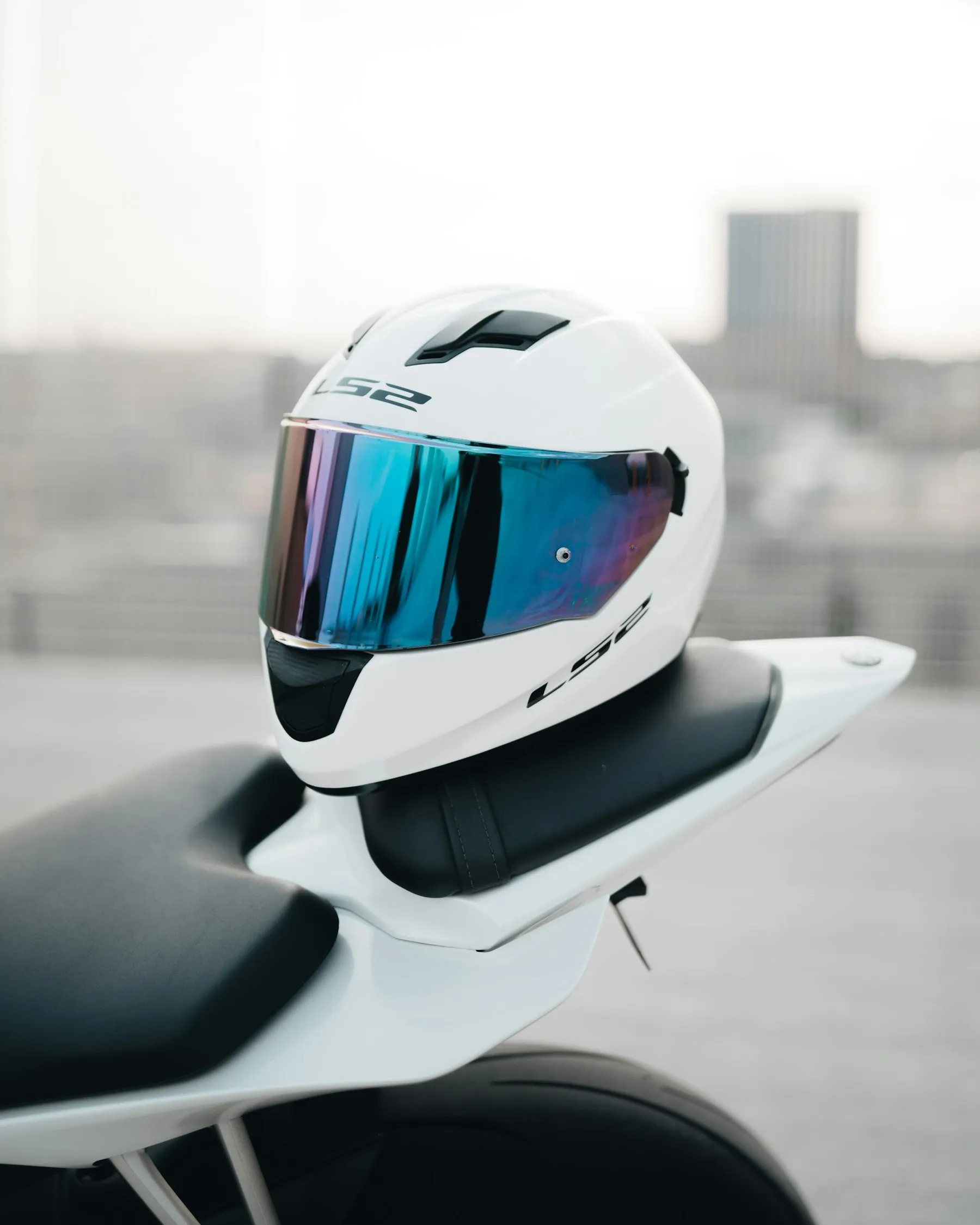
The break-even is short. Buying a helmet in Thailand is easy: every town has motorcycle shops, the big retail parks have them, and prices start at a few hundred baht for a basic full-face and run to a few thousand for something you would happily wear at home. Look for the Thai industrial standard mark, which is what Thai-market helmets are certified against, or for a familiar international marking if you are buying an imported brand. Choosing a helmet that actually protects you covers standards, fit and what to look for in detail — that is the page to read before you spend the money.
It is worth buying your own if any of these apply:
- You are in Thailand for more than about a week and will ride most days.
- You are on a monthly rental — see monthly motorbike rental in Thailand.
- Your route involves hills, mountain roads or anything above town speeds.
- You will ride after dark, when a clear visor stops becoming optional.
- You are carrying a passenger regularly and want two helmets that actually fit.
- You have a large or a small head, which is where the rental stack helps you least.
Buy it on day one, not day four. The crashes that hurt visiting riders happen disproportionately in the first days of a trip, on unfamiliar machines and unfamiliar roads. A helmet bought at the end of the holiday has protected nobody.
Heat, sweat and the practical problems
A full-face helmet in Thai heat is warmer than an open-face one — that is the honest trade-off, and it is why so many riders here wear the thin shells. Two things make it manageable. A cheap cotton skull cap or thin balaclava, sold in any Thai motorcycle shop, keeps sweat out of the padding and makes a shared or hired helmet far more pleasant. And a helmet with real ventilation moves a surprising amount of air once you are above about 30 km/h; the problem is sitting in traffic, not riding.
Carrying it is the other nuisance. Under-seat storage on a 110–125 will usually take one open-face helmet and nothing else; the 150–160cc machines take more. Most riders end up with a cable lock through the chin bar or simply carrying it. See choosing a rental scooter for what fits where.
Frequently asked questions
Is the free rental helmet legal?
In the sense that wearing one satisfies the requirement to wear a helmet at a checkpoint, generally yes. Whether any particular helmet meets the specification set by ministerial regulation is not something a visitor can verify at the counter, and it is not the same question as whether it will protect you.
Will the shop charge me for the helmet?
It is normally included. It is also normally the shop's property, so film it at handover along with the bike and hand it back with the machine — a missing helmet is an easy line item on a return bill.
Do I have to wear one on a quiet island road?
The law makes no exception for quiet roads, and helmet checkpoints in tourist areas exist precisely because they are productive. More to the point, the low-speed fall on a sandy corner is the accident visitors actually have.
How much does a decent helmet cost in Thailand?
A basic full-face from a Thai brand starts at a few hundred baht; something well made and comfortable is typically one to a few thousand. Against a fortnight's scooter hire, it is a small line.
Can I bring my own helmet from home?
Yes, and if you already own a good one it is the best option — it fits, you know its history, and airlines generally accept a helmet as carry-on or in a bag. The only downside is bulk.
What about the passenger's helmet?
Legally required, and it is the rider who commits the offence if the passenger is not wearing one. Ask for the second helmet when you collect the bike; it is not always offered.
Does wearing a helmet actually affect an insurance claim?
Insurers commonly make helmet use a condition of motorcycle cover, and policies typically exclude injury sustained while breaking local law. Read your own policy's motorcycle clause — the wording varies more than people expect.