Three minutes of video, shot in daylight before you ride away, is the cheapest insurance available to anyone hiring a scooter in Thailand. Almost every rental dispute in this country is an argument about whether a mark was already there, and a slow, narrated walk-round settles that argument in one move. It is the single habit that most reliably keeps a deposit intact.
What matters is not production quality. It is that the video is continuous, that it is obviously of that machine at that shop on that day, and that you say out loud what you are pointing at.
- How longTwo to three minutes. Long enough to be slow, short enough to watch
- WhenBefore you ride away, in daylight, at the shop
- Must be in shotThe registration plate, the odometer and the shop frontage
- Where it livesUploaded to cloud storage before you leave the shop's wifi
Why video rather than photographs
Photographs are useful and you should take them too — what to photograph before you drive away lists the set. But a still image can be argued with. It was taken at a different angle. It was taken later. It is of a different bike. A continuous clip that starts on the shop's sign, moves to the number plate, and then travels round the machine without a cut is very hard to dispute, because the continuity does the authenticating.
Video also captures things stills miss: the sound of the engine starting, the brake lever coming back further than it should, a mirror that will not hold its position, the wobble in a wheel as you roll the bike a metre forward.
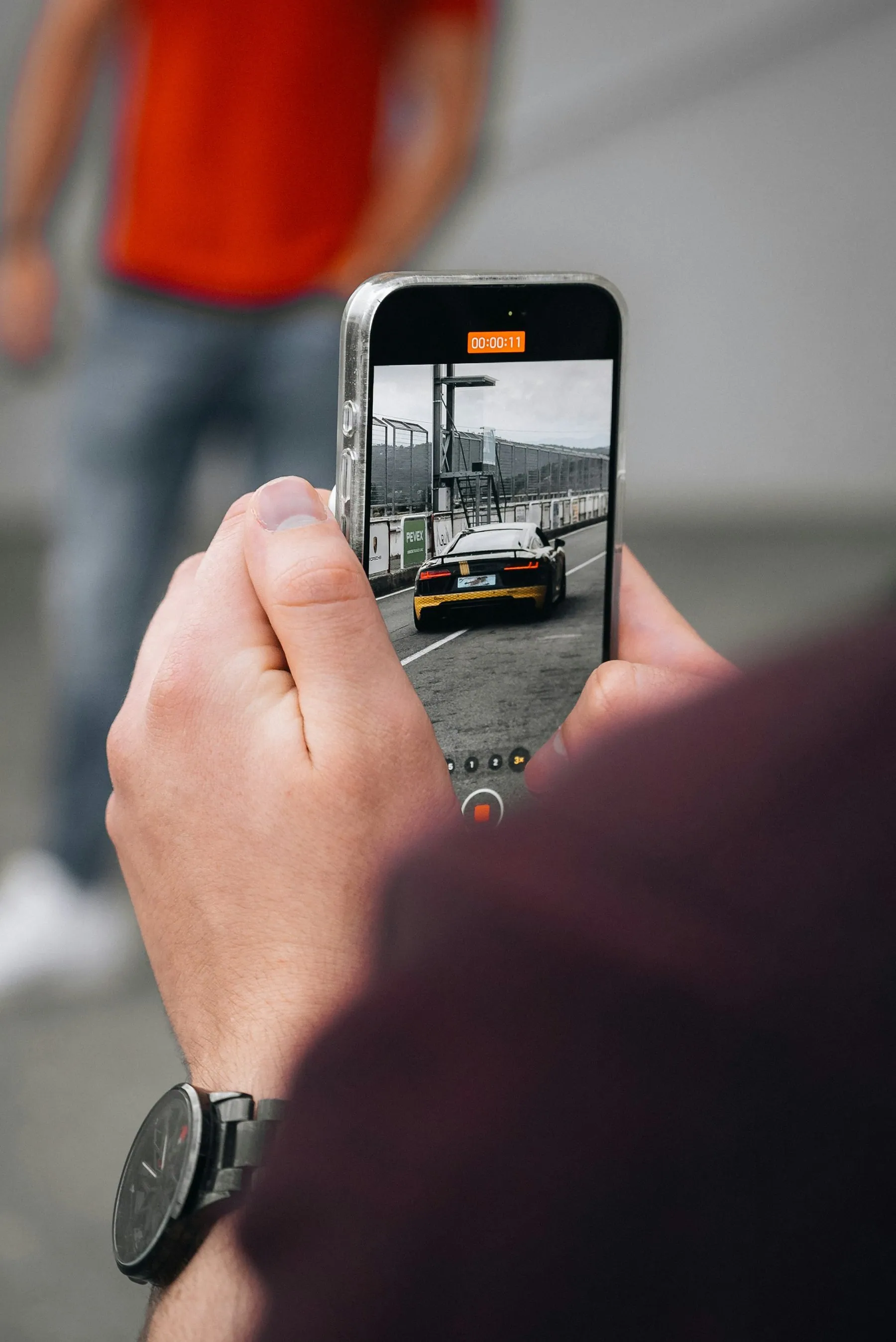
The order to film in
Start recording and do not stop. Move at half the speed that feels natural — the commonest mistake is sweeping past the damage too fast for anyone to see it later.
- The shop. Begin on the shopfront, the sign, the street. This fixes where and, with a phone's own metadata, when.
- The registration plate. Hold on it for three seconds so the number is legible. This is the shot that proves it is this machine.
- The instrument panel. Odometer reading and fuel gauge with the ignition on.
- Front on. The apron, the headlight, the indicator lenses, the front mudguard.
- Left side, front to back. Mirror, lever, panel, footboard, exhaust side, rear light. Pause on every scuff and scratch.
- The rear. Number plate again, rear light, indicators, the top of the seat, the rack or top box if there is one.
- Right side, back to front. Same again in reverse. This is the exhaust and kickstand side and it collects the most damage.
- Down low. Crouch and film the underside of the front apron and the bottom edges of the plastics. Nobody looks here, which is why disputed damage lives here.
- Both wheels. Rim edges — kerbed rims are a favourite claim — and tyre tread across the whole width.
- Under the seat. Open it. Film the compartment and anything in it.
- Function check. Engine on, headlight on both beams, both brake levers each showing the brake light, all four indicators, horn.
- The paperwork. The rental agreement, both sides, and the helmet you have been given.
Roll the bike a metre while filming the wheels. A buckled rim, a flat spot in a tyre or a dragging brake shows itself in motion and is invisible in a still. It takes four seconds and it occasionally saves you from riding away on something genuinely unsafe.
What to say out loud
Narration is what turns footage into evidence. Speak in a normal voice and name what you see: "scratch on the left panel, already there"; "crack in the front apron, bottom right"; "both mirrors loose"; "odometer 24,180"; "fuel about a quarter". State the date and the shop name at the start.
Two reasons it works. It forces you to actually look, rather than waving a phone around, and it produces an unambiguous record of your reading of the bike's condition at handover. If a claim arrives four weeks later, "the video shows the crack and my voice describing it before I left" is a complete answer.
Keep the camera on the machine and the paperwork, not on the staff. Filming people who have not agreed to it is a bad idea generally and a needlessly confrontational one here. If a shop objects to you filming their scooter, that is worth knowing before you rent it rather than after.
The parts people always miss
- The underside of the front apron and the lower edges of every plastic panel.
- Both wheel rims, all the way round.
- The exhaust heat shield, which scuffs easily and is a common line on a bill.
- The seat — tears, burns and split seams.
- The ignition barrel and any damage around it, which is what a theft claim will focus on.
- The key, the second key if there is one, and the lock or chain if one is supplied.
- The helmet, including the strap and the buckle. See rental helmets in Thailand.
Get the file somewhere safe immediately
A three-minute video is a large file, and the phone it is on is the item most likely to be lost, stolen, dropped in the sea or broken in the fall you are insuring against. Upload it before you ride away — most shops have wifi, and this is a good use of it.
- Upload to cloud storage or email it to yourself while you are still at the shop.
- Mark it as a favourite or move it to an album so it does not vanish into 900 holiday photos.
- Name it with the town, the shop and the date if your phone lets you.
- Keep it until the deposit is back and any card hold has cleared and a statement has come through — a month or two after you get home, not the day you fly.
Film the return as well
The handover video protects you against damage that was already there. The return video protects you against damage that appears afterwards, which is the other half of the problem.
Do a shorter version when you bring the bike back: plate, odometer, fuel, a slow lap of both sides, and the shop's frontage. If a member of staff inspects the bike and says it is fine, that is exactly the moment to have the camera running on the machine. And if you paid a cash deposit, film it being handed back to you, or get a signed note that it was.
Do not let the return be rushed. The classic damage claim is made at the moment the renter has a ferry, a bus or an airport transfer waiting. If the shop wants to inspect the bike, let them, with your camera on it. If they want to talk about a figure, that is a conversation you can have without a departure clock running — see motorbike rental damage claims in Thailand.
What the video will and will not do
It will end most arguments about pre-existing damage, because there is nothing to argue about once the mark is on film with your voice describing it. It makes an inflated claim much harder to sustain, and it changes the tone of the conversation the moment you offer to play it.
It will not help with damage you actually caused, which is a different problem — see what happens if you drop a rented scooter in Thailand. It will not, on its own, force anyone to return money. And it is much weaker if the shop is holding your passport, because at that point the dispute is not really about evidence; that is the argument for never handing it over, set out in passport as deposit for motorbike hire.
Used with the rest of the routine — a cash deposit, a photographed agreement, and our printable rental handover checklist — it is the difference between a dispute you can win and one you can only pay. The full picture is on renting a motorbike in Thailand.
Frequently asked questions
How long should the video be?
Two to three minutes. Shorter than that and you are moving too fast for the detail to be visible; much longer and nobody, including you, will ever watch it.
Will the shop mind?
Most do not — it is a common enough habit now that staff in the busier rental towns barely look up. A shop that objects to you filming its own machine before you take responsibility for it has given you useful information.
Do I need to narrate it?
It helps a great deal. Naming each mark creates a record of what you identified at the time, and it stops you from filming the bike without actually inspecting it.
Is video better than the shop's damage sheet?
They do different jobs, so have both. Ask for existing damage to be marked on the agreement and photograph it — a shop that writes the damage down is much less likely to bill for it later. The video covers everything the sheet leaves off.
What if I only remember once I have ridden away?
Film it anyway, as soon as you stop, and say so on the recording. It is weaker than a video shot at the shop, but it is far better than nothing and it still fixes the condition of the bike early in the hire.
How long should I keep it?
Until the deposit is back, any card pre-authorisation has dropped off, and a full statement has come through. Charges appearing weeks after a visitor has flown home are a known pattern, so give it a couple of months.