The Tourist Police are a national unit of the Royal Thai Police whose remit is the safety of foreign visitors, and their hotline — 1155 — runs 24 hours a day with English-speaking officers and multilingual support. For a driver, they are the fastest route to an English-speaking police officer when a roadside encounter, a crash or a dispute has stopped working in whatever language everyone has been attempting.
What they are not is a separate legal authority. They cannot overrule a traffic officer's ticket, cannot cancel a fine, and cannot decide fault in a collision. The accurate way to think about 1155 is that it gets you an English-speaking police officer, not an advocate. That is a narrower service than most visitors assume and a far more useful one than most visitors expect.
- Hotline1155, 24 hours daily
- What they areA national unit of the Royal Thai Police
- What they provideEnglish-speaking officers, interpreting, mediation
- What they cannot doCancel a ticket or overrule a traffic officer
Who they are
The Tourist Police Bureau was established in its current form on 1 September 2017, growing out of a Tourist Police Division that had existed since 1992. It is part of the Royal Thai Police, not a parallel force, and its officers hold the same authority as any other police officer. Alongside the regular officers there is a volunteer arm, which is where a good deal of the multilingual capability comes from.
Their published remit is the safety of foreign visitors, and it explicitly includes interpreting and mediating between visitors and Thai nationals — including in road accidents and disputes. That last phrase is why they matter to anyone driving here.
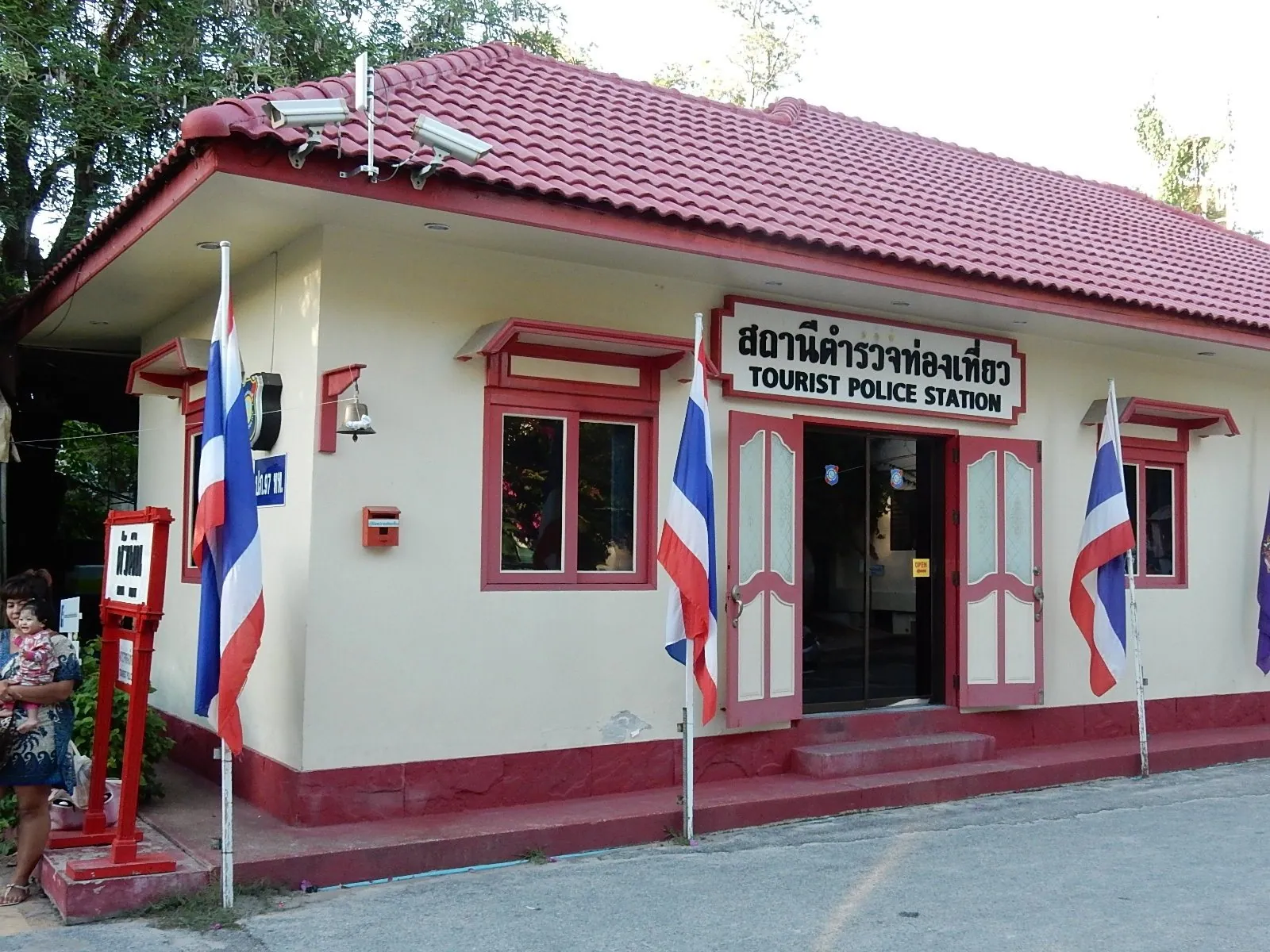
When to ring 1155 as a driver
- A roadside stop where nothing is being communicated. Neither side can explain anything, the encounter is going nowhere, and an English-speaking officer on the phone resolves it in two minutes.
- After a collision, once anyone hurt has been dealt with. Particularly where the other party is Thai, an insurance surveyor is on the way and you have no idea what is being discussed. See what to do after a road accident in Thailand.
- A dispute with a rental company that has become an argument. Damage claims and deposit disputes are exactly the sort of visitor-versus-business friction they mediate. Disputing a rental charge in Thailand covers the wider approach.
- You have a ticket in Thai and no idea what it says. They can tell you the offence and the amount.
- Anything that feels like it is escalating. Getting a calm English-speaking officer involved is almost always the right move.
Save the number before you need it. 1155 in the phone, and take thirty seconds to note where you are — a road number, a kilometre marker, the name of a shop or a temple — before you dial. The first question will be where you are, and "somewhere on a road near a beach" is not an answer anyone can act on.
What they can actually do
Translate. This is the core of it. A great many roadside problems in Thailand are language problems wearing another costume, and putting a bilingual police officer into the conversation dissolves them.
Mediate. Their published role includes mediating between visitors and Thai nationals in road accidents and disputes. In practice that means someone with authority explaining to both sides what the other is saying and what happens next.
Turn up. In the main tourist provinces there are physical tourist police offices and patrols, and an officer can attend. Away from the tourist belt, the hotline is what exists.
Explain the process. Where to pay a ticket, what a document says, what an insurance surveyor is doing at a crash scene. That is genuinely valuable and it is available for the price of a phone call.
What they cannot do
Cancel or reduce a fine. A traffic ticket is issued under section 140 of the Land Traffic Act with the amount set from a schedule issued by the Commissioner-General. The Tourist Police are part of the same force and have no power to override it. Traffic fines in Thailand and what they cost explains where the figure comes from.
Act as your lawyer. They are police officers. They are not on your side in an adversarial sense and it would be a mistake to treat them as if they were.
Decide who was at fault. Fault between vehicles in Thailand is usually determined by insurance surveyors at the scene rather than by police. How fault is decided after a crash in Thailand is the page for that.
Replace your embassy. If a matter has moved to detention or a criminal allegation, consular assistance is a different service with a different purpose.
1155 is not an ambulance line. If someone is injured, medical help comes first and everything else waits. Get the emergency medical response moving before you start on translation and paperwork — what to do after a road accident sets out the order things should happen in.
The other numbers worth having
| Number | What it is | Hours |
|---|---|---|
| 1155 | Tourist Police hotline | 24 hours daily |
| 1197 | Traffic police hotline | — |
| 1220 | Police Ticket Management (traffic fine) call centre | — |
| 1672 | Tourism Authority of Thailand call centre | 08:00–20:00 daily |
Those are the four we can point to a source for. You will see other numbers published widely in English-language guides, including a general police number and a highway police number; we have not been able to confirm them from a government page in this research pass, so we are not listing them as though we had. If you want a printable set to keep in a wallet, the emergency numbers card collects what we can stand behind.
How a call actually goes
Have three things ready before you dial: where you are, what has happened, and what you want. "I am on Highway 4 about ten kilometres south of Khao Lak, I have been stopped by police and neither of us can understand the other, can you translate?" is a call that gets somewhere. Speak slowly and simply — the officer's English may be excellent or may be functional, and either way the phone line will be against you.
If you are at a roadside stop, ask the officer first whether they mind you calling. It is a courtesy, it is usually welcomed by an officer who is also stuck with the language barrier, and it keeps the encounter cooperative. Your rights as a foreign driver in Thailand covers the wider point about tone, which matters here more than most visitors expect.
Frequently asked questions
Is 1155 free to call?
It is a short-code national hotline of the kind that works from any Thai number, including a prepaid tourist SIM. If you are relying on data-only roaming with no voice service, that is worth checking before you find yourself needing it.
Can the tourist police get a traffic fine cancelled?
No. They are part of the Royal Thai Police, not a separate authority, and they cannot overrule a traffic officer's ticket or change the amount, which comes from a police schedule under section 140.
Do they speak English?
Yes — English-speaking officers and volunteers are what the unit exists for, and the hotline has multilingual support. It is the most reliable English-language police contact available to a visitor here.
Should I call them after a crash?
Once anyone injured is being dealt with, yes, particularly if you cannot communicate with the other party or with the insurance surveyor. Their remit explicitly includes mediating in road accidents involving visitors.
Are the tourist police the same as the regular police?
They are a specialised national unit within the Royal Thai Police with the same authority, focused on foreign visitors. Not a separate force, and not a private service.
What if I am outside a tourist area?
The hotline is national and answers 24 hours, but physical presence is concentrated where visitors are. In rural provinces expect the help to be a phone call rather than an officer arriving.
What number do I ring about an unpaid ticket?
1220, the Police Ticket Management call centre — that is the one for fines, payment confirmations and SMS confirmations that never arrived. See how to pay a traffic fine in Thailand.