There are more ways to pay a Thai traffic fine than most visitors expect. An electronic ticket can be settled online at the Royal Thai Police portal, through mobile banking by scanning the QR code on the slip, at a Krungthai Bank counter, ATM or app, at 7-Eleven, at a CenPay point in a FamilyMart or Central Group store, at a Boonterm kiosk, at a post office, or at a police station. A handwritten ticket is less flexible and may have to be paid at the station named on it.
You normally have seven days from receiving the ticket. Under section 141 of the Land Traffic Act, payment settles the case — so once the money has gone through and you have the confirmation, the matter is closed.
- Official portalptm.police.go.th
- Time to payNormally 7 days from receiving the ticket
- ConfirmationSMS within about 24 hours
- Fine call centre1220
The channels, and which ticket each one works for
| Where | Works for | Notes |
|---|---|---|
| ptm.police.go.th | Electronic tickets | The Royal Thai Police's own portal. Accepts debit and credit cards and mobile banking via QR. Also where you look up outstanding tickets. |
| Mobile banking app | Electronic tickets | Scan the payment QR code printed on the ticket. Needs a Thai bank account in most cases. |
| Krungthai Bank | Electronic tickets | Counter, ATM or the bank's app. |
| 7-Eleven | Electronic tickets | Over the counter, cash. The most convenient option for a visitor without a Thai bank account. |
| CenPay | Electronic tickets | More than 1,900 points, including FamilyMart and Central Group stores. |
| Boonterm kiosks | Electronic tickets | The standalone top-up terminals found outside shops. |
| Post office | Electronic tickets | Also the route for a postal money order or bank draft under s.141. |
| The police station named on the ticket | Any ticket | The fallback that always works, and often the only option for a handwritten slip. |
The pattern is straightforward: the retail and online network is built around electronic tickets that already exist as records in the Police Ticket Management system. A handwritten slip may not be in that system in a form the shop counter can find, which is why it points you at a station.
What the law says
Section 141. The person receiving the ticket shall pay the penalty fine at the place stated on the ticket, or at a place prescribed by the Commissioner-General by publication in the Government Gazette, within the time stated on the ticket; or shall send a postal money order or bank draft payable to the Commissioner-General by registered post. Where payment is made, the case shall be deemed settled.
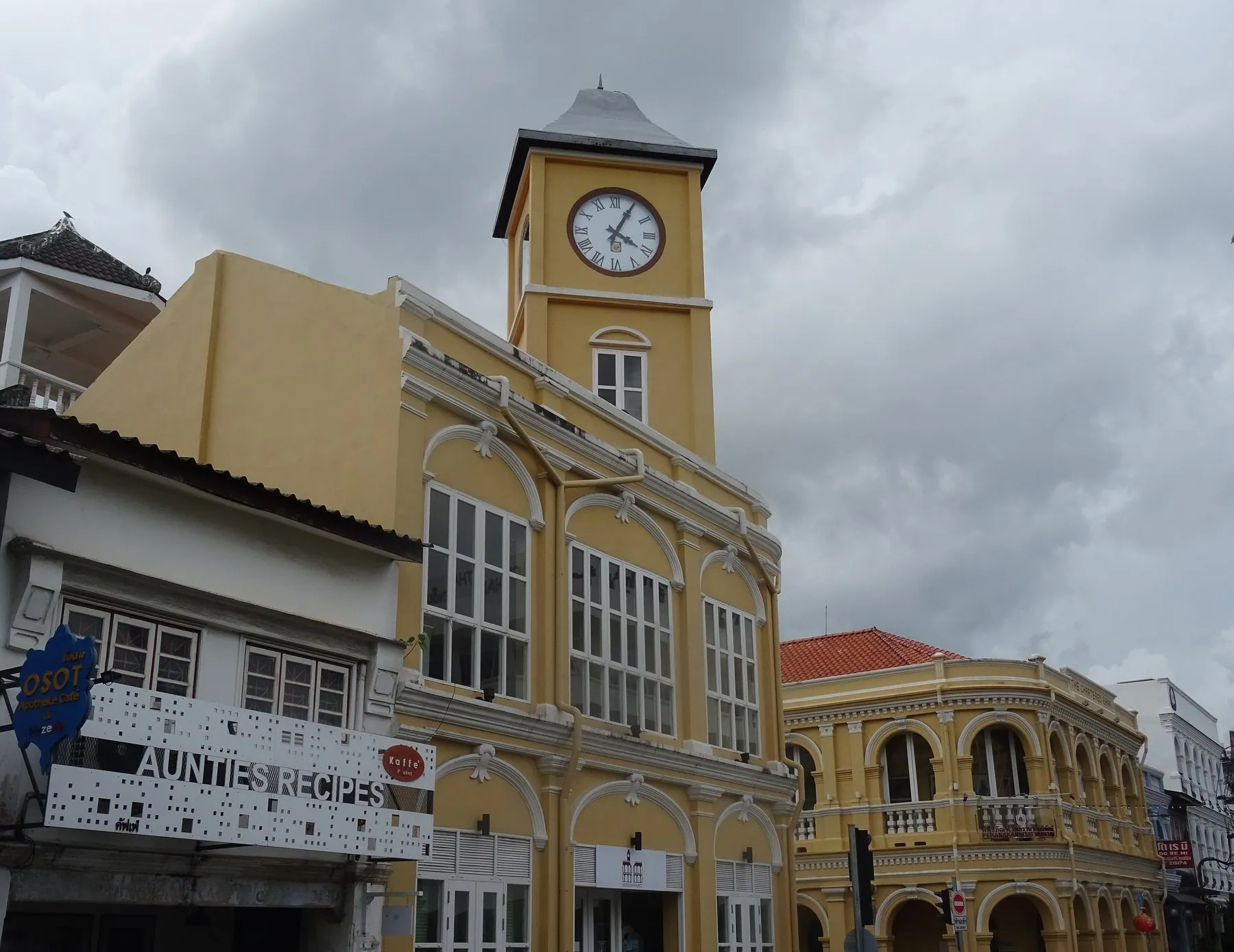
Paying at the police station
This is the route that always works, and for a visitor with a handwritten ticket it is usually the only one. Take the ticket and your passport or a copy of it. Go during office hours if you can — the traffic-fine desk is not always staffed at night, even where the station is. Expect to pay in cash.
What you should leave with is a printed, numbered official receipt, stamped, showing the ticket number and the amount. That is the document that proves the case is settled, and it is worth keeping until you have left the country. What a legitimate Thai police receipt looks like goes through what should be on it.
Ask your hotel to ring the station first. Two minutes of Thai on the phone establishes whether the fine desk is open, whether they take cards, and whether you need to be there in the morning. It is the single most useful thing a reception desk can do for you, and they are used to being asked.
Paying online at ptm.police.go.th
The Royal Thai Police portal is the official channel and it does two jobs: it shows outstanding tickets against a vehicle or a licence, and it takes payment by card or QR. It is not an English-first service, and a browser translation is usually part of the exercise. If the ticket you are holding has two QR codes on it, one of them goes straight to the lookup page for that ticket, which saves a lot of navigation.
If a payment goes through and nothing arrives, the PTM call centre number is 1220. An SMS confirmation should reach you within about 24 hours; the absence of one after that is worth chasing rather than assuming.
If you have already left Thailand
This is where most visitors' questions actually sit, and the honest answer has two parts.
The first is practical. Paying a Thai traffic fine from abroad is awkward. The retail channels are physically in Thailand, mobile banking generally requires a Thai account, and the portal's card payments are not always straightforward from a foreign card. There is a postal route in section 141 — a money order or bank draft payable to the Commissioner-General, sent by registered post — but for a small fixed penalty that is disproportionate.
The second is what actually happens. Where the ticket was issued against a hire vehicle, the registered owner is the rental company, and section 140 presumes the owner is the offender unless they prove otherwise. They will settle it and charge it to the card on file under the rental agreement, typically with an administration fee. That is the mechanism behind the charge that appears three weeks after you got home. Where the ticket was written to you personally and never paid, the enforcement chain in section 141 bis runs through a summons and then through the vehicle registrars — a route that has real teeth for a vehicle owner in Thailand and very little reach to a visitor who has flown out. Unpaid traffic fines in Thailand sets that out properly, including the 1 August 2026 link between unpaid fines and the vehicle tax disc.
Do not let the rental company be the one who tells you. If you are ticketed on a hire car or a rented bike, photograph the slip and tell the shop the same day. Handling it yourself, at a 7-Eleven, costs the fine. Letting them find it later costs the fine plus whatever the agreement lets them add — see disputing a rental charge in Thailand if it has already happened.
Checking whether you owe anything
Camera tickets are the ones that catch people out, because there is no roadside encounter to remember. They are generated against the vehicle, posted to the registered owner's domicile, and deemed received 30 days after they were sent — whether or not the letter arrived. If you own a vehicle in Thailand, ptm.police.go.th is where you check for outstanding tickets, and it is worth doing before the annual tax renewal rather than at the counter.
If you are driving a hire car, the equivalent check is asking the rental company directly at the point of return, and getting the answer in writing. Returning a hire car without a dispute covers the wider version of that conversation.
Frequently asked questions
Can I pay a Thai traffic fine at 7-Eleven?
Yes, for electronic tickets. It is the most practical channel for a visitor without a Thai bank account: take the ticket to the counter, pay in cash, keep the slip. A handwritten ticket may not work there and may have to go to the station named on it.
How long do I have?
Normally seven days from receiving the ticket, with the deadline printed on the slip. For a posted ticket, the Act treats you as having received it 30 days after it was sent.
What proof will I have that I paid?
An SMS confirmation should arrive within about 24 hours, and the bank, shop or station slip is the physical record. Keep both. If no SMS arrives, ring 1220.
Can I pay from outside Thailand?
It is difficult. The retail channels are domestic, mobile banking usually needs a Thai account, and foreign cards on the portal are unreliable. Section 141 does allow payment by postal money order or bank draft to the Commissioner-General, sent by registered post, but that is rarely proportionate for a small fine.
What happens if I just do not pay?
Section 141 bis provides for a summons, and where a summons cannot be served, for the vehicle registrars to be notified — which since 1 August 2026 means the annual tax disc can be withheld. For a visitor who has left, the practical consequence normally falls on the rental deposit or the card on file instead.
Does paying admit guilt?
Payment settles the case under section 141 and closes it. If you genuinely intend to contest an allegation, raise it at the station named on the ticket before you pay, not after.
Is there an English-language way to do all this?
Not officially. The portal is Thai-first and the station desk usually is too. In practice the workable English routes are a hotel receptionist, a rental company, or the tourist police on 1155 — see when to call 1155 for what they can and cannot do.