A lawful Thai traffic penalty produces paperwork at both ends. At the roadside you are handed a ticket — printed or handwritten, of which the officer keeps a copy — that names the offence, the vehicle, the amount, and where and by when to pay. Then, when you pay, you get a receipt: a printed, numbered, stamped record from the bank, the shop, the post office, the station or the online portal, plus an SMS confirmation that should arrive within about 24 hours.
Those two documents are the whole of it, and knowing what they look like is the most useful piece of preparation there is. Everything that resolves a traffic offence in Thailand leaves a paper trail; anything that does not leave one has not resolved it, and the original offence stays outstanding in the police system.
- Step oneA ticket the officer keeps a copy of
- Step twoA numbered receipt from an official payment channel
- Step threeSMS confirmation, normally within 24 hours
- If confirmation does not arrivePTM call centre 1220
What a legitimate ticket looks like
The ticket comes first, and it is the document that establishes that you are in the official process. Section 140 of the Land Traffic Act gives an officer two options on finding a breach — a warning, or a traffic ticket requiring payment of a determined penalty fine — and prescribes that the form of the ticket is set by the traffic officer's own regulations. In practice you will be handed one of three things.
- A handwritten carbon slip. From a pad, one copy to you, one retained. Still common outside the cities.
- An electronic ticket. Printed from a handheld terminal, carrying two QR codes — one to pay by mobile banking, one to look the ticket up on the police website.
- A posted camera ticket. Arrives by registered post with the photographic evidence, addressed to the registered owner of the vehicle.
Whichever version it is, four things should be legible on it: a ticket number, the amount in baht, where to pay, and a deadline. A slip with no amount and no station is not a ticket in any useful sense. On-the-spot traffic tickets in Thailand goes through the form field by field.
What the law says
Section 140. The officer may give a warning or issue a traffic ticket requiring payment of a determined penalty fine, in the form prescribed by the traffic officer, with the amount determined according to criteria prescribed by the Commissioner-General of the Royal Thai Police.
Section 141. Payment is made at the place stated on the ticket or a place gazetted by the Commissioner-General, within the time stated. On payment, the case is deemed settled.
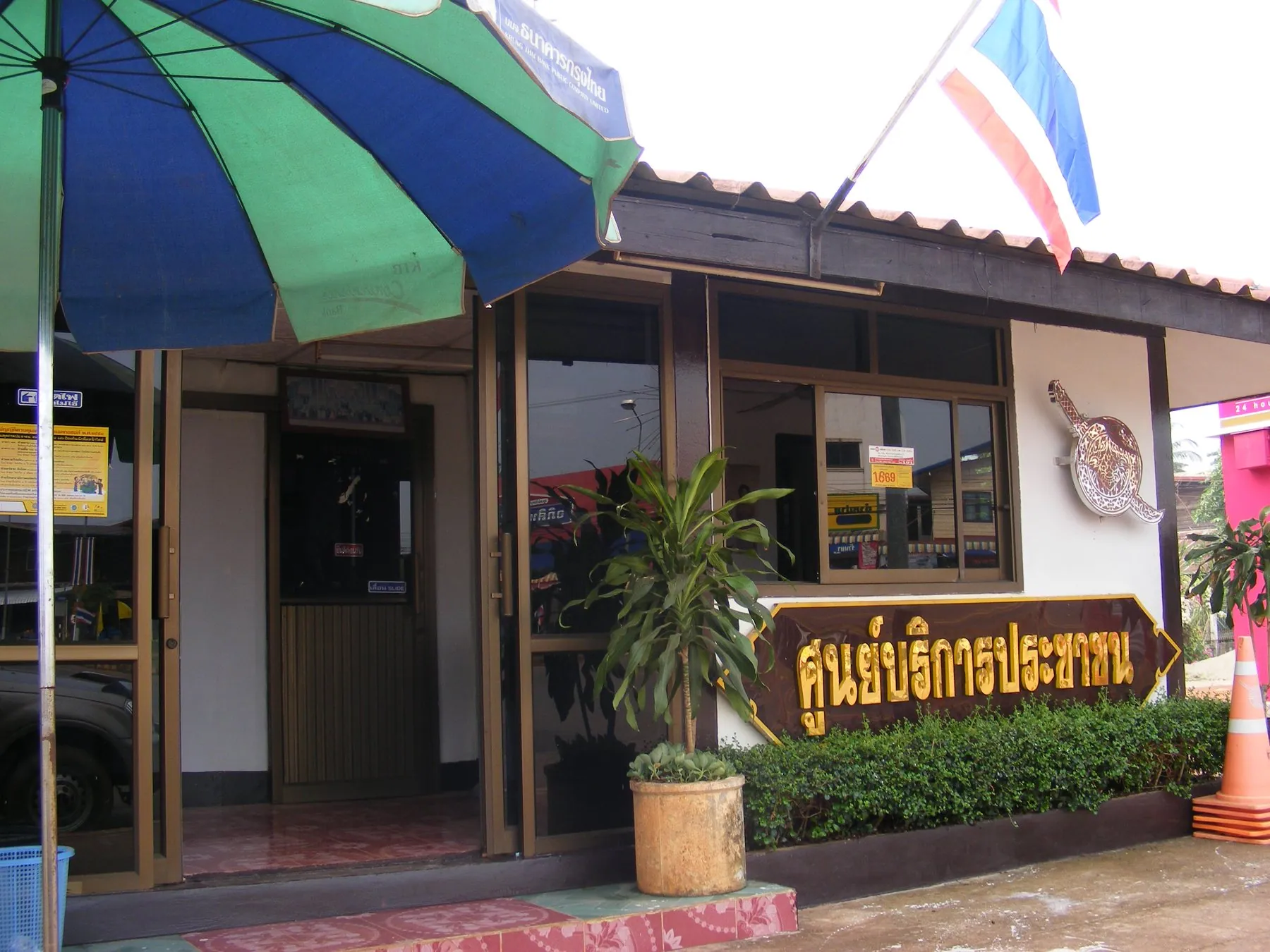
What a legitimate receipt looks like
The receipt is generated by whichever channel you paid through, and its form depends on that channel rather than on the police.
| Where you paid | What you should end up with |
|---|---|
| Police station | A printed, numbered official receipt, stamped, showing the ticket number and the amount paid |
| 7-Eleven, CenPay or a Boonterm kiosk | A till slip showing the ticket reference, the amount and the date and time |
| Krungthai Bank counter, ATM or app | A bank slip or in-app transaction record against the ticket reference |
| ptm.police.go.th | An on-screen and emailed confirmation against the ticket number |
| Post office | The postal payment record, or the registered-post record for a money order under s.141 |
| All of the above | An SMS confirmation, normally within about 24 hours |
The common thread is a reference number that ties the payment to the ticket. That is what makes it a receipt rather than a piece of paper: it lets someone else, later, look up whether the case is closed. How to pay a traffic fine in Thailand covers each channel and what a visitor can realistically use.
Photograph everything, twice. The ticket when it is handed to you, both sides, before it goes in a pocket. The receipt when you get it. Thermal-printed slips fade badly in a hot climate and a handwritten ticket does not survive a rainy-season pocket. The photographs are what you will actually use if a rental company queries anything weeks later.
What paying does, and does not, do
Section 141 is unusually clear on this: on payment, the case "shall be deemed settled". For an ordinary fixed-penalty offence there is no further court step, no summons and nothing outstanding. The receipt is the end of the matter.
What it does not do is cover anything else. A ticket settles the offence it names, on the date it names. It is not a permit, and there is no same-day immunity written into the Act — see on-the-spot traffic tickets for why the "one ticket lasts all day" belief is a description of practice rather than of law. And where the alleged offence is one that section 140 excludes from the ticket system — drink-driving, drug-driving, failing to stop after a collision, racing — no payment settles it at all, because those go to an investigating officer and then to a court.
When no paperwork appears
The whole official process is built on documents. An officer's options under section 140 are a warning or a ticket; section 141 provides for payment at a named or gazetted place. There is no roadside cash mechanism anywhere in the Act, and there is no receipt that a roadside payment could produce.
The consequence is simple and worth stating plainly: a payment that generates no ticket and no receipt creates no record, settles nothing, and leaves the original offence outstanding in the Police Ticket Management system. If you are ever unsure whether you are in the official process, the test is not the officer's manner or the setting — it is whether a numbered document with an amount on it has been produced. Informal roadside payments: what travellers report deals with the wider picture, and your rights as a foreign driver sets out what you can ask for and how.
Two facts that change the shape of a roadside encounter. Since 20 September 2019 an officer has had no power to seize your driving licence, so a demand framed around keeping it does not describe the law. And under section 141, payment through an official channel settles the case outright — there is no separate court appearance waiting for you on an ordinary fixed-penalty offence.
Keep the receipt until you leave
A small habit that costs nothing. Keep the ticket photograph and the payment confirmation until you have flown home, particularly if the vehicle was hired. Camera tickets are issued against the vehicle and reach the registered owner, so a rental company can be chasing a fine you have already settled — and the reference number on your receipt ends that conversation in one message. If a charge has already appeared, disputing a rental charge in Thailand covers who to take it up with.
If you own a vehicle here, the same records matter for a different reason: since 1 August 2026 unpaid fines are linked to the annual tax disc, and being able to show a fine was settled is a great deal easier than arguing at the counter. Unpaid traffic fines in Thailand explains how that runs.
Frequently asked questions
Should the officer give me a receipt at the roadside?
Not a receipt — a ticket. The receipt comes later, from whichever channel you pay through. What you should leave the roadside with is a numbered ticket showing the offence, the amount, where to pay and by when, of which the officer retains a copy.
What if the ticket has no amount written on it?
Then it is incomplete, and it is entirely reasonable to ask. The amount is set from a schedule under section 140 and it belongs on the form along with the place and the deadline for payment.
Is an SMS enough proof that I paid?
It is good evidence and it is the confirmation the system generates, but keep the slip or the transaction record as well. Two records with the same ticket number settle any later question in a single message.
The SMS never arrived. What do I do?
Ring 1220, the Police Ticket Management call centre, with the ticket number and the payment details to hand. Outstanding tickets can also be looked up at ptm.police.go.th.
Can I get a receipt in English?
Generally no. Thai receipts are in Thai, and the reference number is the part that matters — it is the same in any language. If you need to explain the document to an insurer or a rental company later, the photograph plus the number does the job.
What if I am asked to pay something with no ticket and no receipt?
Then you are not in the official process, because the official process is a ticket followed by payment at a bank, a shop, a post office, a station or the police portal. You can ask for the written ticket, and note the officer's name and station. Informal roadside payments covers this in full.