Pai is a small town at the end of one of Thailand's most demanding mountain roads, surrounded by dirt tracks and steep concrete ramps up to viewpoints, full of young travellers who have never ridden a motorbike before. The result is entirely predictable, and it has a nickname: the bandaged forearm and shin that half the guesthouse breakfast tables display is known locally as the Pai tattoo. Deposit and damage arguments are correspondingly common.
The national picture on paperwork, deposits, insurance and how a claim escalates is in renting a motorbike in Thailand. This page is about what Pai does to a rented bike and a new rider: the 1095, the tracks, the cold, and the argument at the counter when you hand the bike back.
- Typical daily rateRoughly 120–250 baht for a 110–125cc automatic; more for trail bikes
- TerrainFlat valley floor; dirt and steep concrete off the main roads
- Best vehicleSemi-automatic or manual if you can ride one; 125cc minimum
- The road inRoute 1095, 762 bends from Chiang Mai
Route 1095, and whether to ride it
The road from Chiang Mai to Pai is famous for its 762 curves — the number is painted on souvenir T-shirts in every shop in town. It climbs, drops, switches back on itself and does so for around 130 kilometres. It is a genuinely good motorcycle road and it is also the reason a proportion of Pai's visitors arrive by minibus feeling ill and leave the same way.
Riding it is a reasonable ambition if you are an experienced rider on a suitable bike. It is a poor first outing on a scooter you collected that morning. Several Chiang Mai shops will rent you a bike there and take it back in Pai for a fee, which is a sensible way to ride the road once without committing to riding it twice. Chiang Mai to Pai: Route 1095 and its 762 bends covers what the road involves and mountain roads and hairpin bends the technique. Beyond Pai the 1095 continues towards Mae Hong Son as the northern half of the Mae Hong Son loop.
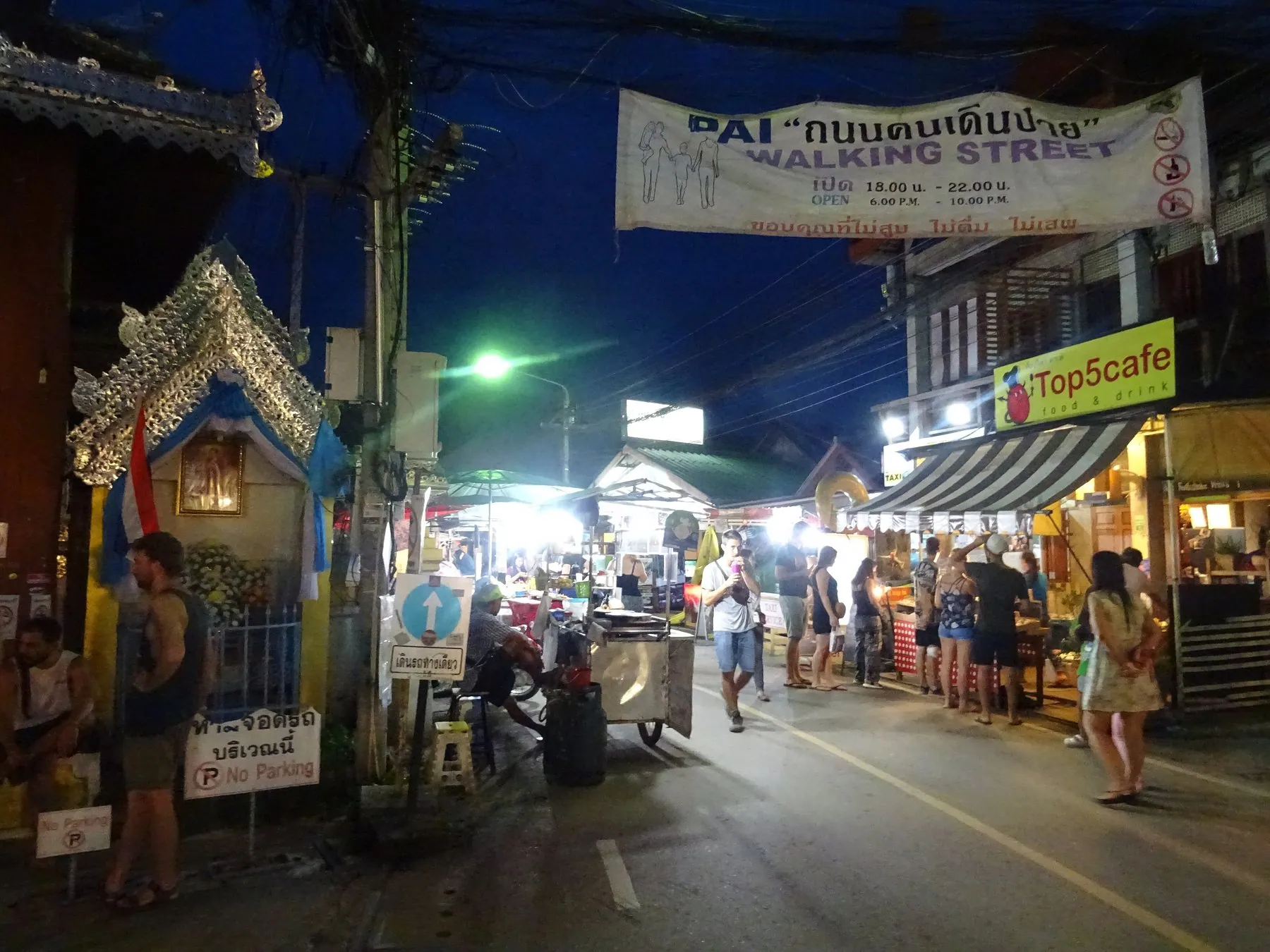
Where people actually get hurt
Not, mostly, on the 1095. The injuries in Pai come from the short trips: the loose gravel on the track to Pai Canyon, the steep concrete ramp up to the Yun Lai viewpoint, the dirt approach to Mor Paeng waterfall, the sandy stretch out to the bamboo bridge, and the unlit ride back into town from a hot spring after dark.
The pattern is nearly always the same. A first-time rider on an automatic, no gloves, shorts and flip-flops, meets loose surface on a slope at walking pace, puts a foot down, and the bike goes over. Speed is barely involved. The damage is to a forearm, a shin, an ankle and the bike's plastics. Riding a scooter in flip-flops and road rash and exhaust burns explain why the injuries are worse than the fall deserves, and why they take so long to heal in this climate.
The steep concrete ramps are the specific problem. Several of Pai's viewpoints and guesthouses are reached by short, brutally steep concrete drives, sometimes with a grooved surface. An automatic scooter carrying two people can fail to make one, and rolling backwards down a steep ramp with a passenger on the back is how people break ankles here. Drop the pillion at the bottom and ride up alone, or park and walk.
The deposit and damage argument
Pai's rental shops know exactly how many bikes come back with scratched plastics, and their contracts reflect it. Some hold passports; some quote fixed prices per panel; some do both. Damage arguments here are part of the town's folklore, and they are not all one-sided — plenty of riders genuinely do drop the bike and then dispute a bill they owe.
The way to be on the right side of that conversation is documentary. Film the bike slowly before you ride away, narrating every mark, with the shop front in shot: the inspection video. Offer a cash deposit and a photocopy rather than the original passport: passport as deposit. And ask before you pay what a scratched side panel costs — a shop that gives you a number in advance will not invent one later.
If you do drop it, photograph the bike where it lies, and read what happens if you drop a rented scooter and the rental damage claim playbook.
Buy the gloves. Pai's shops sell cheap riding gloves for a few hundred baht, and a pair of them is the difference between a scraped palm and a fortnight of not being able to hold a beer glass. Get a better helmet too if you are staying a while — rental helmets in Thailand explains what the free one does and does not do, and gloves and footwear for riding covers the rest.
What to rent
In Pai the type of bike matters more than the size. Semi-automatic and manual bikes are widely rented here because engine braking helps on the descents and clutch control helps on steep loose climbs; take one if you can ride one. Otherwise a 125cc automatic is the practical minimum, and a 110 is a poor choice beyond the town centre. Some shops rent small trail bikes, which are the right tool for the dirt tracks and the wrong tool for a rider who has never used a gear lever. See choosing a rental scooter and riding two-up, which is relevant given how many of Pai's falls happen with a pillion aboard.
Cold, fog and rain
Pai sits in a valley at altitude and mornings from December to February are genuinely cold — cold enough that riders who set off at seven in a vest are shaking by the first viewpoint. Fog fills the valley at dawn, beautiful from above and dangerous from inside. Take a layer, and let it lift before you ride the 1095.
The wet season, roughly June to October, turns the dirt tracks to the canyon and the waterfalls into something a rented scooter should not be on and brings landslip risk to the mountain road; from late February to April the burning season fills the valley with smoke. See the rainy season and flooded roads and driving in northern Thailand.
Prices
Pai is cheap. A basic 110–125cc automatic typically runs around 120–250 baht a day (roughly £3–£6 / US$4–US$7.50), with semi-automatics and trail bikes above that. The rate is not where the money is; the damage clause is. Read it before you sign. See scooter rental prices in Thailand.
The busy months are November to February, plus the New Year period when Pai fills entirely and the better bikes go early.
Frequently asked questions
Should I ride the road from Chiang Mai to Pai myself?
Only if you have real riding experience. It is 762 bends of mountain road and it is not a first outing. If you want to ride it once, some Chiang Mai shops rent one-way with a drop-off in Pai for a fee.
What is the "Pai tattoo"?
The bandaged forearm, shin or ankle that comes from dropping a scooter on gravel at low speed — common enough here to have a name. Gloves, proper shoes and staying off loose surfaces prevent most of it.
Are the deposit disputes in Pai as bad as people say?
Damage arguments are common, partly because genuine damage is common. The defence is the same: film the bike first, agree damage prices in advance, and keep your passport.
Can I ride to Pai Canyon on a rented scooter?
The main road there is fine; the last part and the parking area are loose. Ride slowly, park at the bottom of anything steep, and be aware that the surface is worse after rain.
Automatic or semi-automatic in Pai?
Semi-automatic or manual if you can ride one — the engine braking on the descents and the control on steep loose climbs are both worth having. Otherwise a 125cc automatic, not a 110.
What if I get hurt?
Pai has a small hospital and Chiang Mai is three hours away. Clean any graze properly and get it looked at — infection is the real risk in this climate. See accident in a rental car or scooter.