Hands and feet take the first hit in almost every motorbike spill. You put your hands out because you cannot help it, and your feet are the closest part of you to the road, to the falling bike and to a hot exhaust. They are also the two areas where protection costs least and interferes with the heat least: a pair of mesh gloves and a pair of trainers together cost about what two days of scooter hire does, and you barely notice either while moving.
If you take nothing else from this section, take this ranking: helmet first, then gloves and closed shoes, then everything else. The helmet is covered in choosing a helmet that actually protects you. This page is the second rung.
- Mesh gloves in ThailandAbout ฿300–900
- What gloves savePalms, which go out on reflex
- Minimum footwearClosed shoes that stay on
- Exhaust positionRight-hand side, calf height
Gloves
Why they matter more than they look like they should
The reflex to put a hand out in a fall is involuntary and it is faster than any decision you could make. The palm lands first, at whatever speed you were doing, on a surface with the texture of coarse sandpaper. A palm injury is one of the slowest things on the body to heal, because you use your hands for everything and the skin keeps reopening — and in this climate, a hand wound with grit in it is a genuine infection risk. Road rash and exhaust burns explains why the tropics make that worse.
There is a second, less obvious benefit. Bare hands on hot rubber grips, in direct sun, get uncomfortable within twenty minutes, and sweaty palms slip on a throttle. Gloves improve control on a long ride rather than reducing it.
What to buy
| Type | What it gives you | Heat | Use in Thailand |
|---|---|---|---|
| Fingerless / cycling mitts | Palm cover only | None | Better than nothing; fingertips are exposed and they take skin off easily |
| Summer mesh motorcycle gloves | Full finger cover, palm reinforcement, often a knuckle pad | Very low with airflow | The right answer for almost everyone |
| Leather short-cuff gloves | Better abrasion resistance | Moderate | Good if you already own them; hot in traffic |
| Full gauntlet touring or racing gloves | Maximum protection, wrist coverage | High | For big bikes and long rides, not for a scooter run to the beach |
| Work gloves from a hardware shop | Some palm cover | Varies | A stopgap. They tear rather than slide, and the seams fail |
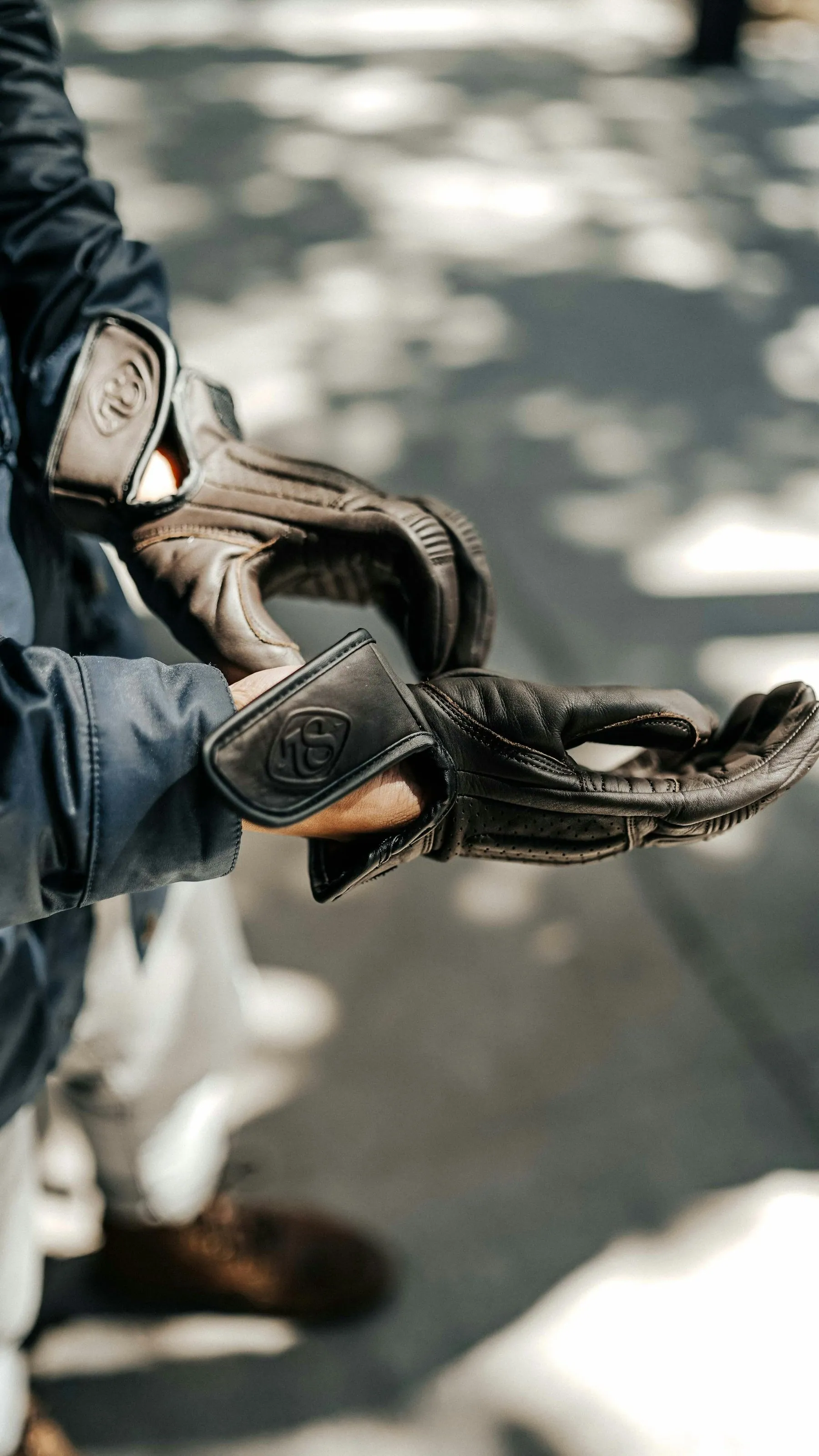
The features that matter, in order: a reinforced palm, full-length fingers, a closure at the wrist so the glove cannot be pulled off in a slide, and something over the knuckles. Ignore anything else. Sizing in Thai shops runs small by European and American standards, so try them on and expect to go up.
Test the wrist closure by trying to pull the glove off. Grip the fingers with your other hand and pull, hard. If it comes off easily, it will come off in a fall — and a glove that leaves at the moment of impact has done nothing. A velcro strap or an elasticated cuff that fights you is what you want.
Rain
Mesh gloves are soaked in about four seconds in a Thai downpour, which is uncomfortable but not dangerous; waterproof gloves in this climate are hot and generally not worth carrying. The thing that does matter in rain is grip on the levers and the throttle, and a wet mesh glove is better than a wet bare hand. Riding a motorbike in tropical rain covers the rest.
Footwear
The bar is lower than people think
You do not need motorcycle boots to ride a scooter in Thailand. You need shoes that stay on your feet, cover them, and grip a wet footboard. Trainers do all three. Everything above that is a genuine improvement, but the step from flip-flops to trainers is the one that removes most of the risk — riding a scooter in flip-flops sets out exactly what happens when you skip it.
| Footwear | Stays on? | Abrasion | Ankle | Verdict |
|---|---|---|---|---|
| Flip-flops | No | None | None | The thing to stop doing |
| Sandals with a heel strap | Yes | Minimal | None | A real improvement over flip-flops, still exposed |
| Canvas or mesh trainers | Yes | Some | None | The realistic minimum; fine for town |
| Sturdy trainers or approach shoes over the ankle | Yes | Good | Some | The sweet spot for daily riding |
| Short motorcycle boots | Yes | Very good | Good | Right for touring, hills and bigger bikes |
What footwear is actually protecting you from
- The bike landing on your foot. The commonest scooter injury is a low-speed drop in a car park, and the machine lands on the ankle. A stiff sole and an upper spread the load.
- The exhaust. Right-hand side, calf height, hot enough to burn through skin in about a second, and most burns happen while mounting or dismounting rather than riding. A shoe with any height at all takes most of it.
- Slipping. A wet plastic footboard with wet rubber on it has almost no friction. This matters when you put a foot down in a hurry.
- Gear levers and kickstarts. Not an issue on an automatic, very much an issue on a semi-automatic step-through or a manual bike, where a bare foot on a gear lever is quickly painful.
- Everything on the road surface. Broken concrete, kerbs, drain covers with missing grilles — see potholes and road surfaces in Thailand.
Ride in shoes, carry the sandals. Nearly every scooter in Thailand has a storage box under the seat big enough for a helmet. Flip-flops take up almost none of it. Ten seconds at each end of the journey and the whole question disappears — you are not being asked to walk on a beach in trainers.
Where to buy, and roughly what to pay
Motorcycle accessory shops exist in every Thai town of any size, and the bigger cities have proper bike shops with a full range. For footwear, ordinary sports shops and department stores are fine — you are buying trainers, not specialist equipment.
- Mesh motorcycle gloves: roughly ฿300–900, about £7–20 / US$9–26 / €8–23. Sold in every bike shop and most petrol-station convenience shops on the highways.
- Short motorcycle boots: from around ฿2,000, about £45 / US$58 / €50, in city bike shops. Less widely stocked than gloves.
- Trainers: whatever you already own. Do not buy anything.
- Imported European brands: priced at or above what you would pay at home, so bring your own if you have them.
One practical note if you are hiring: ask the shop for the biggest helmet they have and check it properly, but do not expect them to supply gloves — almost none do. Renting a motorbike in Thailand covers what is and is not included with a hire.
Matching kit to the ride
- Beach town, 110cc scooter, two kilometres. Trainers and gloves. This is the trip people ride in flip-flops and it is where most of the foot injuries happen.
- Daily riding, resident. Gloves and over-the-ankle shoes, plus the rest of a hot-climate riding kit.
- Mountain roads and long tours. Proper boots, full-finger gloves. Higher speeds, worse surfaces, further from help — see mountain roads and hairpin bends.
- Rain. Whatever you have, accept it will be soaked, and prioritise grip over dryness.
Frequently asked questions
Do I really need gloves for a five-minute ride?
The reflex to put your hands out does not know how long the journey was, and most spills happen close to where the rider set off, at low speed. Gloves are the cheapest item of riding kit there is and the least noticeable in heat. If you buy one thing after a helmet, buy these.
Are cycling gloves good enough?
Better than nothing — they cover the palm, which is what lands first. What they do not cover is the fingertips, which take skin off very easily, and they have no wrist closure so they can be pulled off in a slide. If you already have them, use them; if you are buying, buy motorcycle mesh gloves for a similar price.
Can I ride in sandals if they have a heel strap?
It is a meaningful improvement on flip-flops, because they stay on and you can put a foot down without the shoe sliding away. They still leave the top of your foot bare, and they do nothing when a bike lands on your ankle. Better, not good.
Won't shoes be unbearable in the heat?
On a moving bike, barely — the airflow over your feet is the same whatever you are wearing. The discomfort is walking around afterwards, which is what the under-seat box is for. Canvas or mesh trainers rather than heavy leather ones make it a non-issue.
Do motorcycle boots make sense for a two-week holiday?
Only if you are doing serious riding — a mountain tour, a big bike, long days. For scooter use around a town, trainers get you most of the benefit at none of the inconvenience, and they are already in your suitcase.
What about the exhaust burn — does footwear stop it?
It stops the ankle version, which is the common one. It does not protect your calf, which is why the other half of the answer is to get on and off the bike from the left-hand side, away from the exhaust. If you do get burnt, road rash and exhaust burns covers what to do in the first twenty minutes.
Is there a Thai law about riding footwear?
We have found no footwear requirement in Thai traffic law, and checkpoints are looking at helmets and licences rather than shoes. This is a question about physics rather than enforcement.