Nobody rides in leathers at 35 degrees in Thailand, and nobody needs to. The useful question is not "full gear or no gear" — it is which items give you the most protection for the least heat, and the answer is fairly consistent: a proper helmet first, then gloves and closed shoes, then a mesh jacket with armour if you are riding more than around town. Trousers come last, because they are the hardest to live with in this climate and the easiest to compromise on.
The reason to bother at all is not a dramatic crash. It is the low-speed spill on gravel, sand or a wet road that visitors have constantly, where the difference between a T-shirt and a mesh jacket is the difference between a bruise and two weeks of daily dressings — see road rash and exhaust burns for why that matters more here than at home.
- First priorityHelmet
- SecondGloves and closed shoes
- Best hot-climate jacketMesh with CE armour
- Cooler moving than stationaryMesh only works with airflow
The heat problem, stated honestly
Riding gear is designed for European and North American conditions and most of it is unwearable here. A textile touring jacket in Bangkok traffic in April is not a discomfort, it is a heat-illness risk, and there is no virtue in a rider who arrives dizzy and dehydrated because they wore the right jacket. Heat is a safety factor in its own right, and losing concentration is a more likely outcome than sliding down the road — sunburn and dehydration on a motorbike covers what the wind hides from you.
The rule that resolves it: gear you will actually wear beats gear you will not. A mesh jacket you put on every day protects you far more over a two-week trip than an armoured textile one that lives in the wardrobe after day two.
There is one more thing about mesh worth knowing before you buy: it cools by airflow, so it works beautifully at 60 km/h on an open road and does nothing at all sitting at a Bangkok traffic light. If your riding is mostly stop-start city traffic, a jacket is a harder sell than it is for touring.
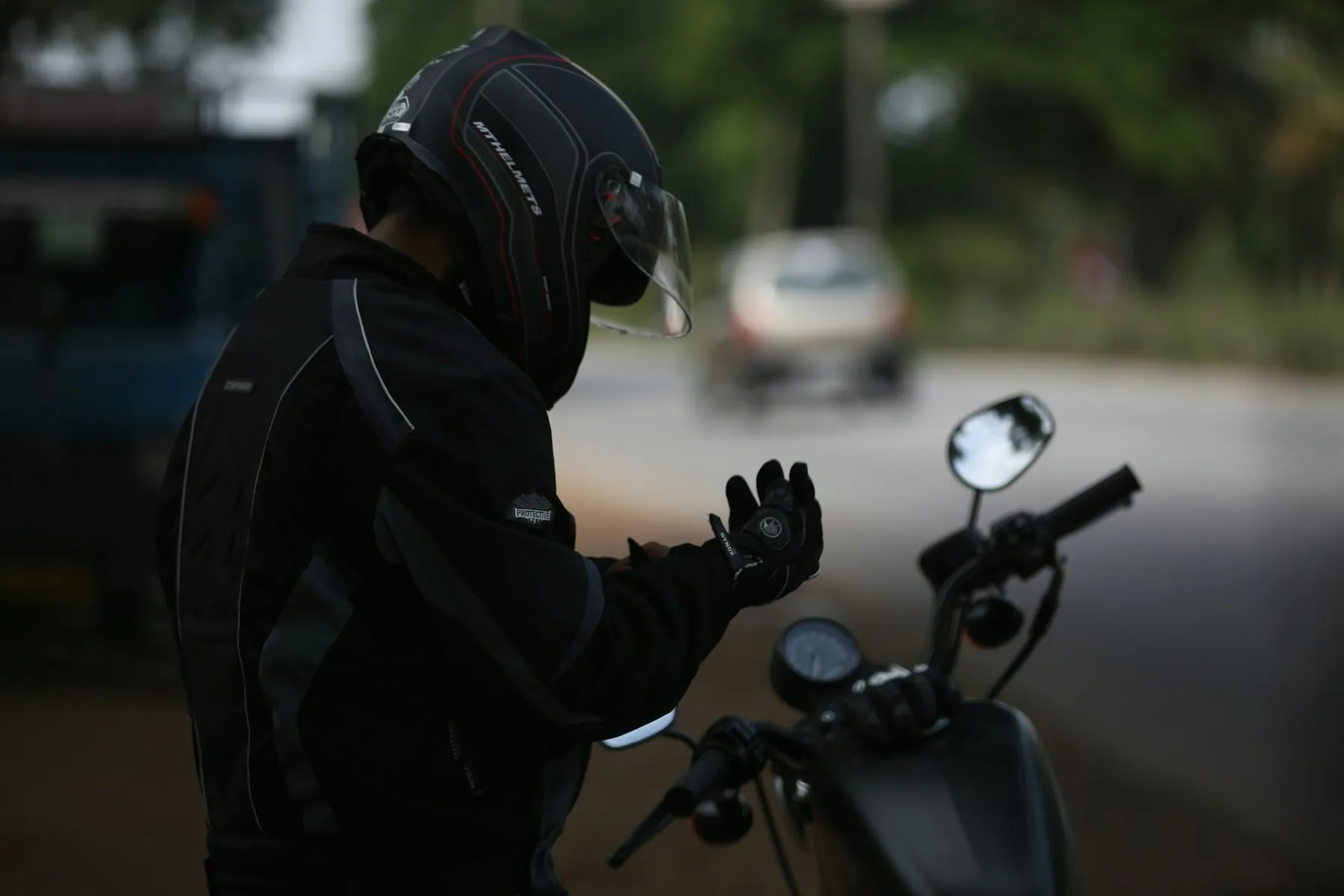
What each item is actually for
| Item | Protects against | Heat cost | Worth it in Thailand? |
|---|---|---|---|
| Helmet | The injury that kills riders | Moderate, and manageable with venting | Always. See choosing a helmet |
| Gloves | Palms, which go out first in every fall | Almost none in mesh | Always |
| Closed shoes | Feet, ankles, exhaust burns | Almost none while moving | Always |
| Mesh jacket with armour | Shoulders, elbows, back, forearm abrasion | Low while moving, high at a standstill | Yes for touring and daily riding; optional for short town hops |
| Riding trousers or armoured jeans | Hips, knees, thighs | High | For long rides, big bikes and mountain roads |
| Back protector | Spine | Moderate | If your jacket takes an insert, use it |
| Hi-vis or light-coloured top | Being seen at dusk and in rain | None | Yes, and underrated here |
Jackets: what to look for
A hot-climate riding jacket does two jobs: it holds armour in the right places, and it puts a layer of abrasion-resistant material between your skin and the road. In mesh, the second job is done less well than in leather or heavy textile — but "less well than leather" is a very long way above "a cotton T-shirt", which is what the comparison actually is.
- Armour at shoulders and elbows, fitted so it stays put. Armour that slides off the joint when you move is decorative. Try the jacket on and windmill your arms.
- A pocket for a back protector. Many jackets ship with a foam placeholder; a proper insert is a cheap upgrade.
- Genuine mesh panels across the chest and back, not a token vent behind a solid lining.
- A snug fit at the cuffs and waist so the jacket does not ride up and expose your back in a slide.
- Light colours. A black jacket in Thai sun is a decision you will regret by eleven in the morning.
- A packable waterproof layer, separate from the jacket, kept under the seat. Mesh is by definition not waterproof, and the rain here arrives fast — see riding a motorbike in tropical rain.
Wear something under it. A thin technical or merino base layer under a mesh jacket feels counter-intuitive and is genuinely cooler, because it moves sweat off your skin into the airflow rather than leaving it pooled. Riding in mesh over bare skin is hotter and, in a slide, considerably worse.
Legs: the honest compromise
This is where most riders in Thailand, including experienced ones, quietly give up — and it is worth saying so rather than pretending otherwise. Armoured riding trousers in this climate are hard work, and Thai bike shops stock relatively few of them.
The realistic ladder, in ascending order of protection: shorts (nothing), thin long trousers or lightweight cotton (stops surface grazing, no abrasion resistance to speak of), riding jeans with abrasion-resistant fabric (a real step up, tolerable in the heat for a day ride), and full mesh riding trousers with knee armour (the right answer for a long tour, and hot in traffic).
What is genuinely worth doing even if you ride in shorts: cover your legs for anything on a mountain road, for a full-day ride like the Mae Hong Son loop, and for any riding at night. Those are the situations where a fall is fastest and where you are furthest from a clinic.
Shorts and a vest is the standard uniform of the visitor road-rash injury. That is not a moral point — it is what a hip and thigh look like after sliding on Thai tarmac, and it is the most common serious skin injury in tourist towns. If you are going to ride in shorts, at least be honest that you have chosen comfort over your skin, and keep the speed down accordingly.
What you can actually buy in Thailand
More than most visitors expect. Thailand has a large motorcycling culture, and any city of size has motorcycle accessory shops carrying helmets, gloves, mesh jackets and rain gear. Bangkok and Chiang Mai have proper bike shops with a full range; Phuket, Pattaya and Koh Samui carry enough for a visitor's needs.
| Item | Rough price in Thailand | Approximate equivalent |
|---|---|---|
| Mesh gloves | ฿300–900 | About £7–20 / US$9–26 / €8–23 |
| Mesh jacket with armour | ฿1,500–4,000 | About £35–90 / US$45–115 / €40–100 |
| Rain suit (jacket and trousers) | ฿300–1,000 | About £7–23 / US$9–29 / €8–25 |
| Riding trousers | ฿2,000 upwards | From about £45 / US$58 / €50 |
| Imported European-brand gear | Similar to or above home prices | — |
Local and regional brands are considerably cheaper than imported ones and are perfectly serviceable for a holiday. Imported gear is not notably cheap in Thailand, so if you already own a mesh jacket, bring it rather than expecting a bargain here. Sizing runs small by European and American standards — try things on, and expect to go up a size or two.
Matching the gear to the riding
- Short hops around a beach town on a 110cc scooter. Helmet, gloves, closed shoes. A jacket is nice and few people wear one; keep your speed low and accept the trade.
- Daily riding as a resident. Add a mesh jacket. You will be on the bike enough for the odds to matter, and enough for it to become habit.
- A day ride or a multi-day tour. Full mesh jacket with armour, gloves, boots or sturdy shoes, and long trousers at minimum. Rain gear under the seat, not in the hotel.
- Hills and mountain roads. Same as touring, plus knee protection if you have it. The speeds are higher, the surfaces are worse and help is further away.
- Renting anything with real power. Treat it as you would at home. Renting a big bike in Thailand covers what those hires require of you.
Frequently asked questions
Is a mesh jacket actually any use in a crash?
Yes, on two counts. The armour at the shoulders and elbows is doing the same job it does in any jacket, and the mesh fabric — while it will not survive a high-speed slide the way leather does — turns a full-thickness graze into a scuff at the speeds most visitor crashes happen. Comparing it to leather is the wrong comparison; the real alternative is a T-shirt.
Will I overheat wearing gear in Thailand?
You can, and it is worth taking seriously. Mesh works by airflow, so the risk is in slow traffic rather than on the open road. Drink far more than you think you need, stop in the shade, and do not ride through midday in gear if you can shift the journey to early morning.
Can I buy riding gear in Thailand, or should I bring it?
Both work. Local and regional-brand mesh gear is cheap and adequate, and easy to find in any city. Imported European brands cost about what they do at home, so bring those if you already own them. Sizing runs small, so try before you buy.
What about hi-vis? Do Thai drivers look for motorbikes?
They look for motorbikes constantly, because motorbikes are everywhere — but heavily tinted car windows, rain and dusk all cut the odds of being seen. A light-coloured or hi-vis top costs nothing in heat and is one of the more effective cheap changes, especially if you ride at dusk.
What is the minimum I should wear?
Helmet, gloves, closed shoes. That covers the head, the hands and the feet — which between them account for the great majority of what a visitor damages on a scooter, and costs less than two days of hire. Gloves and footwear for riding in Thailand covers those two in detail.
Do I need armour if I am only doing 40 km/h?
A fall at 40 km/h is a fall onto tarmac at 40 km/h. Armour helps most at exactly those speeds, because the impact is survivable and the injury is decided by what sits between your joint and the road.