Thai road surfaces are inconsistent rather than bad. The national highway network is largely well built and well maintained, and you can travel hundreds of kilometres on smooth asphalt without a complaint. What catches visitors out is the transition: a good road can become a broken one inside a kilometre, with no warning sign, and then become good again just as suddenly.
On four wheels that is a jolt and a coffee spilled. On two it is the most common cause of a solo crash after loss of grip on a bend. Learning to read the surface ahead is a skill worth building deliberately in your first few days.
Why the surfaces vary so much
Three forces destroy Thai road surfaces and all three are worse here than in a temperate country. Water gets under the asphalt during the monsoon and softens the base beneath it; heat softens the bitumen itself, so the surface deforms under load rather than resisting it; and heavily loaded trucks push that softened material sideways. The result is the two classic Thai failures: ruts in the nearside lane where the trucks run, and potholes that appear suddenly at the end of the rainy season. Surfaces are therefore at their worst in October and November, and at their best a few months later once the repair crews have been through.
Thailand also uses concrete for sections that carry very heavy loads or that flood, and concrete fails differently. Instead of holes you get slabs that have settled at different heights, producing a hard edge at every joint. On a motorbike a mis-aligned slab edge running diagonally across your line is a genuine hazard, particularly wet.
Patch repairs are extremely common and vary enormously in quality. A good patch is flush; a bad one is a raised island of new asphalt with a lip, or a sunken depression where the fill has settled. Either way the patch is a different colour, which is your visual cue — and a heavily patched road is telling you that it fails regularly. Utility trenches are the worst of the lot: a long trench line running parallel with your direction of travel, slightly sunken, with lipped edges, wants to steer your front wheel along it.
Seeing it before you hit it
Most potholes are visible if you are looking in the right place, and the commonest mistake is looking too close to the front of the vehicle. Lift your eyes: on a scooter in town, look ten to fifteen car lengths ahead; on an open road, considerably further. You are looking for changes in texture and colour rather than for holes as such.
- A dark patch darker than the shade around it. A hole reads as a shadow, and a shadow with a hard edge on a sunlit road is almost always a hole.
- A change of colour. Grey against black is a patch; black against grey is a fresh repair. Either way the surface changes.
- Traffic moving out of line for no reason. The best pothole detector on any road is the car in front of you. If it moves, move.
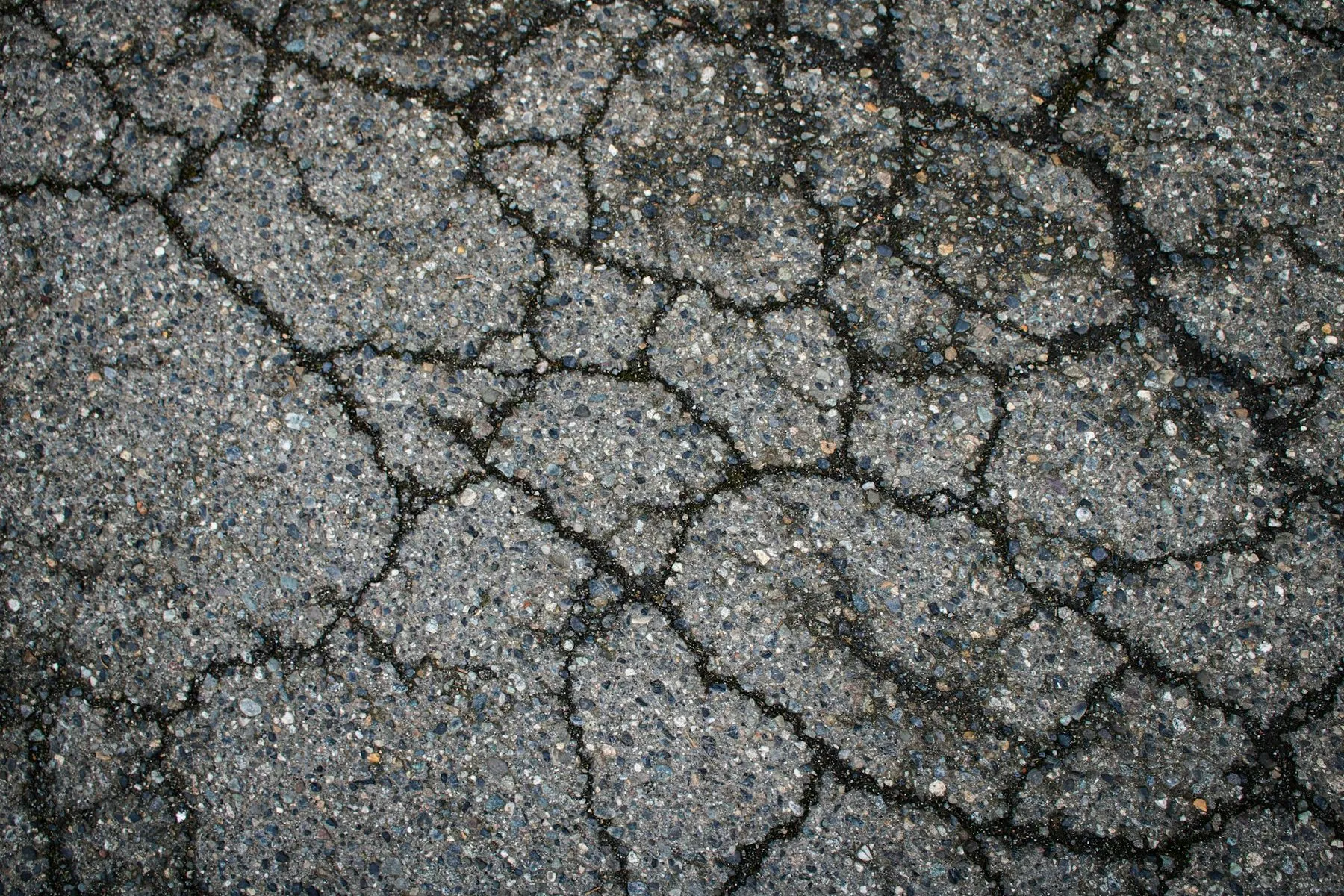
- A ring of crazed cracking. That is a pothole about to happen, and there is usually a real one within a few metres.
- Standing water in the dry. A puddle on an otherwise dry road means a depression. In the wet, every puddle is a possible hole.
- The edge where the tarmac ends. Rural roads often have no proper shoulder and the asphalt simply stops, with a drop of several centimetres onto dirt.
At night, none of these cues work. Headlights flatten the road and remove the shadows that give a hole away, and a water-filled pothole looks exactly like wet tarmac. This is a main reason driving at night in Thailand is a different activity from driving in daylight, and a strong argument for following the tail lights of a local vehicle at a sensible distance and going where it goes.
Technique: taking a pothole on two wheels
Go round it if you can, and if you cannot, go over it properly.
Going round means checking behind and beside you first. The classic pothole crash is not the hole itself but the swerve into a vehicle that was alongside. On a road with filtering traffic, a sudden lateral move is a bigger risk than a modest bump; if the hole is small and the traffic is close, take the hole.
Going over means braking before it, not on it. Release the brakes just before the front wheel arrives — braking compresses the front suspension, removing the travel you need to absorb the impact. Stand up slightly on the footboards, weight the rear, keep your arms relaxed, hold the bars firmly but do not fight them, and keep the bike upright and straight. The two things that turn a pothole into a crash are hitting it at an angle while leaning, and gripping the bars rigidly so the front wheel's deflection becomes a steering input.
The wheels matter more than the rider. The 10-inch wheels fitted to some of the cheapest rental scooters fall into a hole that a 14-inch wheel rides over. If you are riding rough provincial roads, choose accordingly at the shop — choosing a rental scooter covers what actually differs between the models on offer. Tyre pressure matters too: an underinflated tyre pinches against the rim on a sharp edge, and that is how you get a puncture and a bent rim at once.
Technique in a car
Slow before, not over. Braking hard while a wheel is in a hole loads the front suspension at exactly the wrong moment and is the classic way to bend a wheel or break a spring. Come off the brakes as you reach it and let the suspension work. Where you cannot avoid a bad stretch, position the car so the holes pass between the wheels, and hold the wheel firmly — a deep hole under one front wheel will pull the steering hard. On a rutted highway, sit slightly offset from the worn wheel tracks: it is more comfortable and, in the wet, keeps you out of the standing water that collects in them, which matters for the reasons set out in the rainy season and flooded roads.
Where the surfaces are worst
| Road type | What to expect |
|---|---|
| Motorways and expressways | Consistently good. Tolled, well maintained, occasional roadworks. |
| Numbered national highways | Generally good to very good. Deteriorate on minor four-digit routes. |
| Rural roads in Isaan and the provinces | Highly variable. Concrete sections, edge drops, seasonal potholes. |
| Town sois and back streets | Frequently poor. Utility trenches, uneven concrete, missing drain covers. |
| Island and beach roads | Poor in places. Steep, patched, and sand on the surface. |
| Mountain roads | Usually decent asphalt, but landslip damage, sunken edges and debris on bends. |
The things that are not potholes
- Speed bumps, frequently unmarked and unpainted, on roads where you do not expect them — see speed bumps and unmarked hazards on Thai roads.
- Missing or raised drain covers. Thai monsoon drains run along the edge of many roads under removable slabs, and a missing slab leaves a slot big enough to swallow a wheel.
- Diesel and oil in the middle of the lane, at junctions, bus stops and outside garages. Invisible when dry, lethal in the first minutes of rain.
- Spilled cargo — sand, gravel, rice husk, sugarcane, palm fruit. Sand on a bend has its own page: sand and gravel on Thailand's coastal roads.
- Steel plates over roadworks, slippery when wet and with a lip at each edge.
If a hole costs you a tyre, the good news is that Thailand has an extraordinarily dense network of small roadside tyre workshops — a hand-painted sign, a stack of used tyres and a compressor — and repairs are quick and cheap. Punctures and where to get a tyre fixed in Thailand covers how to find one. On a hire vehicle, photograph the wheels at handover so a pre-existing buckle is not attributed to your week.
Frequently asked questions
Are Thai roads actually in bad condition?
The main network is better than most visitors expect — the numbered highways are wide, well surfaced and well signed. The problem is variance, concentrated on minor rural roads, town sois and islands.
When are potholes worst?
At the end of the rainy season and for a month or two afterwards, once water has got under the surface and the trucks have worked on it. By the middle of the dry season much of it has been repaired.
Should I report a pothole?
The Department of Highways operates a 24-hour information line on 1586, which is the right place for a hazard on a numbered route. Roads inside a town are the local authority's responsibility.
Can I claim for damage caused by a pothole?
In theory a claim against the road authority exists; in practice it is a slow administrative process that is not realistic for a visitor. Your own comprehensive cover, or the rental company's, is the practical route — and tyre and wheel damage is very often excluded from a standard hire-car waiver.
Is this a problem for cyclists too?
More so than for anyone else, because a bicycle's narrow tyre drops into holes and cracks that a scooter rides over, and because cyclists are pushed to the road edge where the surface is worst. Route choice matters more than technique — see planning a quiet-road cycling route in Thailand.