Chiang Rai is the quieter, cheaper alternative to Chiang Mai for renting a bike, and for a certain kind of rider it is the better one. The shops cluster in the city centre around the clock tower and along Jet Yot Road, the rates undercut Chiang Mai's, and within an hour of leaving town you are on mountain roads with almost no traffic on them. What you give up is choice: fewer shops, smaller fleets, fewer large-capacity machines, and fewer staff who will conduct the whole transaction in English.
The general rules of Thai motorbike hire — what the shop asks for, what a deposit should be, how damage is handled — are in renting a motorbike in Thailand. This page is about the province: the distances, the mountain roads, and the two seasons that genuinely change whether you want to be on a bike here at all.
- Typical daily rateRoughly 150–250 baht for a 125cc automatic; less again on a weekly rate
- TerrainFlat river plain around the city; serious mountains to the north and east
- Best vehicle150cc or a manual if you are going into the hills; 125 is fine for town
- AvoidRoughly late February to April, when burning-season smoke fills the north
Where the shops are
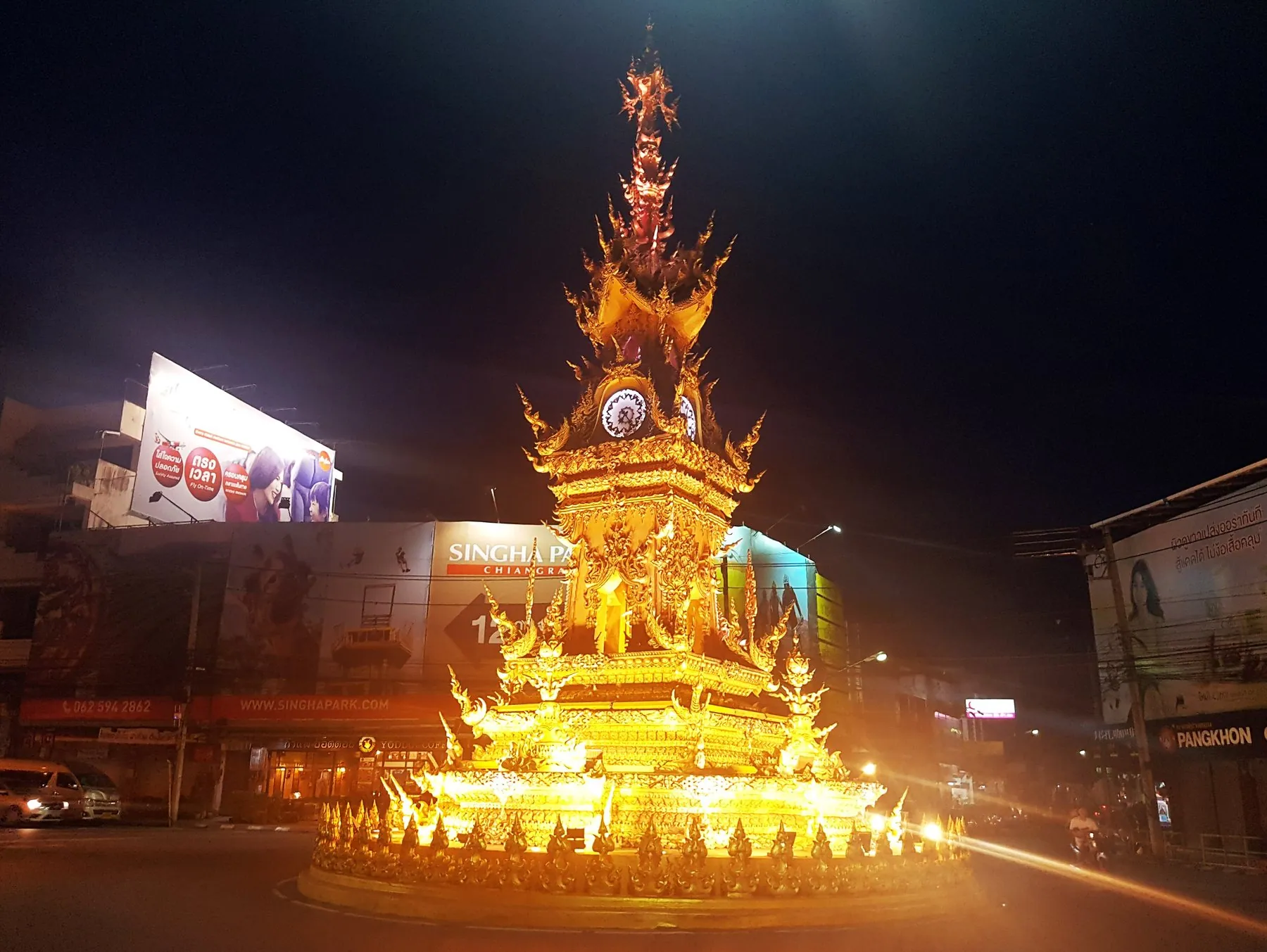
Chiang Rai's rental trade is concentrated in a small area of the city centre — around the clock tower and along Jet Yot Road and its sois, where several long-running shops operate within a few hundred metres of each other, including a couple that keep larger bikes. Many deliver to hotels or to the airport.
The scene is smaller than Chiang Mai's in every dimension, which cuts both ways. You have less choice, but you are also dealing with businesses that live off local reputation rather than a constant flow of one-time tourists, and deposit disputes are reported far less often here than in the beach towns. The standard protections still apply: cash deposit rather than the original passport (why that matters), and a slow video walk-round before you ride away (how to film it).
The burning season is the big planning factor
From roughly late February through to April, agricultural burning across northern Thailand and over the borders in Laos and Myanmar fills the region with smoke. Chiang Rai is affected as badly as Chiang Mai and sometimes worse, because prevailing winds carry a great deal of smoke down from northern Laos. Air quality readings during March regularly reach many times the World Health Organization's daily guideline for fine particulates, and the mountain views that are the entire reason to ride here disappear into a grey wall.
For a rider it matters twice: you breathe it unfiltered, and the haze takes away sightlines through exactly the bends where you need them. It typically breaks when the rains arrive in late April or May. If the Golden Triangle and the viewpoints are the point of your trip, come between November and February.
Cool-season mornings in the hills are genuinely cold. Chiang Rai city is mild in December and January, but the roads up towards Doi Tung, Mae Salong and Phu Chi Fa before mid-morning are cold enough that riders in shorts and a T-shirt get properly chilled, and fog sits in the valleys at dawn. Take a layer and set off later than you would in the south. See protective riding clothing in a hot climate.
The distances are the other thing
Chiang Rai province is large and the good things are spread across it. This is not a town where you potter about for an afternoon; it is a base for full-day rides, and that should change what you rent.
| Destination | Rough distance from the city | Road |
|---|---|---|
| Wat Rong Khun (White Temple) | About 13 km south | Main highway; easy |
| Chiang Saen and the Golden Triangle | Roughly 60–70 km north | Flat and straightforward |
| Mae Sai and the Myanmar border | About 60 km north | Main road; busy near the border |
| Doi Tung | Roughly 60 km north-west | Steady mountain climb, tight bends |
| Mae Salong | Roughly 65–80 km north-west | Winding hill road; a full day |
| Phu Chi Fa | Roughly 100 km east | Long, remote, steep at the end |
A 125cc automatic will do all of these, but it will not enjoy the last two, and neither will you. If mountains are on the list, a 150cc or a manual bike is the better choice — engine braking on the descents from Mae Salong and Doi Tung matters more than power on the way up. Choosing a rental scooter covers the classes and mountain roads and hairpin bends covers the technique.
For the routes themselves, see driving the Golden Triangle loop from Chiang Rai, Route 1148 and the northern back roads, and the drive on Highway 118 if you are arriving from Chiang Mai. Driving in northern Thailand covers the region generally, and driving in Chiang Rai covers the city itself, which is small, flat and easy.
Fuel and phone signal both thin out in the hills. The main highways have proper stations, but on the back roads towards Phu Chi Fa or between Mae Salong and Doi Mae Salong you may go a long way between them, and roadside bottle sellers are the fallback. Fill up before you leave a town rather than when the gauge drops. See fuel in Thailand and navigation apps in Thailand, since offline maps are worth having up here.
Border areas
Chiang Rai province borders both Myanmar and Laos, and some roads run close to the frontier — see crossing into Laos by road. The practical point for a rider is simpler: stay on marked public roads, do not follow tracks towards the border out of curiosity, and expect checkpoints on the main routes north towards Mae Sai and east towards Chiang Khong. See police checkpoints in Thailand, and be clear about which licence you can use before you set off.
Prices and seasons
Chiang Rai is one of the cheaper places in Thailand to rent. A 125cc automatic typically runs somewhere around 150–250 baht a day (roughly £3.50–£6 / US$4.50–US$7.50), with weekly rates markedly better and monthly rates cheaper again — see scooter rental prices in Thailand and monthly motorbike rental.
The high season here is the cool, clear period from November to February, and that is when demand peaks. Bikes are easy to find outside it. The wet season, roughly June to October, brings heavy afternoon rain and occasional landslips on the mountain roads; check locally before committing to a hill route after a wet night, and read the rainy season and flooded roads.
Frequently asked questions
Is Chiang Rai cheaper than Chiang Mai for scooter hire?
Usually a little, yes, and the difference grows on weekly and monthly rates. The bigger difference is choice: Chiang Mai has far more shops and a much deeper big-bike market.
When is the burning season, and how bad is it?
Roughly late February to April, peaking in March. Bad enough that mountain views vanish and air quality readings reach many times the WHO daily guideline. It clears with the first serious rains.
Can I ride from Chiang Mai to Chiang Rai and drop the bike there?
Some Chiang Mai shops arrange one-way drops for a fee, but it is far less common than the Chiang Mai–Pai arrangement. Ask before you assume. The road itself is covered in Chiang Mai to Chiang Rai.
What size bike do I need for Mae Salong and Phu Chi Fa?
A 150cc automatic or a manual. A 125 will get there but will be short of engine braking on the long descents, which is the part that matters.
Are there checkpoints near the borders?
Yes, routinely, on the main roads north to Mae Sai and east towards Chiang Khong. They are ordinary traffic and immigration checks. See police checkpoints in Thailand.
Is a car better here than a bike?
For the long days — Phu Chi Fa, the Golden Triangle loop with stops — a car is more comfortable and lets you carry things. For the mountain roads themselves, most riders would rather be on two wheels. See renting a car in Thailand.