Renting a scooter on Koh Samui is easy — shops line Chaweng Beach Road, the Lamai strip and Fisherman's Village in Bophut, and the airport and most hotels will arrange one. What is not easy is the island itself. Samui's ring road looks, on a map, like a gentle 51-kilometre loop you could ride in an afternoon. The south-western quarter of it, between Lamai and Nathon, is nothing of the sort: steep gradients, hairpins and narrow sections above a drop. Samui also has one of the worst reputations in Thailand for rental damage claims, and the two facts are related.
The general rules — what a shop asks for, how deposits work, what happens when a bike comes back marked — are all in renting a motorbike in Thailand. This page is about what Samui does differently: the ring road, the ferries, and a rental market that has learned exactly how much a nervous visitor will pay to get to the airport on time.
- Typical daily rateRoughly 200–350 baht for a 125cc automatic; 350–500 baht in high season
- TerrainFlat and busy in the north-east, steep and twisting in the south-west
- Best vehicle125–150cc automatic. The whole ring road on a loaded 110 is unpleasant
- The loopAbout 51 km, 1.5–2 hours without stopping
Route 4169: the two halves of the ring road
The northern and eastern sections — Nathon up to Maenam, Bophut, Chaweng, down to Lamai — are flat, wide in places, and heavily built up. The hazard here is traffic rather than terrain: cars pulling out of hotel driveways, songthaews stopping without warning, and the congested strip through Chaweng where the road narrows and everyone is looking for a parking space rather than at the road. See songthaews and how they stop without warning, which is the single most useful piece of local knowledge on this island.
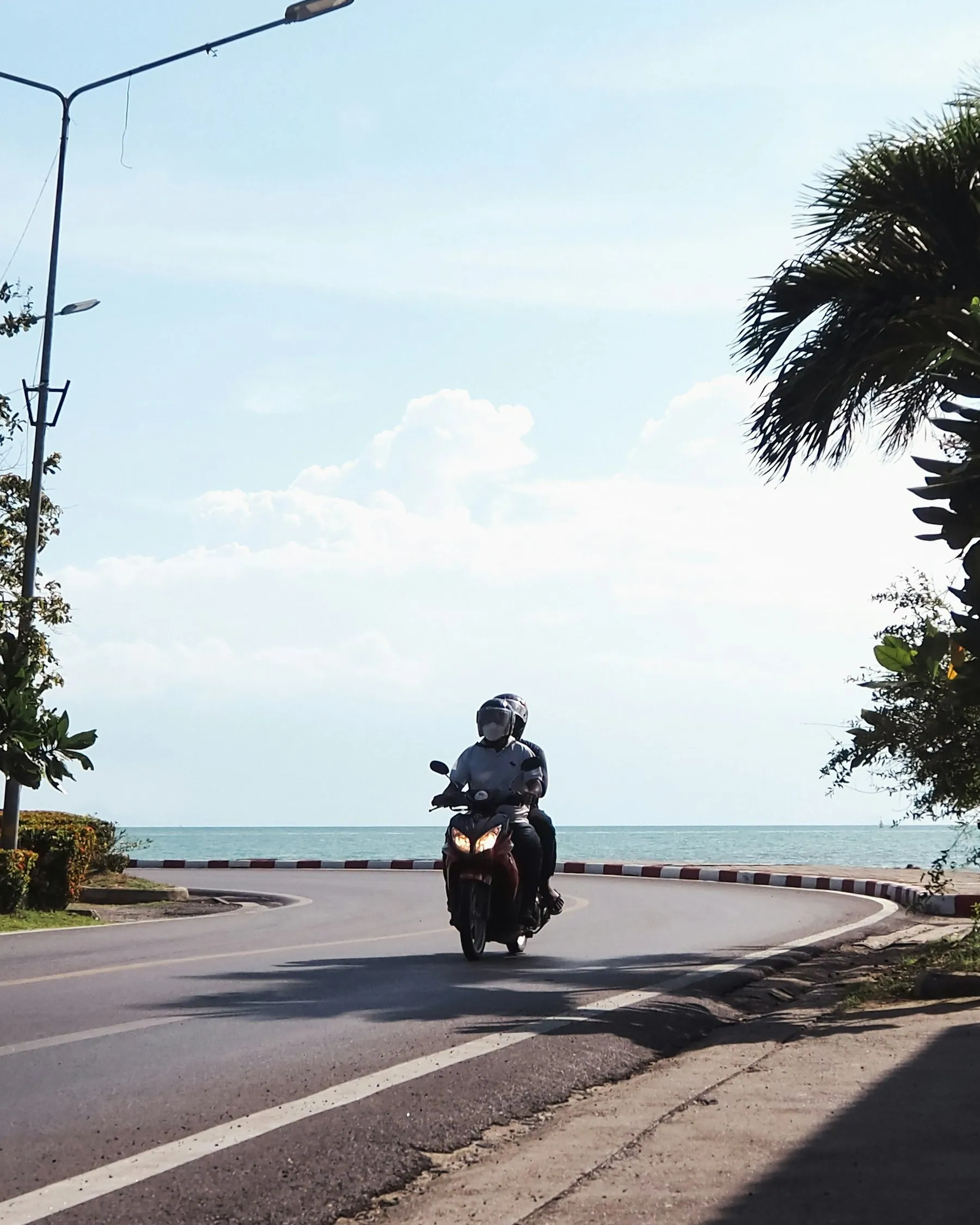
The south and west — from Lamai round past Hua Thanon, Taling Ngam and up to Nathon — is the difficult half. Steep climbs, sharp hairpins, narrow lane widths, and long descents where a small automatic's brakes get hot. It is genuinely scenic and it is where visitors come off. Allow the best part of an hour for that section alone and ride it in daylight. Mountain roads and hairpin bends covers the descent technique that matters most: engine braking, not dragging the lever.
The turning up to the viewpoints is where it goes wrong. Several of Samui's best-known viewpoints and waterfalls are reached by short, extremely steep concrete access roads off the ring road. They are far steeper than anything on the main loop, often single-track, and frequently wet. A scooter that stalls halfway up one of these rolls backwards. If in doubt, park at the bottom and walk.
Getting a vehicle to and from Samui
Samui is reachable by vehicle ferry, which sets it apart from Koh Tao. Roll-on ferries run between Donsak on the mainland, about an hour and a half by road from Surat Thani, and Lipa Noi on Samui's west coast. Not every operator carries vehicles — the high-speed catamarans serving Nathon are foot-passenger services — so bringing a car or bike means the conventional ferry, not the fast boat. See the Koh Chang and Koh Samui vehicle ferries.
In practice almost nobody brings a rented bike: most mainland agreements forbid ferry crossings — see taking a hire car on a ferry in Thailand — and car hire in Surat Thani covers the alternative of parking at the pier. If you fly in, you rent on the island.
The claims reputation, and what to do about it
Samui has been generating rental damage complaints for years, and the pattern travellers describe is consistent: a bike is returned, the shop finds a scratch, and a demand follows that is far out of proportion to the mark. The lever that makes it work is a passport held as security. A shop with your passport controls whether you make your flight, and it knows it.
The counter-measures are simple. Offer a cash deposit and a photocopy — passport as deposit. Film the bike slowly before you ride it, narrating every existing mark: the inspection video. And if a claim lands, do not pay at the counter under time pressure — see the rental damage claim playbook and disputing a rental charge, including the tourist police route.
Rent from a shop with a shop. Samui has plenty of proper businesses with a premises, a sign, a printed contract and a fleet you can see. It also has stands on the beach road that hand over a bike belonging to someone else entirely. If the person renting to you cannot show you where the business lives, you have no one to complain to later. Hotel desks or street shops explains how to tell.
Checkpoints and the licence question
Roadside checks are a routine feature of the ring road, most commonly reported at junctions around Chaweng, on the approach to Nathon and near the airport road. What happens at one is described in police checkpoints in Thailand. Settle which licence you can use before you rent, read Thailand's helmet law, and see rental helmets in Thailand on when to buy your own.
Prices through the year
Samui's season is unusual: the wettest months are late in the year, roughly October to December, rather than the mid-year monsoon that hits the Andaman coast. Peak demand is December to February and again in July and August. A 125cc automatic typically runs around 200–250 baht a day (roughly £5 / US$6) in the quiet months and 350–500 baht at the peak, with the good shops selling out over New Year. Weekly and monthly rates drop sharply — see scooter rental prices in Thailand and monthly motorbike rental if you are staying a while.
One seasonal warning specific to this coast: heavy rain in the last months of the year floods parts of the ring road and the sois off it, and Samui has had genuinely serious flooding in some years. The rainy season and flooded roads in Thailand covers what standing water does to a scooter, which is more than most people expect.
Is a car the better answer here?
For a family, or anyone who is not a confident rider, yes. The ring road is perfectly manageable on four wheels and the south-western section that frightens riders is simply a nice drive; the trade-off is tight parking in Chaweng and Lamai. See renting a car in Thailand and our scooter-or-car tool.
Frequently asked questions
How long does it take to ride round Koh Samui?
The ring road is about 51 kilometres and takes roughly an hour and a half to two hours without stopping — but nobody rides it without stopping. Allow a full day with viewpoints, lunch and a waterfall, and do the steep south-western section in good light.
Can I bring a rented motorbike to Samui on the ferry?
The vehicle ferries between Donsak and Lipa Noi carry bikes, but most mainland rental contracts do not allow it. Almost everyone rents on the island instead. See the Samui vehicle ferry for how the crossing works.
Why does Samui have such a bad reputation for damage claims?
Because the combination of high visitor turnover, passports held as deposits and tight flight schedules makes disputed claims profitable. It is not universal and there are good shops. Protect yourself with a cash deposit and an inspection video rather than by trying to pick the honest shop by instinct.
What is the most dangerous part of the ring road?
The south-western quarter between Lamai and Nathon, and the short steep access roads up to viewpoints and waterfalls. Both are worse in the wet.
What size scooter should I rent?
125cc for one rider, 150cc if you are two-up or plan to ride the whole loop with luggage. See choosing a rental scooter.
What do I do if I come off the bike?
Get yourself checked properly — Samui has good private hospitals and grazes go septic fast in this climate. Then photograph the bike where it lies. Accident in a rental car or scooter and road rash and exhaust burns cover both halves of the problem.