Thailand runs two motor insurance systems side by side. The compulsory one — Por Ror Bor, the sticker on the windscreen or under the seat — is legally required on every vehicle, and it covers injury to people, not damage to anything. The voluntary one, sold in classes numbered 1 to 3, is what actually repairs vehicles and pays meaningful third-party liability, and no vehicle is obliged to have it.
For a visitor driving a hire car or a rented scooter, the practical consequence is this: the vehicle you are in almost certainly has the compulsory cover, because it cannot be taxed without it, and you have no idea what voluntary cover it carries unless you ask. Neither of them is your travel insurance, and neither of them is the collision damage waiver at the rental desk. Four different things, four different failure modes.
- Compulsory (Por Ror Bor)People only. No property damage of any kind
- Medical ceiling once liability is settledUp to 80,000 baht per person
- Voluntary Class 1The only class covering a single-vehicle crash
Compulsory insurance: what it actually is
Por Ror Bor is statutory motor insurance under the Protection for Motor Vehicle Accident Victims Act. Two features define it. It attaches to the vehicle rather than to the driver, so it does not care who is at the wheel. And it covers people rather than property — it will not repair anyone's car, anyone's scooter, or anyone's shopfront. A vehicle without it cannot have its annual tax renewed, and the reported penalty for using one without it is a fine of up to 10,000 baht, roughly £230, US$280 or €260.
The cover comes in two stages, and the difference between them matters more than the headline numbers.
| What is paid | Amount per person | When |
|---|---|---|
| Preliminary medical expenses | Up to 30,000 baht | Without waiting for fault to be established |
| Preliminary payment for death, permanent disability or loss of organs | 35,000 baht | Without waiting for fault to be established |
| Preliminary combined maximum | 65,000 baht | As above |
| Medical expenses | Up to 80,000 baht | Once liability is established |
| Death or total permanent disability | 500,000 baht | Once liability is established |
| Loss of organs / dismemberment | 200,000 to 500,000 baht, by schedule | Once liability is established |
| Daily hospital allowance, inpatient | 200 baht a day, up to 20 days | Once liability is established |
| Combined maximum per person | 504,000 baht | - |
Those figures are published identically by two licensed Thai insurers, Chubb and Roojai, which makes them the most solidly sourced insurance numbers on this site. There is also a per-accident ceiling, published by one insurer as 5,000,000 baht for vehicles of not more than seven seats and 10,000,000 baht above that; because only one source states it, treat it as indicative rather than settled.
Premiums are modest — a few hundred baht a year for a motorcycle or a car. We have seen precise tariff figures attributed to the regulator, but could not confirm them against the Office of Insurance Commission itself, so we are not publishing them.
The number to hold on to is 80,000 baht. That is roughly £1,800, US$2,200 or €2,100 — and it is the medical ceiling, per person, once liability has been settled. A serious motorbike head injury treated at a private hospital in Phuket or Bangkok can pass that inside a day. If you are riding a scooter with a valid compulsory sticker and no travel insurance, you are not covered in any sense that will help you. See Thai hospitals after a crash and what it costs.
There is a second trap in the two-stage structure. The preliminary payment arrives quickly and without anyone proving anything, which is genuinely useful. The larger figures arrive only when liability is settled, and in Thailand that process can be slow and frequently runs through an informal negotiation between the parties and their insurers rather than through a court.
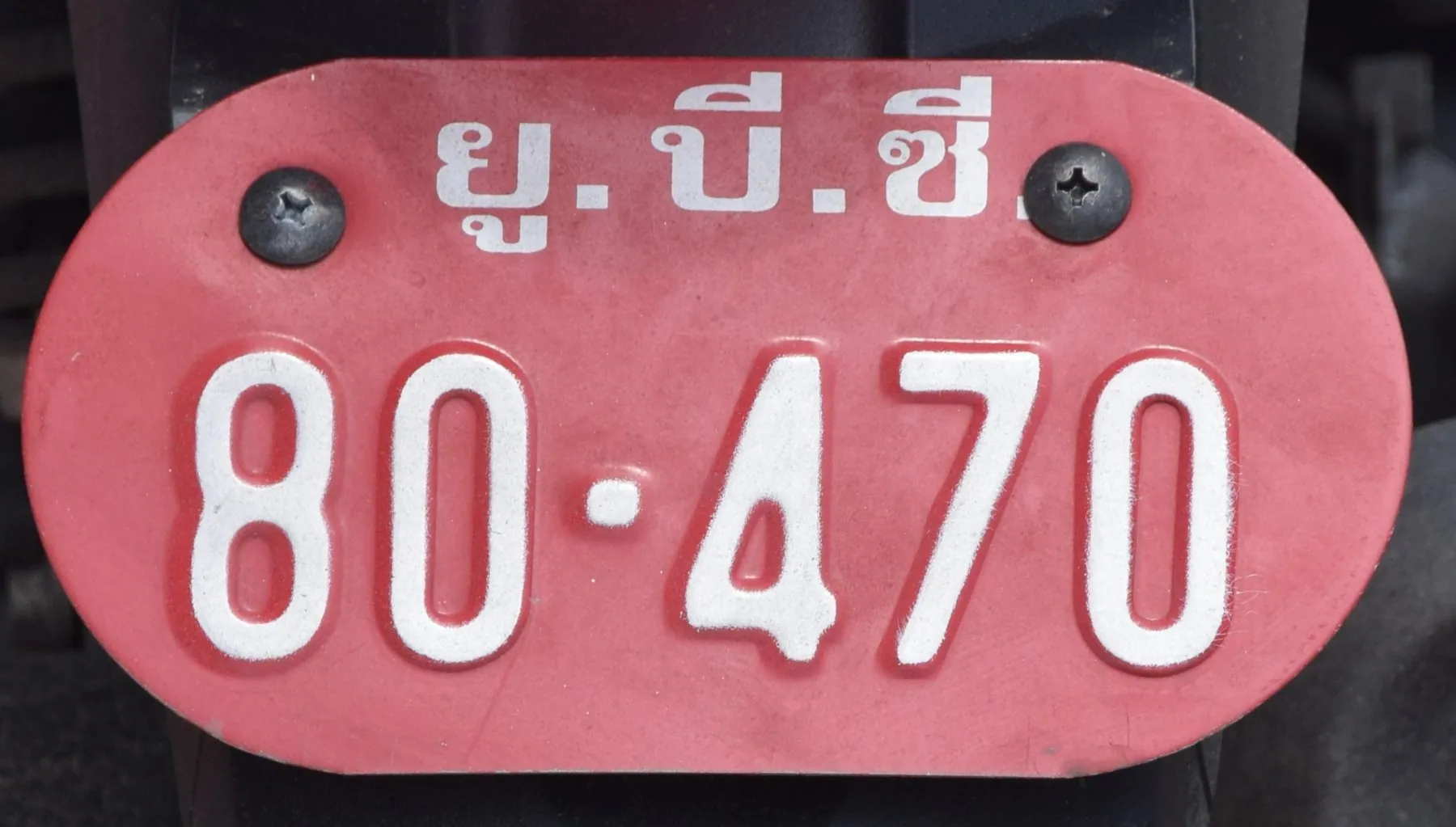
Voluntary insurance: the classes explained
Voluntary motor insurance is what most people mean by "car insurance". It is sold in five tiers and the differences between them are not intuitive.
| Class | Your own vehicle | Theft and fire | Third-party liability |
|---|---|---|---|
| Class 1 | Yes, including single-vehicle accidents; plus flood and natural disaster | Yes | Yes |
| Class 2+ | Only in a collision with another vehicle | Yes | Yes |
| Class 2 | No | Yes | Yes |
| Class 3+ | Only in a collision with another vehicle | No | Yes |
| Class 3 | No | No | Yes |
The "+" is doing specific work: the plus tiers cover your own vehicle only when a named third-party vehicle is involved. The difference between 2+ and 3+ is simply that 3+ drops theft and fire. All classes add third-party liability on top of the compulsory Por Ror Bor cover.
The "+" classes exclude the accident a visitor is most likely to have. Losing the front wheel on gravel, on a wet corner, or on a sandy bend on Koh Samui is a single-vehicle accident with no other party to identify. Class 2+ and Class 3+ both exclude it. Only Class 1 covers it — and a rented scooter is almost never on Class 1.
Which of this touches you as a visitor
In a hire car
The compulsory cover is included. Budget Thailand, for example, confirms that compulsory third-party cover is included in all its rates, and this is standard across the industry — a vehicle cannot be legally taxed without it. Beyond that, the hire company will carry its own voluntary policy on its fleet, but that policy is between the company and its insurer. What governs your exposure is the rental agreement: the collision damage waiver, the excess and its exclusions.
That waiver is not insurance. Avis Thailand says so in its own terms — its protections are "not insurance" but "products which reduce your damage responsibility". The excess and the long list of things sitting outside the waiver — tyres, wheels, glass, interior damage, lost keys, lost plates, wrong fuel, towing — are where the money actually goes. That is a renting subject and it is covered properly at rental insurance excess in Thailand and how to cut it.
On a rented scooter
Assume the machine has compulsory cover and nothing else. Voluntary motorcycle policies exist but are far less common on rental fleets, and scooter hire terms in Thailand vary so widely that we found no operator's terms we would rely on for a general statement. Practically: damage to the machine is your problem, damage you cause to another vehicle is your problem beyond the compulsory cover's zero property limit, and your own injuries are your travel insurance's problem — if it is valid.
If you own the vehicle
Then the choice of class is yours, and it is a real decision with real money attached. That is covered on the buying side: Por Ror Bor, Thailand's compulsory motor insurance and Thai insurance classes 1, 2+, 3+ and 3 explained.
What none of it does for you
- It does not repair the hire vehicle. Compulsory cover pays nothing for property, ever. The rental agreement decides that.
- It does not pay for your medical treatment beyond the ceiling. 80,000 baht per person is a floor under a serious injury, not a safety net.
- It does not evacuate you. No Thai motor insurance moves you to Bangkok by air or flies you home — see medical evacuation insurance for Thailand.
- It does not survive your own licence problem. Compulsory cover attaches to the vehicle and pays victims, but your travel policy — the one with real capacity — is conditional on your entitlement to be driving. See does travel insurance cover driving in Thailand.
The three questions to ask at the counter. What is the excess, and what does the waiver exclude? Does the vehicle carry voluntary cover as well as compulsory, and at what class? And what is the number I call at the scene of an accident? Get the answers on the agreement, in writing, before you drive away.
Frequently asked questions
Does the compulsory insurance sticker mean I am covered?
Only in the narrowest sense. It means injured people in an accident involving that vehicle can claim up to statutory limits. It does not repair any vehicle, it does not cover property damage of any kind, and its medical ceiling is exhausted quickly by serious trauma.
Do I need to buy Thai motor insurance as a tourist?
No, and you generally cannot — Thai motor policies are written for a registered vehicle and its owner. Your protection as a visitor comes from the vehicle's own cover, the rental agreement, and your travel insurance. Focus your effort on the last of those.
What is the difference between Class 2+ and Class 3+?
3+ drops theft and fire. Both cover your own vehicle only in a collision with another vehicle, and both exclude the single-vehicle crash entirely. Only Class 1 covers you when you come off on your own.
Is the rental company's CDW insurance?
No. Avis Thailand states in its own terms that its protections are not insurance but products that reduce your damage responsibility. It caps what you owe the rental company; it does nothing else and it protects nobody else.
Who pays if I injure someone?
The compulsory cover on the vehicle pays the victim up to its limits, starting with the preliminary payment. Beyond that, liability is yours unless voluntary cover responds. This is where an uninsured position becomes serious — see what happens if you drive uninsured in Thailand.
Someone hit me. Will their insurance pay?
The compulsory cover on their vehicle should pay your medical costs up to the limits above, and the preliminary payment does not require fault to be settled first. Anything beyond that depends on their voluntary policy and on the liability process. If someone hits you in Thailand covers how to actually get paid.
How much does compulsory insurance cost?
A few hundred baht a year for a motorcycle or a private car. We have seen exact tariff figures attributed to the regulator but could not confirm them from the Office of Insurance Commission, so we are not publishing precise numbers.