The fine is the smallest part of it. Using a vehicle without the compulsory Por Ror Bor cover carries a reported penalty of up to 10,000 baht — roughly £230, US$280 or €260 — and the vehicle's annual tax cannot be renewed without it. For a visitor, that is an administrative problem belonging to whoever owns the vehicle. The consequence that actually reaches you is what happens after a crash when there is no cover standing behind you: a hospital that wants payment, another party who wants compensation, and a negotiation you are conducting from the weakest possible position.
"Uninsured" is also less binary than it sounds. There are four separate covers in play for a typical visitor and they fail independently, so you can be uninsured in one way while perfectly covered in another — and the one that fails is usually the one that mattered.
- No compulsory cover on the vehicleReported fine up to 10,000 baht; no tax renewal
- The cover that fails most oftenYour travel policy, on a licence technicality
- What Thai compulsory cover never paysProperty damage, of any kind
The four ways to be uninsured
| What can be missing | What you lose | How likely for a visitor |
|---|---|---|
| Compulsory motor cover on the vehicle | The statutory payments to injured people | Unlikely on a hire car, possible on a cheap rental scooter |
| Voluntary motor cover on the vehicle | Vehicle repair and meaningful third-party liability | Very likely on a scooter; unknown on a hire car unless you ask |
| A valid travel policy | Your own treatment, evacuation and repatriation | The common failure, and usually on the licence clause |
| Cover for the hire vehicle's damage | What you owe the rental company | Depends entirely on the agreement you signed |
The first two attach to the vehicle. The third attaches to you. The fourth is a contract, not insurance at all. Compulsory vs voluntary insurance in Thailand sets out what each of the motor covers actually pays.
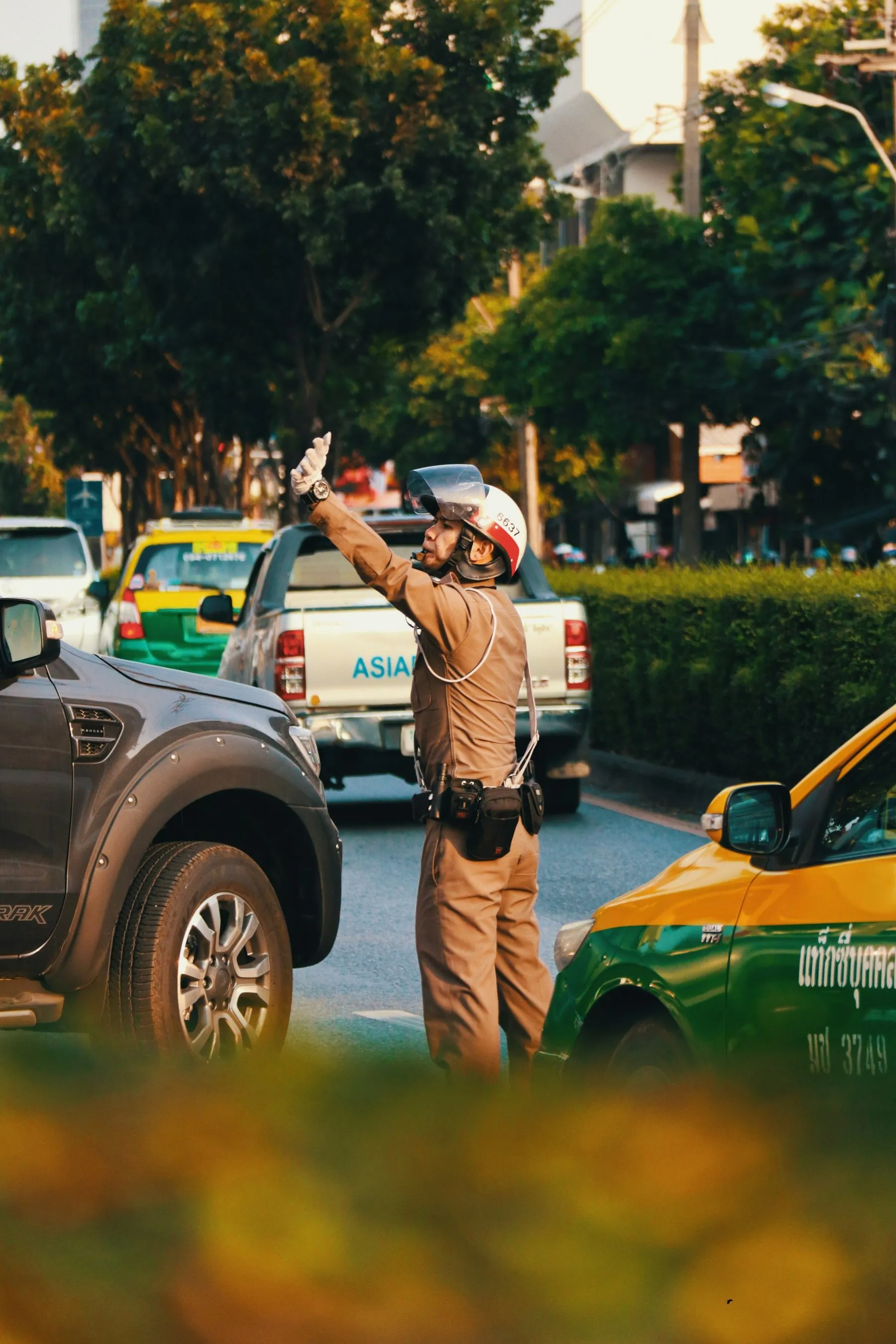
The legal position
Compulsory insurance is required on every registered vehicle under the Protection for Motor Vehicle Accident Victims Act. It attaches to the vehicle rather than the driver, so as a hirer you are not the person who buys it — but you are the person driving if it turns out not to be there. The reported penalty for using a vehicle without it is a fine of up to 10,000 baht, and the practical enforcement mechanism is the annual tax renewal, which cannot be completed without a current policy.
There is no separate Thai offence of "driving without insurance" in the sense a British or Irish reader would recognise, where the driver's own cover is checked at the roadside. What is checked at the roadside is your licence, and that is the point at which a visitor's position most often unravels — see riding without a licence in Thailand.
What the law says
Compulsory motor insurance (Por Ror Bor) covers bodily injury, death and disability of accident victims and no property damage of any kind. Preliminary compensation of up to 30,000 baht for medical expenses, and 35,000 baht for death or permanent disability, is paid without waiting for fault to be established. Once liability is settled, medical expenses run to 80,000 baht per person and death or total permanent disability to 500,000 baht. The reported penalty for using a vehicle without cover is up to 10,000 baht.
What actually happens after a crash with no cover behind you
At the scene
Thai road accidents are frequently settled at the scene or shortly afterwards, through a negotiation between the parties and, where they exist, their insurers' surveyors. A surveyor attending on your behalf changes the character of that conversation entirely: there is a professional present whose job is to establish what happened and what is payable. Without one, you are a foreign visitor negotiating liability in a language you do not speak with people who live there.
At the hospital
Thai private hospitals require payment or a guarantee of payment. The compulsory cover's preliminary payment arrives without proof of fault, which helps immediately, but the ceiling is low relative to what serious trauma costs. Without a valid travel policy, the balance is yours, in cash or on a card, before treatment continues or before you are discharged. Thai hospitals after a crash and what it costs covers the process.
Afterwards
If you injured someone or damaged their vehicle, the claim does not evaporate when your flight leaves. Liability discussions can run for weeks, police may be involved where there is serious injury, and in the worst cases your passport and your ability to leave the country become part of the conversation.
The most expensive version of this is not the fine. It is a rider with no motorcycle entitlement, therefore no valid travel insurance, on a machine whose compulsory cover tops out at 80,000 baht of medical expenses, who needs a transfer to Bangkok and an intensive care bed. Everything above the statutory floor is personal debt. Nothing about that scenario is exotic; it is the ordinary outcome of a licence technicality most riders never knew existed.
The failure nobody sees coming
For the overwhelming majority of visitors, being uninsured in Thailand is not a decision. It is a discovery. The scooter had a valid compulsory sticker. The rental agreement was signed. The travel policy was bought. And then the claim is assessed and the insurer asks what licence entitlement the rider held for a 110cc motorcycle, and the answer is a car licence.
Thailand issues car and motorcycle entitlement as separate licences, and under its declaration to the 1968 Convention it treats mopeds as motorcycles — so there is no lighter category. The UK Foreign Office puts the consequence in one sentence: driving a car or riding a motorcycle in Thailand without a valid licence "could invalidate your travel insurance and you'll be unable to claim if you have an accident or injury." Does travel insurance cover driving in Thailand goes through the wording; what voids your motorbike cover goes through the rest of the exclusions.
How to make sure this is not you
- Check the entitlement on your own licence against the vehicle you intend to hire, before you book anything.
- Get an international driving permit at home. It is issued only in your own country and it cannot be bought after you land.
- Read your travel policy's motor and motorcycle clauses in the full wording, and buy the extension if there is one.
- Ask the rental company for the vehicle's compulsory insurance document and a copy of the registration. An established operator will have both.
- Read the excess and the waiver exclusions on the hire agreement before you sign — rental insurance excess in Thailand.
- Save your insurer's 24-hour assistance number offline, and 1155 for the Tourist Police.
- Run through the five-question legality checklist once, properly.
If you discover the problem while you are here. Stop riding the machine you are not entitled to ride. That is the whole fix, and it works immediately. Swap to a car if your licence covers cars, or use local transport. Continuing because you have already paid for the week is trading a small sunk cost against an unlimited one.
If a crash has already happened
Do the ordinary things in the ordinary order, and do not volunteer a legal opinion about your own position. Stop, make the scene safe, get medical help, photograph everything, and call the rental company and your insurer's assistance line before you agree any figure with anybody. Do not sign a Thai-language document you have not had translated. Call 1155 if you need an English-speaking police officer. What to do after a road accident in Thailand sets out the sequence, including when a police report is essential.
Frequently asked questions
Is it illegal to drive without insurance in Thailand?
It is an offence to use a vehicle without the compulsory Por Ror Bor cover, with a reported fine of up to 10,000 baht, and the vehicle's tax cannot be renewed without it. The obligation sits with the vehicle rather than with you as a driver, which is why the roadside check is of your licence rather than of your insurance.
Is a hire car in Thailand insured?
It will carry compulsory cover — Budget Thailand, for instance, confirms that compulsory third-party cover is included in all its rates. What voluntary cover the fleet carries is between the company and its insurer, and your own exposure is set by the excess and exclusions in the rental agreement.
Are rental scooters insured?
Assume compulsory cover and nothing else. Voluntary motorcycle policies are far less common on rental fleets, and scooter hire terms vary so widely in Thailand that no general statement is safe. Ask to see the documents, and treat damage to the machine as your liability.
What if the other driver is uninsured?
Their vehicle should still carry compulsory cover, which pays your medical costs up to the statutory limits, including the preliminary payment made before fault is settled. Beyond that you are relying on their voluntary policy or on recovering from them personally, which is difficult.
Can I be stopped from leaving the country after an uninsured crash?
Where there is serious injury or a criminal element, a case can require your presence and your passport can become part of the discussion. Ordinary minor damage does not work like that. Get the Tourist Police involved early and speak to your embassy if a matter looks like it will not resolve before your flight.
Does my credit card's travel cover count?
Sometimes, partially, and with the same licence conditions as any other policy. Read the certificate wording rather than the marketing summary, and check specifically whether motorcycles are included at all.