Thailand has excellent bike shops in Bangkok and Chiang Mai, decent ones in most provincial capitals, and effectively nothing in between. If your bicycle uses mainstream parts you will be fine almost anywhere; if it uses anything unusual — an obscure bottom bracket standard, a niche tyre size, a hydraulic system nobody stocks — you should bring the spares with you and assume you are self-sufficient. The good news is that Thai mechanical culture is very good and there is almost always someone who can improvise a solution.
This is written for the touring cyclist. If you are on a hire bike, your repair strategy is a phone call to the shop you hired from, and the things worth checking before you ride off are in renting a bicycle in Thailand.
- Best cities for shopsBangkok, then Chiang Mai
- Easy to findTubes, chains, mainstream tyres, brake pads
- Hard to findDerailleur hangers, unusual sizes, touring parts
- EverywhereMotorbike mechanics who will help
Where the real shops are
Bangkok has the best bicycle retail in the country by a distance: brand dealerships, workshops with proper tooling, wheelbuilders, and stock you would recognise from a shop at home. There are clusters of shops in several districts, and the larger operations carry current road, gravel and mountain equipment. If something on your bicycle needs a specialist to look at it, this is the place.
Chiang Mai is second and is the more useful of the two for most touring cyclists, because it is where your route probably goes. It has several genuine workshops, a road cycling scene that supports proper servicing, and mechanics who understand modern equipment. If you are doing the northern climbs or the Mae Hong Son loop, have the bicycle looked at here before you start, not halfway round.
Provincial capitals — Khon Kaen, Udon Thani, Ubon Ratchathani, Nakhon Ratchasima, Chiang Rai, Phitsanulok, Hat Yai, Surat Thani — have shops. They are usually aimed at the local mountain-bike and commuter market, so expect tubes, chains, cheap tyres, cables and basic servicing rather than a wide parts stock.
Small towns have a bicycle shop of the old kind: a man with a stand, a box of tubes and forty years of experience with steel single-speeds. He will patch a tube, true a wheel, fix a broken chain and probably refuse payment for the small stuff. He will not have a 12-speed cassette.
The most underrated resource in rural Thailand is the motorbike repair shop. Every village has one, they are open long hours, and the mechanics are inventive with anything mechanical — bearings, threads, welds, a bent rack, a snapped bolt. They will not have bicycle parts but they will very often solve the problem. Ask; they are used to being asked.
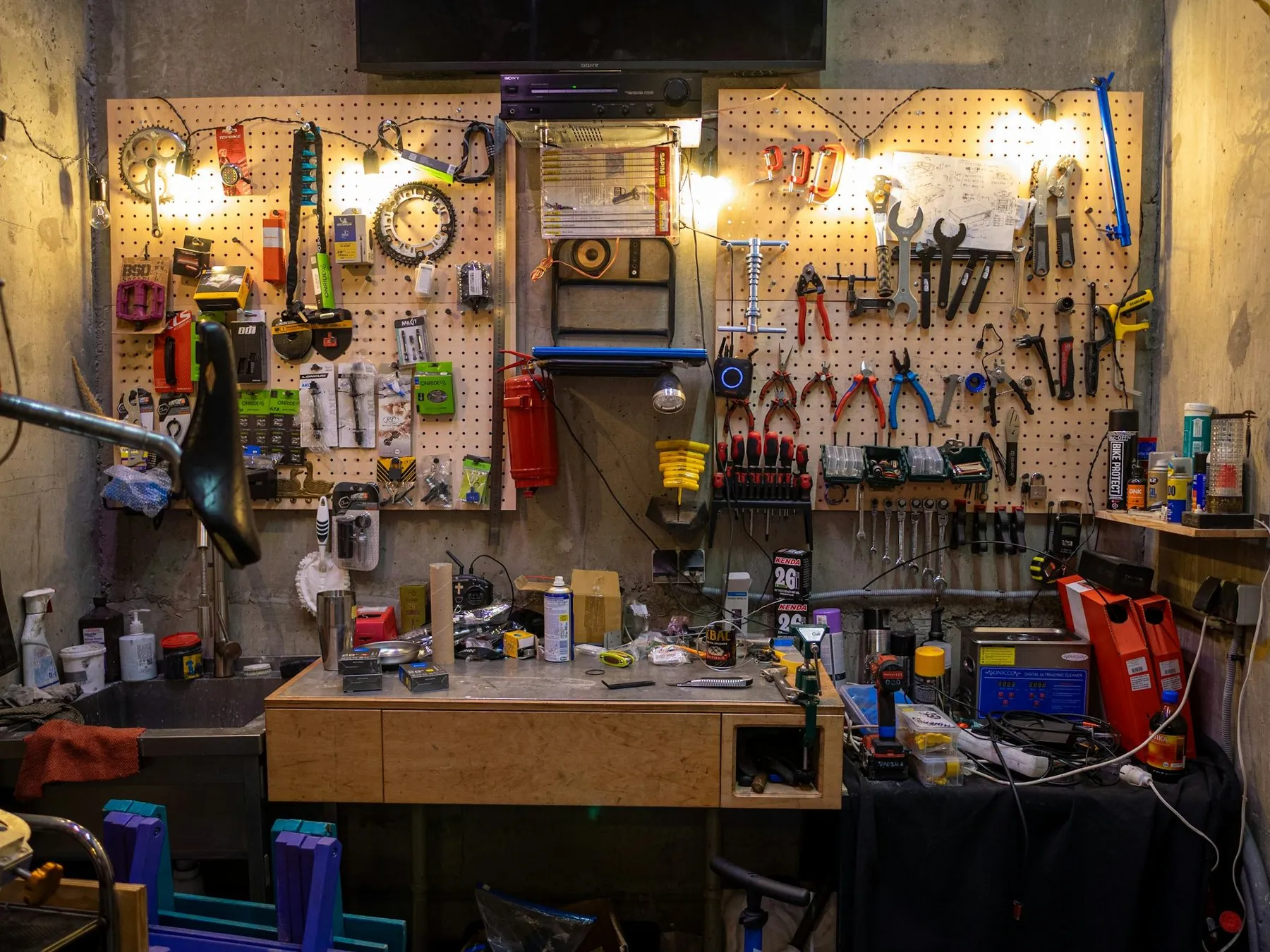
What is easy to get and what is not
| Part | Availability |
|---|---|
| Inner tubes (700c, 26in, 27.5in, 29in) | Easy almost everywhere |
| Chains and quick links | Easy in cities, common in towns |
| Mainstream tyres | Cities yes, small towns hit and miss; quality varies |
| Rim brake pads | Easy |
| Disc pads | Cities; specific compounds and shapes are harder |
| Cassettes and chainrings | Bangkok and Chiang Mai; assume nowhere else |
| Spokes, cut to length | Cities with a wheelbuilder |
| Rear derailleur hangers | Effectively unobtainable — bring your own |
| Touring-specific parts (racks, dynamo, wide-range triples) | Rare. This is not a touring market |
| Tubeless sealant and valves | Cities |
| Helmets in large sizes | Difficult — Thai stock skews small. Bring one |
What to carry yourself
Thailand is forgiving enough that you do not need a full workshop, but you do need to be able to get to the next town.
- Two tubes, patches and tyre levers
- A pump that actually works — a mini pump you can reach full pressure with, not a token one
- Multitool with the Allen keys your bike uses, plus a chain tool
- Quick links for your chain speed
- Spare rear derailleur hanger for your exact frame
- Brake pads, particularly before a mountain section
- Spare gear and brake cable
- A folding spare tyre if your size is unusual
- Zip ties, a length of duct tape wrapped round the pump, and a short piece of wire
- Chain lube — the wet-weather kind, because of the rain and the dust
The rest of what to bring, and what you can leave at home, is in cycling gear for a hot-climate tour. If you are flying the bicycle in, pack the spares in the box — see bringing your own bike to Thailand.
Punctures at the roadside
You will get them. Thai roads carry a lot of wire from disintegrating lorry tyres, and the hard shoulder collects everything the traffic sweeps into it. Wider tyres at sensible pressure and a decent puncture-resistant casing reduce this dramatically, and it is worth fitting good tyres before you come rather than hoping to buy them here.
If you are stuck, help is close. Roadside tyre repair shops — signed with a stack of tyres and often the word pa yang — exist along every Thai highway for motorbikes and cars, and most will help with a bicycle. They have compressors, patches and glue, and the cost will be trivial. The equivalent for motorised traffic is described in punctures and where to get a tyre fixed in Thailand, and the shops are the same ones.
Do not let a compressor put car pressure into a bicycle tyre. A well-meaning tyre shop with an air line and no gauge for low pressures can blow a bicycle tyre off the rim. Use your own pump for the final pressure, or watch the gauge yourself.
What the climate does to a bicycle
Thailand is hard on equipment in three specific ways, and knowing them changes your maintenance schedule.
Grit and rain. Wet-season riding drags fine grit into the chain, the jockey wheels and the brake pads, and drivetrains wear far faster than they would at home. Clean and re-lube the chain every few days rather than every few weeks, and check pad wear weekly on any trip with descents in it.
Heat. Tyres and tubes age quickly in tropical sun and stored bikes crack their sidewalls. Sealant dries out faster. Electronics cook — a phone or a GPS in a handlebar mount at midday will overheat and shut down.
Salt. Anything that goes on a boat comes off with salt on it, and coastal riding puts salt spray onto the bicycle whether you notice or not. Rinse with fresh water and re-lube after any island crossing — the detail is in cycling on Thailand's islands.
Getting a broken bike to a shop
If something fails that you cannot fix, you are rarely more than a few hours from help. Songthaews will take a bicycle for a negotiated fare, coaches will take one in the luggage bay, and trains will carry it as freight on the main lines. The practicalities are in taking a bike on Thai trains and buses. In the mountains, flagging down a pickup is the normal solution and drivers stop readily.
Chiang Mai and Bangkok are the two places worth travelling to for a serious repair. Everywhere else, the calculation is whether a local mechanic's improvisation will get you to one of those two, and the answer is usually yes.
Buying a bicycle in Thailand
Worth mentioning for long-stayers. New bicycles in Bangkok and Chiang Mai cost roughly what they cost at home for imported brands, and less for Thai and Taiwanese-assembled machines. The second-hand market is thin and mostly runs through Facebook groups and expat networks in the same two cities. If you are here for months and want to ride properly, buying and reselling is often cheaper than long-term hire — the same calculation the driving side of this site makes in should you buy a vehicle in Thailand or rent long-term.
Frequently asked questions
Are there good bike shops in Thailand?
Yes, in Bangkok and Chiang Mai — proper workshops with tooling, stock and mechanics who understand modern equipment. Provincial capitals have adequate shops. Small towns have an old-school bicycle repairer who can fix anything simple.
Can I get bicycle parts in Thailand?
Mainstream consumables, yes, widely. Anything specific to your bicycle — hangers, unusual sizes, touring components — assume no and bring them. Thailand is not a cycle-touring market and the shops reflect that.
What tools should I carry cycling in Thailand?
Tubes, levers, a real pump, a multitool with a chain tool, quick links, brake pads, a spare hanger and cable. Zip ties and duct tape solve a surprising proportion of touring problems.
Where can I fix a puncture on a Thai highway?
The roadside tyre shops that serve motorbikes and cars are everywhere and most will help with a bicycle for very little money. Just do not let a compressor with no low-pressure gauge inflate the tyre.
How often should I service my bike in Thailand?
More often than at home. Clean and lubricate the chain every few days in the wet season, check brake pads weekly if you are riding in the hills, and rinse the bicycle after any coastal or ferry section.
Can a motorbike mechanic help with a bicycle?
Frequently, yes. They will not have your parts, but they have tools, a welder, bearings and a great deal of practical ingenuity, and they are in every village in the country. It is the single most useful fallback for a cyclist in rural Thailand.