The kit list for a Thai tour is shorter than the one you would take to Europe, because you need almost no warm clothing and no waterproofs worth the name. What you do need is water capacity, sun cover, light, and a small number of things that are genuinely hard to buy here. Everything else — clothes, toiletries, a tent you will never use — can be bought in Thailand for very little, or left at home.
This is written for the touring cyclist packing a bag. If you are hiring a bike for a day, the list is three items: water, sunscreen and a hat, and the rest of this is not for you.
- Priority oneWater capacity and sun cover
- Priority twoLights, more than you think
- Leave at homeRain jacket, camping gear, most clothes
- Bring from homeHelmet, shoes, spares, sunscreen
Clothing
The instinct is to strip down and it is the wrong one. In direct tropical sun, a loose, pale, long-sleeved technical top is cooler than bare skin, because it stops radiant heating while still letting sweat move. Riders who cover up finish the day less cooked and much less burnt.
- Two jerseys, light colours, long sleeves or with arm covers. Two is enough — everything dries in an hour here.
- Two pairs of shorts or bibs. Wash one every evening. Chamois cream matters more in this humidity than it does at home; bring it, because it is hard to find in Thailand.
- A peaked cycling cap under the helmet. Cheap, weighs nothing, and it keeps sun off the face and sweat out of the eyes.
- Lightweight gloves. Mostly for the crash rather than the comfort.
- One warm layer. Not for the flat country, but for northern mornings and for descending from altitude in the cool season, when a sweat-soaked rider genuinely gets cold.
- One set of off-the-bike clothes. Buy them here for almost nothing.
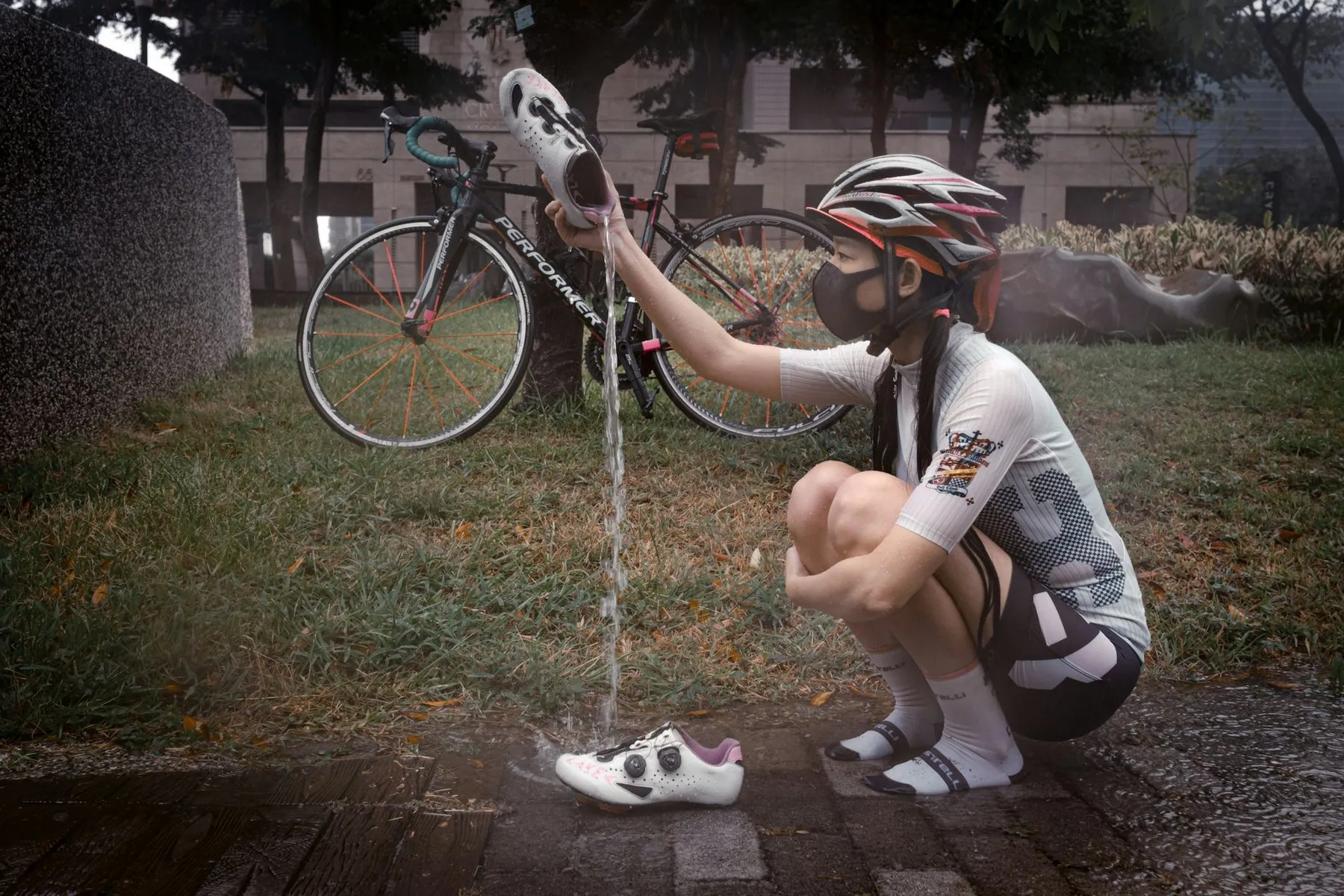
Do not bring a waterproof jacket. In 30-degree rain you will be as wet inside it as out, and it stops the only cooling mechanism you have. Get wet, keep riding, dry in twenty minutes. The one exception is a very light windproof for cool-season descents in the north. This is covered from the weather side in cycling in Thailand's rainy season.
Sun
You are much closer to the equator than you are used to and the UV is harsh even through haze. The parts that burn on a bicycle here are the backs of the hands, the back of the neck, the ears and the strip of thigh between shorts and knee.
Bring sunscreen from home. Thai pharmacies sell plenty of it, but a large proportion of the mainstream skincare market here contains skin-whitening agents, and finding a plain high-factor sport sunscreen in a small town is more difficult than it should be. Bring a big tube, reapply after every long stop, and treat cover as the primary defence and cream as the backup. The same problem for motorbike riders is in sunburn and dehydration on a bike.
Sunglasses matter more than usual — the glare off wet tarmac and off the sea is severe, and they keep grit out of your eyes on the shoulder. Bring a clear or yellow lens too, because you will be riding at first light.
Water
The single most important equipment decision on a Thai tour.
- Two large bottles minimum on the frame. Three cages if the frame takes them.
- A collapsible bladder or spare bottle in a bag, for long climbs and the emptier stretches of Isaan and the far south.
- Oral rehydration sachets — a strip weighs nothing and does more than any sports drink.
- An insulated bottle is a luxury that earns its place here. Fill it with ice at a shop and it stays cold for an hour.
You do not need a water filter. Bottled and dispensed drinking water is available everywhere in Thailand, is cheap, and is what Thai people drink. Carrying a filter for a Thai tour is a solution to a problem this country does not have. Why capacity matters and how much to drink is in cycling in Thailand's heat and humidity.
Lights
Overspecify. Thai roads carry unlit motorbikes, unlit obstacles and drivers whose windows are heavily tinted, and your riding hours are dawn and dusk because of the heat. A rear light that would be excessive in Europe is about right here.
- Two rear lights, at different heights, one steady and one flashing. Run them in daylight too.
- A front light bright enough to be recognised by traffic pulling out of a side soi — being seen matters more than seeing.
- A dynamo hub if you are touring for weeks. It removes the charging problem entirely, and the charging problem is real when your riding is at either end of the day.
- Reflective material on your ankles. Moving reflectors read as a cyclist at a distance in a way a static vest does not.
- A power bank, because the alternative to a dynamo is charging everything overnight at a guesthouse.
Lighting is not a compliance question, it is a survival one. The traffic law's minimum for a bicycle is modest and enforcement against cyclists is rare — see bicycle law in Thailand — but the thing that actually stops a pickup driver from hitting you at dusk is being visible at 200 metres, not at 15.
Helmet, shoes and locks
Helmet. Bring one. Thai shops stock helmets cut for Asian head shapes and mostly in smaller sizes, and riders with larger heads regularly cannot find anything that fits. A helmet that fits badly does very little.
Shoes. Bring them. Cycling shoes in Thai sizes stop well short of large European and American sizes. If you ride flats, ordinary trainers are fine and cheap here; do not ride in sandals, for the same reasons set out in riding a scooter in flip-flops.
Lock. A cable lock is enough for a coffee stop; a decent D-lock is worth the weight if you are leaving a good bicycle anywhere in Bangkok or a busy resort town. Bicycle theft is a real if not epidemic problem.
The bike itself
| Component | What Thailand asks of it |
|---|---|
| Gearing | Around 28 gear inches or lower if you are going north. This is the most common equipment failure here |
| Brakes | Discs are a real advantage on long wet mountain descents. On rims, carry spare pads |
| Tyres | Wider than you think, with good puncture protection. The shoulder collects wire from lorry tyres |
| Mudguards | Worth it in the wet season, unnecessary in the cool season |
| Racks and bags | Sun degrades cheap fabric fast. Bring what you trust; you cannot buy touring luggage here |
| Bottle cages | As many as the frame allows |
What you can and cannot buy once you are here is in bike shops and repairs in Thailand, and the gradients that dictate the gearing are in cycling northern Thailand: the hills and big climbs.
Camping and sleeping
Leave the tent. Guesthouse rooms in provincial Thailand cost less than a restaurant meal at home, are available in every town of any size, and rarely need booking outside the peak weeks. Carrying camping gear over a Thai tour is weight spent on a problem that does not exist, and in this heat that weight matters.
What is worth carrying is a silk or cotton sleeping bag liner for the occasional grim room, and a small quick-dry towel because cheap rooms sometimes do not provide one.
What to leave out
- Waterproof jacket and trousers
- Tent, sleeping bag, stove and cookset
- Water filter or purification tablets
- More than two of anything you wear
- A heavy lock, unless you are city-based
- Toiletries beyond a travel size — everything is available here and cheap
Pack, then take half of it out. Everyone over-packs for their first tour here, and the northern gradients punish it more than the distance does. If you are basing yourself in Chiang Mai and riding a loop, leave the surplus at your first guesthouse and collect it at the end — this is a completely normal request and it is usually free.
Frequently asked questions
What should I wear cycling in Thailand?
Loose, pale, long-sleeved and quick-drying, with a peaked cap under the helmet. Covering up is cooler than bare skin in direct tropical sun and it saves you from a burn that will ruin the rest of the trip.
Do I need a rain jacket for Thailand?
No. Rain here is warm and a jacket traps more sweat than it excludes water. Bring a very light windproof if you are going to the northern mountains in the cool season, and dry bags for the things that must stay dry.
How much water should I carry?
Two large bottles as a minimum, with a collapsible spare for long climbs and empty stretches. Shops are frequent almost everywhere in Thailand, so the strategy is to fill often rather than to carry a lot.
Should I bring my own helmet to Thailand?
Yes, particularly if your head is larger than average. Thai stock skews small and is cut for a different head shape, and a helmet that fits badly is close to useless.
Do I need camping gear to tour Thailand?
No. Guesthouses are cheap, everywhere, and rarely need booking. Carrying a tent over the northern climbs to save a couple of pounds a night is a poor trade in this heat.
What is the one thing people forget?
A spare rear derailleur hanger for their exact frame, closely followed by enough sunscreen. Neither can be bought here in the form you need — see bringing your own bike to Thailand for the full packing list.