The single best protection against buying a stolen or cloned vehicle in Thailand is also the simplest: do the ownership transfer at a Department of Land Transport office, with the vehicle present, before you hand over the balance of the money. At that transfer an official physically checks the chassis and engine numbers against the registration book. A vehicle with a false identity does not survive that check — which is exactly why the people selling one will find reasons to avoid it.
Everything else on this page is about spotting the problem earlier, so you never get as far as the car park with cash in your pocket. There is no public database a foreign buyer can search, so the checks that protect you are physical and documentary rather than online.
- Your real protectionThe DLT transfer, with the vehicle inspected
- Never pay in fullBefore the registration is in your name
- Public stolen-vehicle databaseNone a foreign buyer can search
- Biggest warning signAny reason offered for not doing the transfer now
How a bad vehicle reaches you
Three routes account for most of it. A machine is stolen and sold on quickly and cheaply, with no book and a story attached. A machine is stolen and given the identity of a legitimately registered vehicle — a clone — with restamped numbers and a book that belongs to a different physical vehicle. Or a machine was never properly registered in the first place, which is a particular problem with ex-rental scooters: the UK government warns explicitly that motorcycles and scooters for hire in Thai tourist areas are often unregistered and cannot legally be used on a public road.
The third category is the one that catches honest buyers most often, because nobody involved is necessarily a thief. A rental shop retires a bike it never registered properly, sells it to a departing backpacker, who sells it to you. Every step feels ordinary. The machine still cannot be transferred into your name.
Cheap plus urgent is the pattern. Almost every bad purchase shares two features: a price that is noticeably below the market, and a reason why the paperwork has to happen later — a flight tomorrow, the book is with a friend, the owner is upcountry. Price alone is not a warning sign. Price plus urgency plus a paperwork excuse is.
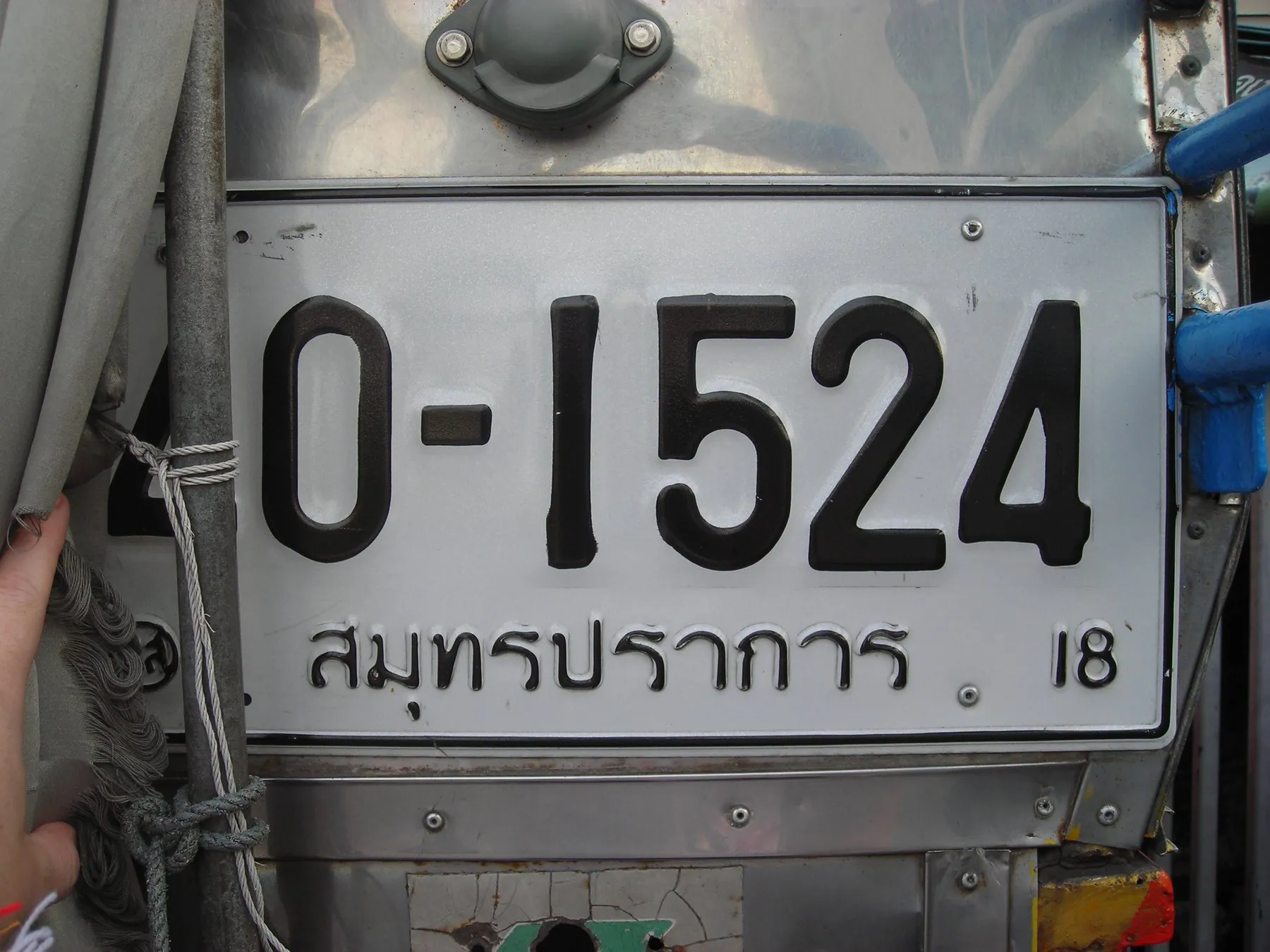
The number checks
Every registered vehicle in Thailand carries a chassis or frame number and an engine number, and both are recorded in the registration book. Your job is to confirm that the numbers on the metal match the numbers on the page, and that the numbers on the metal have not been altered.
- Read the frame or chassis number off the vehicle yourself; do not accept a photograph or the seller reading it out
- Compare it to the book digit by digit, out loud, twice
- Do the same with the engine number
- On a car, check the chassis number in more than one place — the windscreen plate, the door shut, the engine bay — and confirm they agree with each other
- Check the plate number on the vehicle against the plate number in the book
- Check the make, model, colour, body type and engine size in the book against the vehicle
- Use a torch and look at the stamping itself, not just the characters
What altered stamping looks like: characters of uneven depth or inconsistent spacing; two different fonts within one number; a patch of ground or filed metal around the number; fresh paint or lacquer over an area that should be bare or original; a rivetted plate where the factory stamps directly into metal; a number that sits proud of a surface that has clearly been built up. On a scooter, the frame number is usually stamped on the frame under or behind the front of the seat area or on the steering head — get down and look at it properly rather than glancing.
The document checks
- The name in the registration book matches the identification of the person selling
- The identification is a real document you have looked at, not a name given verbally
- No finance company recorded as title holder — if there is, the seller cannot transfer the vehicle
- The book itself is not obviously altered: no correction fluid, no overwritten entries, no pages missing or replaced
- The tax payment history is coherent and continuous, not a gap followed by a sudden catch-up
- The transfer history makes sense — a very recent transfer into the seller's name, followed by an immediate resale, deserves a question
- The compulsory insurance certificate names the same vehicle
The Thai logbook explained walks through the fields. Remember the colour: green is a motorbike's book, blue is a car's. A seller who describes a car's book as "the green book" is not necessarily dishonest — half the English-speaking internet does — but it is a small sign that they may not have looked at it closely either.
What the DLT transfer actually does for you
At the transfer, the vehicle is inspected and its numbers are checked against the book by an official who does this all day. That is a meaningful check, and it is the reason the transfer should happen before final payment rather than after.
The law puts the deadline on both of you
Section 17 of the Motor Vehicle Act B.E. 2522 requires both the transferor and the transferee to notify the registrar within fifteen days of a transfer of ownership, and section 60 sets the penalty at a fine not exceeding ฿2,000. A seller who proposes leaving the registration untouched is proposing that you both breach that provision, and is removing the one check that would expose a false identity.
Structuring the payment
The safest sequence, and one no honest seller should object to:
- Inspect the vehicle and the book; match every number.
- Agree a price and put a modest deposit against a short written agreement naming the vehicle, the plate, the chassis number and both parties.
- Meet at the land transport office in the province where the vehicle is registered.
- Complete the transfer, with the vehicle inspected.
- Hand over the balance once the registration is recorded in your name.
Transferring vehicle ownership at the DLT, step by step covers what happens on the day, and buying a vehicle registered in another province covers the case where that office is a long way from home.
Ask one question early: "Can we do the transfer at the DLT this week?" It costs nothing, it is entirely reasonable, and the answer sorts sellers into two groups faster than any inspection. Ask it in the first exchange of messages, before you spend a day travelling to a viewing.
If you end up holding one
Be clear about the position: if a vehicle is stolen, the person it was stolen from remains its owner, and a buyer in good faith who has paid money for it is left with a loss and a claim against a seller who has usually disappeared. Practically, the vehicle can be seized, and you will not be able to register, tax, insure or legally sell it in the meantime.
What to do. Stop using the vehicle — riding something with a false identity turns a civil loss into a much worse conversation at a checkpoint. Gather every piece of evidence you have: the advertisement, the messages, the receipt, the seller's name and identification if you saw it, photographs, and any bank transfer record. Report it to the police, and if language is a barrier, call the Tourist Police on 1155, who are set up for English-speaking callers. Take advice from a Thai lawyer rather than from a forum; the recovery of your money is a civil matter and depends heavily on whether the seller can be found.
Two related pages are worth reading if this is where you find yourself: your rights as a foreign driver in Thailand, and Tourist Police in Thailand.
Frequently asked questions
Can I check a Thai number plate against a stolen vehicle register?
There is no public register a foreign buyer can search. Your protection is the physical number check, the registration book, and completing the transfer at a land transport office where an official checks the numbers again.
Are cloned vehicles common in Thailand?
Cloning exists here as it does everywhere with a large motorcycle population and an active cash market. We have no reliable figure for how common it is and will not invent one. What we can say is that the standard checks defeat it, and that they take fifteen minutes.
The seller has the book but says the previous owner never transferred it. Is that a problem?
Yes. It means the person in the book is a stranger whose signature you now need. It is also a breach of the fifteen-day notification requirement by both of them. At minimum, insist that the named owner attends or provides a properly executed power of attorney and identification.
What about ex-rental scooters?
Treat them with particular care. The UK government warns that hire motorcycles in tourist areas are frequently unregistered and cannot legally be used on a public road. Ask for the green book in the first message; no book, no deal.
Is it safer to buy from a dealer?
Generally yes, because an established business with premises has a reputation to protect and handles transfers routinely. It is not a guarantee — ask a dealer the same questions about the book and the title holder that you would ask a private seller. See where to buy a used car or bike.
What if I only realise after the transfer has gone through?
Then the DLT check did not catch it, which is unusual, and you need Thai legal advice quickly. Stop using the vehicle, report it, and preserve every document and message from the sale.