There are five realistic places to buy a used car or motorbike in Thailand — a franchised dealer's used department, an independent second-hand lot, a Thai classified app, an expat Facebook group, and a rental shop selling off its old fleet — and they line up almost perfectly along a single axis: the cheaper the channel, the more of the paperwork risk you carry yourself. Where you should buy depends less on which has the best prices than on how confident you are reading a registration book and how willing you are to spend a morning at a land transport office.
For a first purchase, the honest recommendation is to pay a little more to a seller who does this for a living, has premises you can go back to, and will handle the ownership transfer. For a second purchase, once you know what a clean book looks like, the private market is where the money is.
- Cheapest channelPrivate sale via a Thai classified app
- Safest channelAn established dealer who does the transfer for you
- Highest-risk sellerAnyone leaving the country this week
- The non-negotiableThe registration book, in the seller's own name
Franchised dealers and certified used programmes
Toyota, Honda, Isuzu, Mitsubishi and the rest all run used-car operations attached to their main showrooms, selling recent part-exchanges with some form of check and often a limited warranty. You pay a clear premium for this and you get the two things a nervous buyer most wants: a car that has been looked at by someone who knows the model, and a business that will do the transfer paperwork as a matter of routine.
The same applies to main motorbike dealers, though the used side of the business is smaller and stock moves fast. If you want a nearly new automatic and cannot face the classifieds, this is the low-effort answer.
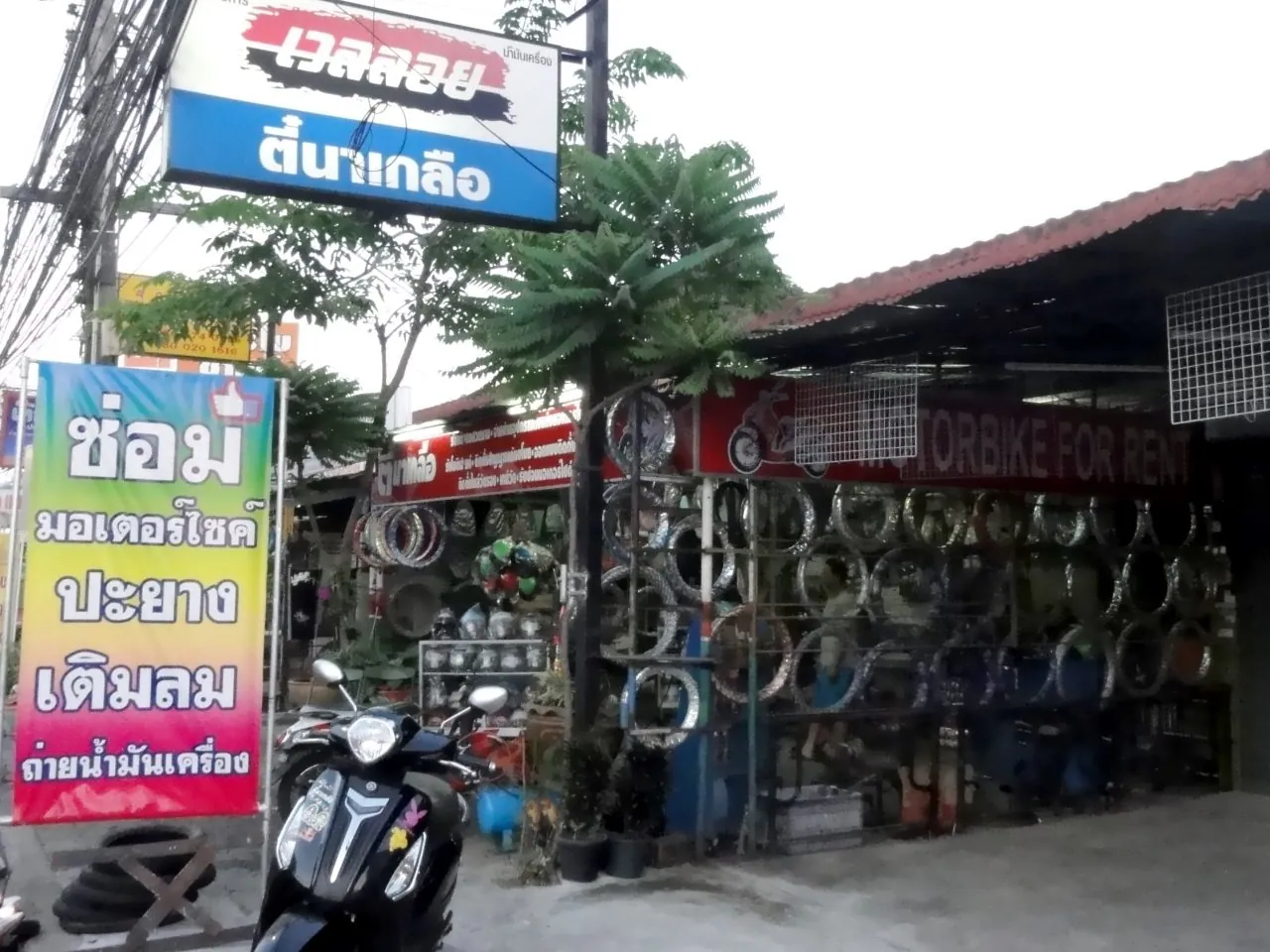
Independent second-hand lots
The rows of forecourts on the ring roads of every provincial capital are the backbone of the Thai used market. Stock is broad, prices are negotiable, and the good ones are long-established local businesses with a reputation they care about. The bad ones sell flood-repaired cars and vehicles whose registration books they do not hold.
How to tell them apart, roughly: does the lot have a workshop behind it, or just a fence and a flag? Are the cars taxed and displaying current stickers, or is every windscreen bare? Ask to see the registration book for a specific car before you discuss price at all — a dealer who cannot produce it for a car standing on their forecourt is holding stock they have not yet paid for, and your transfer will depend on a third party you never meet.
The consignment problem. Many lots sell on consignment: the car belongs to a private owner whose name is still in the book, and the lot takes a commission. That is perfectly legal, but it means the person who must sign your transfer is not the person you negotiated with. Ask directly whose name is in the book, and make the transfer a condition of payment rather than a promise for next week.
Thai classified apps and portals
The Thai-language classified market is far bigger than the English-language one, and it is where the actual prices are set. The major car portals and the general classifieds carry tens of thousands of listings with photographs, mileage and asking prices, and they are usable through a phone's translation function even if you read no Thai. Spend an hour on them before you view anything; it is the cheapest research you will ever do, and it turns a negotiation from guesswork into arithmetic. What a used car or motorbike really costs covers what you will find.
Buying this way means dealing with a private seller directly, in Thai, and doing the transfer yourself. If you have a Thai-speaking friend willing to make the calls, this is comfortably the best value in the market. If you do not, expect a lot of unanswered messages.
Expat Facebook groups
Every town with a foreign population has a buy-and-sell group, and they are the easiest channel for an English speaker: the seller speaks your language, the listing tells you what the bike or car actually is, and you can ask questions. The prices are usually a little above the Thai market, for exactly that reason.
The risk here is specific and worth naming. A meaningful proportion of expat-group sellers are leaving the country, which means they are motivated, in a hurry, and gone by the time any problem surfaces. That is fine if the registration book is clean and you transfer it the same week. It is a disaster if the book is missing, the name in it belongs to a former partner, or the vehicle turns out to be on finance. Time pressure is the seller's problem; do not let it become yours.
Rental shops selling old stock
Rental fleets get refreshed, and the retired machines are sold locally. Sometimes this is a genuinely good deal on a bike that has been serviced on a schedule. Often it is a machine that has been dropped by a hundred different people and ridden hard on salt air.
There is a further problem worth knowing about. The UK government warns that motorcycles and scooters for hire in Thai tourist areas are frequently unregistered and cannot legally be used on a public road. A machine that was never properly registered is not a bargain and cannot be transferred to you at all. Ask for the green book on the first message, before you look at the bike.
The channels compared
| Channel | Price | Paperwork | Main risk |
|---|---|---|---|
| Franchised dealer, used department | Highest | Done for you | You are paying for reassurance you may not need |
| Independent second-hand lot | Mid to high | Usually done for you | Consignment stock; flood-repaired cars |
| Thai classified app | Lowest | Entirely yours | Language; verifying the seller is the registered owner |
| Expat Facebook group | Mid | Entirely yours | Departing sellers, missing books, no comeback |
| Rental shop clearing stock | Low | Varies | Hard use; machines that were never registered |
The check that applies to every channel
Whoever you buy from, the same four things decide whether the deal is sound: the registration book exists, the name in it is the seller's, the frame and engine numbers on the vehicle match it digit for digit, and no finance company is recorded as title holder. The Thai logbook explained shows you what you are looking at; avoiding a stolen or cloned vehicle shows you what tampering looks like.
Both of you have fifteen days
Section 17 of the Motor Vehicle Act B.E. 2522 requires the transferor and the transferee to notify the registrar within fifteen days of a transfer of ownership, and section 60 sets the penalty at a fine not exceeding ฿2,000. A seller in any channel who suggests leaving the registration alone is proposing that you both break a rule that exists precisely to stop what happens next.
Buying out of province
Some of the best-value listings will be a long way from you, and there is nothing wrong with that — but the vehicle has to be physically inspected at a land transport office, and the paperwork starts in the province where it is currently registered. Read buying a vehicle registered in another Thai province before you commit to a long drive, and moving a registration to another province if you want the plates changed afterwards.
Bring a Thai speaker, and pay them if you have to. An hour of a bilingual friend's time on the phone before you view, and an hour at the transfer, removes most of what goes wrong in this process. It also gets you a better price, because prices quoted in Thai and prices quoted in English are not always the same prices.
Frequently asked questions
Where do foreigners usually buy scooters in Thailand?
Expat Facebook groups and local bike shops, mostly, because both work in English. Both are fine as long as you insist on the green book and do the transfer promptly.
Is it safe to buy from a Facebook group?
As safe as the paperwork, and no safer. The channel is not the risk; a missing or mismatched registration book is. Meet at a bank or at the land transport office rather than at a hotel, and do not pay in full before the transfer.
Do second-hand lots negotiate?
Yes, and they expect to. Research the classified portals first so your counter-offer is grounded in what the same car and year is advertised for elsewhere.
Can I buy a vehicle at auction in Thailand?
Auctions exist, mostly for ex-fleet, ex-lease and repossessed vehicles, and prices can be low. They are not a first-purchase route for someone who cannot inspect quickly, read Thai documentation and complete the paperwork under time pressure.
What if the seller wants full payment before the transfer?
Offer a deposit against a written agreement and the balance at the land transport office. If they refuse, you have learned something useful for very little money.
Is it cheaper to buy in Bangkok or in the provinces?
Bangkok has the deepest stock and the most competition, which usually means better prices and more choice; provincial lots can be cheaper on older vehicles but with much less to choose from. Weigh that against the cost and hassle of transferring a registration across provinces.