Driving a car in Thailand is safer than most visitors fear. Riding a motorbike is considerably more dangerous than most of them believe. The distance between those two sentences is most of the honest answer, because Thailand's road risk is not spread evenly across every road, every vehicle and every hour of the day. It concentrates, and it concentrates hard: on two wheels rather than four, after dark rather than in daylight, around alcohol, and around riders with nothing on their heads.
Thailand's road-death record is bad. That is not in dispute and we are not going to soften it — the figures, what they count and what they leave out are set out in what Thailand's road death statistics really say. What this page is for is the question underneath the statistic: given who you are and what you are actually planning to do here, how much of that risk is yours, and which decisions move it?
- Where the risk sitsOverwhelmingly on motorbikes, not in cars
- When it sits thereNight, weekends and holiday periods
- What moves it mostHelmet, alcohol, daylight, speed
- What moves it leastYour own driving skill
The car answer and the motorbike answer are different questions
If you are hiring a car, driving in daylight, staying off the drink and not attempting Bangkok's inner ring on your first afternoon, you are doing something that hundreds of thousands of visitors do every year without incident. Thai roads are mostly well surfaced, well signed on the national network, and the driving culture — while it will surprise you — is not aggressive in the way that some countries' traffic is aggressive. It is fluid, it is negotiated, and it mostly gets on with itself. A modern hire car has airbags, a steel shell and belts. You are, in the most literal sense, inside something.
If you are hiring a scooter, you are not inside anything, and the mathematics change completely. A rider has no crumple zone and no restraint, is the least visible thing in the traffic stream, and is sharing a road with vehicles that outweigh them by a factor of twenty. Add an unfamiliar machine, an unfamiliar side of the road, a helmet that came free with the rental and does not fit, and flip-flops, and you have assembled the exact set of conditions that fills the orthopaedic wards in Phuket, on Koh Samui and on Koh Phangan every week of the year.
None of that is an argument against riding. Plenty of people ride here for years and never come off. It is an argument for being clear-eyed about which of the two things you are choosing, because the answers to "is it safe" are not close to each other.
What actually causes the crashes
Motorbikes, and how many of them there are
Thailand runs on small motorcycles. They are the family car, the delivery van, the school run and the commute, and they are ridden by everyone from teenagers to grandmothers, often two or three up, frequently carrying a load, and usually without any protective clothing at all. That volume is the single structural reason Thai road casualties look the way they do: the country's dominant vehicle offers its user no protection whatsoever.
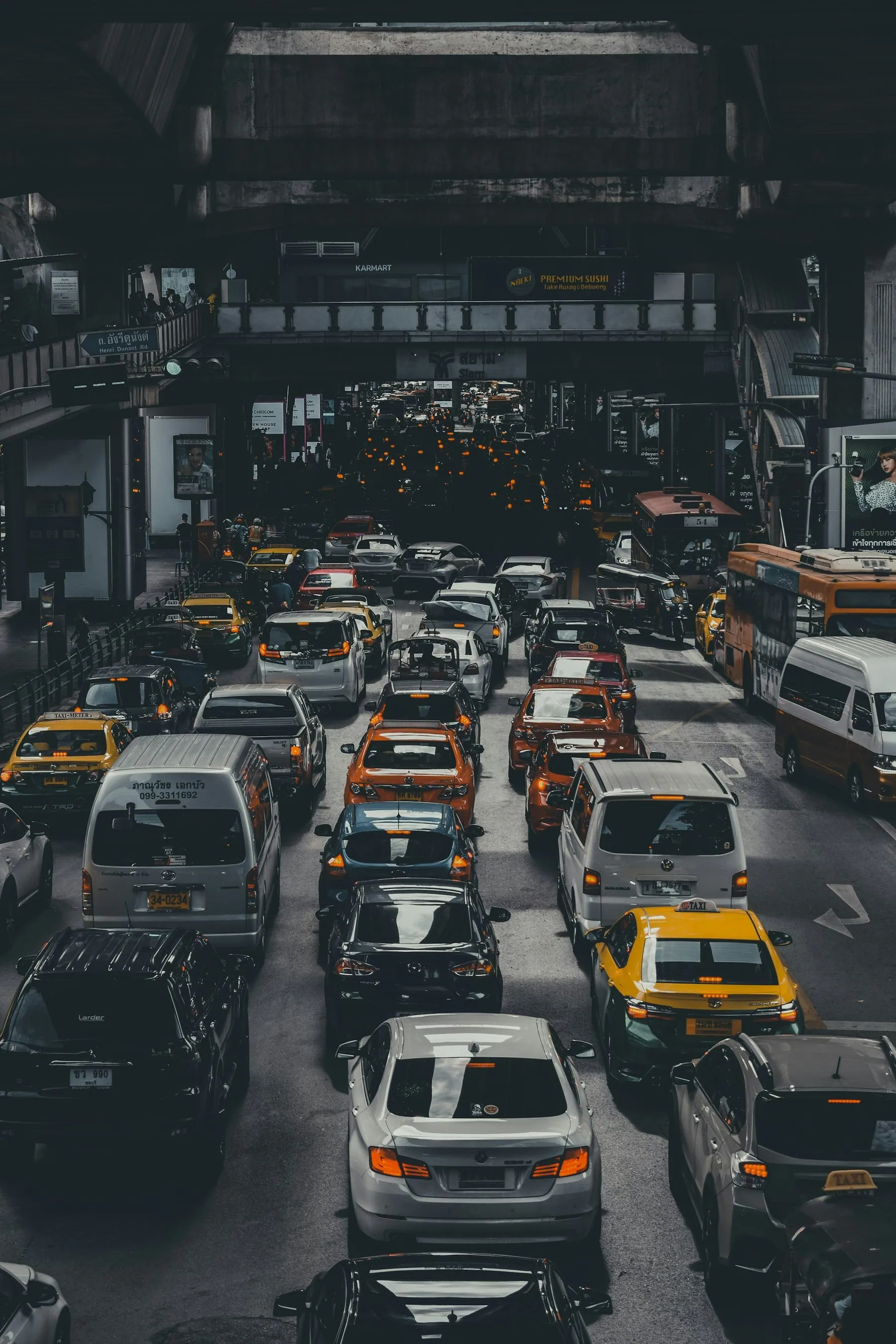
For you as a visitor, that has two consequences. If you ride, you have joined the most exposed group on the road. If you drive, you are surrounded by that group — appearing in your mirrors, filtering down both sides of you at a red light, emerging from side sois without looking, and travelling along the hard shoulder in the wrong direction because it is the short way to the shop. Almost every genuinely dangerous moment a foreign car driver has here involves a motorbike they did not see.
Darkness
Night multiplies everything. Unlit and partially lit vehicles, farm machinery moving at walking pace, animals on warm tarmac, oncoming main beam, potholes that vanish under a headlamp, drivers who have been drinking, and — on a rental scooter — a small, badly aimed headlight that shows you very little road. The hours after dark, particularly at weekends, are disproportionately where fatal crashes happen. Driving at night in Thailand goes through what changes and why in detail; the short version is that finishing your driving before sunset is the cheapest risk reduction available to you and it costs nothing but planning.
Alcohol
Drink-driving is common here and it is concentrated exactly where you would guess — evenings, weekends, national holidays, and the roads out of any town with a bar strip in it. You cannot control other people's drinking, but you can control two things: when you are on the road, and whether you have had anything yourself. The legal position is unambiguous and it is worth knowing before you order the second beer: the Thai drink-driving limits are enforced, checkpoints with breath tests are routine at night in tourist areas, and refusing the test is treated in law as equivalent to failing it.
The lower limit probably applies to you. Thailand's reduced 0.02% blood-alcohol limit is not only for young drivers. Under the 2024 ministerial regulation it also covers anyone driving without a valid licence for the category of vehicle they are on. A tourist riding a scooter on a car-only licence sits in that group whatever their age — effectively zero tolerance, before you even reach the insurance question.
Helmets
The helmet is the difference between a survivable crash and a fatal one more often than any other single factor in motorcycle casualties, and observed helmet use in Thailand outside the cities is low. The rental shop will hand you a lid because it is required to; whether it fits, whether it fastens, and whether it would do anything useful in an impact are separate questions, and the honest answer for a great many rental helmets is no. Choosing a helmet that actually protects you covers what to look for and what to reject.
What the law says
Under section 122 of the Land Traffic Act both the rider and the passenger must wear a crash helmet, and the rider commits a separate offence by riding while their passenger is bare-headed. Since the September 2022 amendment the maximum fine is 2,000 baht. Helmets are on the list of ten offences the Royal Thai Police named for strict enforcement from April 2026. See Thailand's helmet law for the detail.
Speed, and the road environment that punishes it
Thai roads carry a wider mix of speeds than you are used to. On a single stretch of provincial highway you may have a pickup at 110 km/h, a bus, a scooter at 40, an unlit farm truck at walking pace and a dog. Closing speeds do the damage, and they do it at the points where the road design forces people to cross the flow — most commonly at U-turn slots, where vehicles pull out from a standing start across two or three lanes of fast traffic. The posted speed limits are the ceiling; the safe speed on a road with that mix on it is often well below the ceiling.
The bits of the risk that are within your control
Very little of the risk above is about driving skill. This is worth stating plainly, because the reflex of a competent driver is to assume that competence will carry them, and here it mostly will not. The visitors who get hurt are rarely bad drivers. They are ordinarily capable people who made one or two structural choices — ride rather than drive, ride at night, ride after drinking, ride without entitlement or a real helmet — and then had an ordinary piece of bad luck that those choices turned into a hospital admission.
- Choose the vehicle deliberately. If you would not ride a motorbike at home, Thailand is a strange place to start.
- Do your driving in daylight. Build the day around arriving before sunset rather than departing before it.
- Zero alcohol if you are driving or riding at all. Not "under the limit" — zero.
- Wear a helmet that fits and fastens, and buy your own if the rental one does not. It costs less than a night's accommodation.
- Cover your skin. Long sleeves, closed shoes and gloves turn a low-speed slide into a graze rather than a skin graft.
- Sort your paperwork before you fly, so that the entitlement question never arises. Work through the legality checklist.
- Avoid the worst roads on your worst days. Your first day, in Bangkok, in the rain, at night, is a bad combination.
Not all of Thailand is equally difficult
"Driving in Thailand" describes several very different experiences, and it is worth knowing which one you are buying.
| Where | What it is actually like |
|---|---|
| Bangkok | Dense, slow, complicated and unforgiving of hesitation, but low-speed. A bad place to learn and a poor place to ride two wheels. See our honest assessment of riding a motorbike in Bangkok for an honest assessment. |
| Expressways and motorways | The safest fast roads in the country: divided, well surfaced, no U-turns at grade, and motorbikes banned outright. If you are driving between cities, use them. |
| Provincial highways | Good surfaces, high speeds, and the full mix of traffic joining and crossing. This is where most of the serious car crashes happen. |
| Small towns and Isaan back roads | Quiet, slow and genuinely pleasant driving. Watch for dogs, farm vehicles and unmarked junctions. |
| The islands | Short distances, steep hills, sand on the corners, no lighting and a high proportion of inexperienced riders who have been drinking. Disproportionately dangerous for the distances involved. |
| Northern mountain roads | Beautiful, technical and demanding. Fine in daylight with a machine you are confident on; a bad idea otherwise. |
The consequence that is not about safety at all
There is a second kind of risk on these roads and it is financial. Thai compulsory motor insurance is a floor rather than a safety net — it covers people rather than property, and its medical ceiling is exhausted quickly by serious trauma at a private hospital. Your own travel policy is what stands behind that, and travel policies almost universally condition motorcycle cover on the rider holding the correct licence for the machine.
This is the failure that stays invisible until it is catastrophic. A rental shop will hand over a 110cc scooter without looking at your licence. That tells you nothing about your position. Thailand issues motorcycle entitlement separately from car entitlement, and under its declaration to the 1968 Convention it treats mopeds as motorcycles — so there is no engine size small enough to be covered by a car-only licence. If you crash without that entitlement, the fine is trivial and the uninsured hospital bill is not. Read what voids your motorbike cover before you take the key.
The UK Foreign Office puts it in one sentence: driving a car or riding a motorcycle in Thailand without a valid licence "could invalidate your travel insurance and you'll be unable to claim if you have an accident or injury." That is the sharpest edge of the whole safety question, and it is entirely avoidable at home with a form and a small fee.
So — should you drive?
For most visitors hiring a car, yes, with the ordinary caveats: daylight, no alcohol, expressways between cities, and don't make Bangkok your first hour behind the wheel. The freedom a car buys in Thailand is real, and outside the big cities it is often the only sensible way to see anything.
For a scooter, the answer depends on facts about you rather than facts about Thailand. If you ride at home, hold motorcycle entitlement, own a proper helmet and are going somewhere with quiet roads, riding here is a genuine pleasure and the risk is manageable. If you have never ridden, have no entitlement, and are picturing a scooter as a way of getting from the hotel to the beach after dinner, be honest that you are choosing the highest-risk transport option available in a country where that option is already dangerous — and consider whether Grab, a taxi or a songthaew would do the same job.
The rest of this section exists to make whichever choice you make a safer one. The biggest risk factors for visiting drivers ranks them in order, and what to know before you drive in Thailand covers the practical differences you will meet in the first hour.
Frequently asked questions
Is it safe to drive a rental car in Thailand as a tourist?
For a confident driver, broadly yes. The roads are good, the signage on the national network is bilingual, and hire cars are modern. The adjustments that matter are driving on the left, the U-turn system on divided highways, and the constant presence of motorbikes in places you would not expect them. Do your first hour somewhere quiet rather than in central Bangkok.
Is riding a scooter in Thailand as dangerous as people say?
For an inexperienced rider, yes. The combination that hurts people is not exotic: an unfamiliar machine, a poor helmet, unfamiliar roads, night, and often alcohol. Remove those and the risk falls a long way. Keep them and you are in the group that fills island clinics.
What is the single most dangerous thing a visitor does on Thai roads?
Riding a scooter back to the accommodation at night after drinking, without a proper helmet. Every element of that sentence is a separate risk multiplier and they compound rather than add.
Do I need a helmet by law, and does it matter if enforcement is patchy?
Yes, for rider and passenger both, and yes it matters. Enforcement being inconsistent does not change the physics, and it does not change your insurance position either — most travel policies exclude injury sustained while breaking local law or riding without the required safety equipment.
Which is safer, driving myself or being driven?
In heavy city traffic, being driven — you remove the workload and someone who knows the roads absorbs the risk. On open provincial roads there is little in it, and self-driving lets you control the two variables that matter most: your speed, and whether you are out after dark.
Are the roads themselves in bad condition?
Mostly no. The main highway network is in good order. The problems are localised: pothole clusters after the rainy season, unmarked roadworks, dropped edges where tarmac meets a dirt shoulder, and sand or gravel washed across coastal and mountain corners. On four wheels those are an annoyance; on two they are how people fall off.
Is it safer in the low season or the high season?
Different risks rather than more or less. High season brings volume, inexperienced riders and holiday drinking, with the seven days around New Year and Songkran the worst of the year. The rainy season brings standing water, reduced visibility and slick surfaces after the first rain on a dry road.