The two things that cause crashes are a bag hung off the handlebars and a suitcase balanced on the footboard. Both are standard sights in Thailand, both look harmless, and both take control away from you at exactly the wrong moment — the handlebar bag by swinging into the front wheel or dragging the steering aside, the footboard case by putting a large mass in front of your knees where you can neither brace it nor get a foot down past it.
Everything else about carrying things on a scooter is manageable. Weight low and central, or behind you and strapped down, is fine; weight high, loose or near the steering is not. And there is a point — usually the airport run with two people and two suitcases — where the honest answer is a taxi, which in Thailand costs very little.
- Worst place for weightHanging from the handlebars
- Best placeUnder the seat, or in a fitted top box
- Load projecting from the vehicleRed flag by day, red light at night
- When to give upTwo people plus suitcases
Why the handlebar hook is the problem
Almost every Thai scooter has a hook on the inside of the leg shield, used constantly for shopping bags. For a light bag on a two-minute ride it is fine, which is why it looks safe. Load it properly and three things go wrong at once.
- It swings. A heavy bag pendulums with every steering input, and the swing arrives a fraction of a second late — so it fights you into and out of every corner.
- It can reach the front wheel. A strap, handle or plastic bag that stretches down into the wheel locks it instantly. This is not theoretical; it is the specific way loaded hooks bring bikes down.
- It puts weight high and forward. The worst place on a bike for mass is high up and ahead of the steering head, which is precisely where the hook is.
Hanging a bag from one end of the handlebars is worse again: asymmetric, so the bike pulls to that side, and the bag sits in the path of your hand and the brake lever.
Nothing heavy on the hook, and nothing with a long strap anywhere near the front wheel. If a bag has a shoulder strap, put the strap inside the bag or wrap it. A loose strap that finds the front wheel at 40 km/h stops the wheel and you go over the bars.
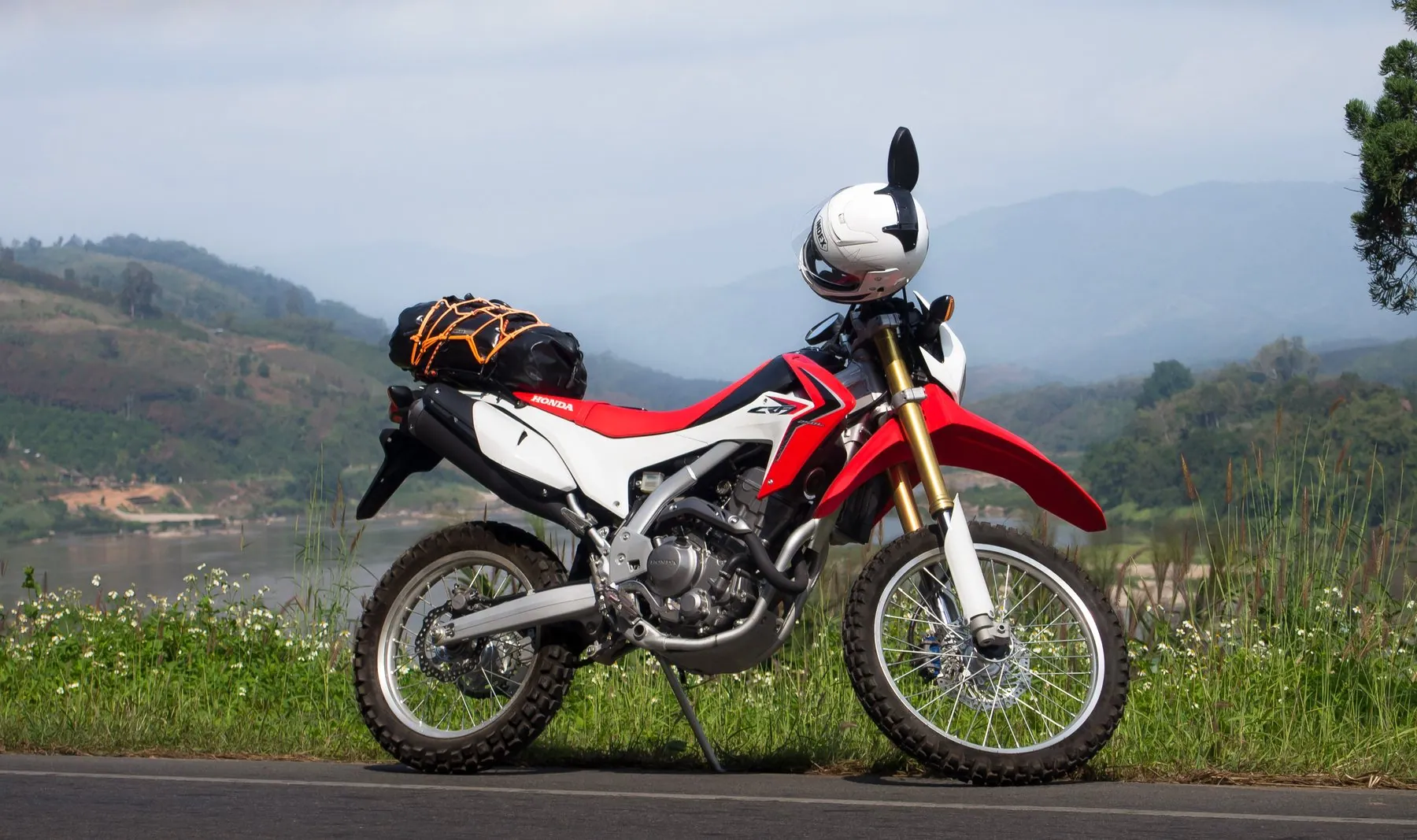
Where weight can safely go
| Position | Suitability | Notes |
|---|---|---|
| Under the seat | Best | Low, central, secure, out of the weather. Most scooters take a helmet plus a bit |
| Fitted top box on a rack | Very good | Behind the rear axle, so it affects handling a little, but it is bolted down and lockable |
| Rucksack on your back | Good, within limits | Fine if light. A heavy pack changes your balance and is punishing in the heat |
| Strapped to the pillion seat | Good if properly secured | Bungee cords or a cargo net, tight, nothing overhanging into the wheel |
| Between your feet on the footboard | Only for small, low, stable items | Anything tall blocks your knees and your ability to put a foot down |
| Handlebar hook | Light shopping only | The failure mode described above |
| Hanging from the bar ends | Never | Asymmetric load in the path of your controls |
Two principles cover almost every decision: low and central beats high and forward, and strapped down beats hanging.
What a load does to the way the bike rides
Weight behind the rear axle — a full top box, a bag on the pillion seat — makes the steering feel light and vague and lifts weight off the front wheel, where your grip and most of your braking are. The bike wanders more at speed and the front tyre has less to give on a wet or gritty surface.
Braking distance goes up with any load, on brakes that were not generous to begin with, and suspension bottoms out over the sharper bumps — which matters more than it sounds on Thai surfaces, as potholes and road surfaces in Thailand explains. A top-heavy load also makes the bike awkward at walking pace, which is where most low-speed drops happen.
All of this compounds if you also have a passenger. Two people plus luggage on a small automatic is over the machine's design load and over most riders' skill — see carrying a passenger on a scooter for what a pillion alone does to the braking.
Strapping things down properly
- Use proper straps. Bungee cords with metal hooks, a cargo net, or cam straps. Two straps crossed over the load, not one.
- Check nothing can reach a wheel. Loose ends, dangling handles, trailing straps. Tuck or tape everything.
- Check nothing touches the exhaust. A plastic bag against a hot exhaust melts through in seconds, and a nylon strap goes the same way. The exhaust runs down the right side at calf height.
- Push the load hard with your hand before setting off. If it moves, it will move more on the road.
- Re-check after ten minutes. Loads settle and straps loosen. This is the single most useful habit for a longer ride.
- Nothing over the mirrors, nothing over your shoulder line. If a load blocks your mirrors or your head-check, you have no rear vision at all in traffic where motorbikes come past on both sides.
If a load projects beyond the vehicle, Thai traffic law requires it to be marked — a red flag by day and a red light at night, visible at not less than 150 metres. That is mostly aimed at pick-ups carrying long items, but it is the rule that applies if you are carrying anything that sticks out. Realistically, if a load is big enough to need a flag, it is too big for a scooter.
The airport run, and other jobs a scooter cannot do
Be honest about the limits. A scooter can carry one person and a rucksack comfortably, or one person and a week's shopping if the shopping goes under the seat and on the pillion seat. It cannot sensibly carry:
- Two people and two suitcases. This is the airport or ferry-pier journey, usually taken with a pillion, usually on an unfamiliar road, usually running late. Take a taxi or a songthaew — in Thailand it costs a fraction of what the equivalent would at home and removes the worst luggage ride of the trip.
- A surfboard, a full-size suitcase or a large box. You will see it done. It is done by people who ride the same 800 metres every day.
- Anything that blocks your mirrors, your knees or your ability to put both feet down.
- A load plus a passenger on hills. A small automatic with two people and bags will not climb, and coming down it has almost no engine braking. See mountain roads and hairpin bends.
If you are touring, get a bike with a rack and a top box. Monthly and long-term hires often include one, or the shop will fit one. A locked box behind you takes a surprising amount, keeps it dry in a downpour, and removes the whole hanging-bag problem. Monthly motorbike rental in Thailand covers what longer hires include.
Rain, theft and the two practical annoyances
Thai rain arrives in minutes and soaks anything not sealed. A dry bag or a heavy-duty bin liner inside your luggage costs nothing and saves a laptop; the under-seat compartment is water-resistant rather than waterproof. Riding a motorbike in tropical rain covers riding in it.
On theft: bag-snatching from riders is commonly reported in Thai cities, usually a bag on the hook or a shoulder bag worn loosely on the road side. The sensible habits are free — valuables under the seat rather than on the hook, a shoulder bag worn across the body on the pavement side. And a parked scooter's under-seat compartment is a lock, not a safe; do not leave a passport in one.
Frequently asked questions
Can I carry my suitcase on a scooter in Thailand?
You can physically wedge one on the footboard, and people do. It blocks your knees, stops you putting a foot down, and puts a large mass in front of you in any impact. For an airport or pier transfer with luggage, a taxi costs very little here and is the obvious answer.
Is the handlebar hook safe to use at all?
For light shopping on a short, slow ride, yes — that is what it is there for and what it is used for a million times a day in Thailand. The problems start with weight, with swing, and with any strap or handle that can reach the front wheel. Anything heavy goes under the seat.
Is a rucksack better than a top box?
A top box is better for the bike and for you: it keeps the weight off your back, it is lockable and dry, and it does not shift when you brake. A rucksack is fine for a light load and is what most visitors have. A heavy rucksack is uncomfortable, hot, and changes your balance in a way you notice on a bend.
How much can a 125cc scooter actually carry?
Rider, a modest amount of luggage, and that is comfortable. Add a passenger and you are at the machine's limits before any bags. If you are touring with luggage, hire a 150cc or larger and fit a box — choosing a rental scooter covers the sizes.
Will the rental shop mind if I strap things to the bike?
Generally not, though straps and boxes scratch paintwork and scratches are what deposit disputes are made of. Photograph the bike thoroughly at handover, and if you are fitting a rack, ask first.
Does luggage affect my insurance if I crash?
An overloaded or improperly loaded vehicle is the kind of circumstance an insurer can point at, and rental agreements often say something about load. The bigger determinants of whether a claim succeeds are helmet, licence and alcohol — see what voids your motorbike cover in Thailand.