Running dry in Thailand is rarely a crisis and usually an embarrassment. Petrol stations are dense along main roads, and where they thin out, roadside sellers fill the gap: bottles, drums with hand pumps, and small kerbside dispensers outside shops in villages that are nowhere near a forecourt. Get the vehicle off the road, work out how far the nearest fuel is, and walk or flag down help — a scooter pushes easily and a passing pickup will very often stop.
The two things worth knowing in advance are that a scooter's fuel gauge is not to be trusted, and that Thailand's fuel grades are in the middle of a transition, so what is available and what your engine can take are both moving targets.
- Highway Police1193
- Department of Highways1586, press 7 for motorways
- Roadside bottle petrolUsually gasohol 91 or 95, quality variable
When the engine dies
- Hazard lights on and use what momentum you have to get to the left and off the tarmac.
- Get yourself off the road. A stationary vehicle on a Thai highway is not somewhere to stand about — see what to do when you break down.
- Confirm it is fuel and not something else. A clean cut-out with no warning lights and a gauge on empty is fuel; a rough die with steam or a temperature warning is not, and that is overheating.
- Find the nearest fuel on your maps app. Petrol stations are well mapped in Thailand even where small shops are not.
- Walk, or get a lift. On a bike, either push it or leave it visible with the hazards on and walk. Flagging down a pickup is normal and usually works.
Do not walk along a highway carriageway. If the nearest fuel is a kilometre away on a fast road with no verge, that is a phone call rather than a walk. On a motorway or expressway it is not an option at all — call 1586, press 7, or 1543 option 1 for an EXAT expressway, and stay behind the barrier.
Roadside bottle petrol: what it is and whether to use it
In rural Thailand you will see petrol sold in old whisky bottles or soft-drink bottles on a wooden rack outside a shop, and in slightly larger villages from a drum with a hand-cranked pump or a small kerbside dispenser. This is an ordinary part of the fuel economy and it is what keeps rural motorbikes moving. The fuel is normally gasohol 91 or 95.
Is it safe to use? For a small scooter, in a pinch, generally yes — millions of Thai riders do it every day. Two honest caveats. Quality is variable in a way that pump fuel is not: a bottle that has stood in the sun for weeks, or been decanted through a funnel that has seen better days, may carry water or dirt. And it is more expensive per litre than the forecourt, which is entirely reasonable given it is being brought to you.
- Use it to get to a proper station, not to fill the tank.
- Buy from a shop that is clearly selling regularly rather than from a single dusty bottle that has sat all season.
- Do not put it in a hire car. A modern petrol engine with an emissions system is far less tolerant than a carburettored scooter, and the wrong grade or dirty fuel becomes a rental dispute.
- Never, in any circumstance, put it in a diesel vehicle.
Getting the grade right
This is the mistake that costs real money, and it is the classic hire-car error. Thai forecourts sell several petrol grades that look confusingly similar on the pump.
| Grade | What it is |
|---|---|
| Benzine 95 | 95-octane petrol, no ethanol. The most expensive petrol grade. |
| Gasohol 95 | 95-octane, 10% ethanol |
| Gasohol 91 | 91-octane, 10% ethanol |
| Gasohol E20 | 95-octane base, 20% ethanol. Only for vehicles approved for E20. |
| Gasohol E85 | 85% ethanol, flex-fuel vehicles only. Being withdrawn — PTT's retail arm stopped selling it from 1 February 2026. |
| Diesel B7 | Standard diesel, 7% biodiesel |
| Diesel B20 | 20% biodiesel, intended for heavy vehicles |
The forecourt is mid-transition. Under the national energy plan, gasohol 91, gasohol 95 and E85 are all to be phased out, with full discontinuation expected by 2027, leaving E20 and B7 as the two main road fuels. So the list above will look different in a year or two.
Put in what the filler flap or the rental agreement says. Filling a non-E20 engine with E20 or E85 is the classic hire-car mistake in Thailand, and wrong fuel sits outside the standard rental damage waiver even at zero excess — you pay for the drain, the flush and the recovery. If in doubt, use the highest-octane non-ethanol grade available. Rental scooters take petrol, never diesel. Fuel in Thailand: which grade goes in your tank goes through it properly.
How far the reserve really takes you
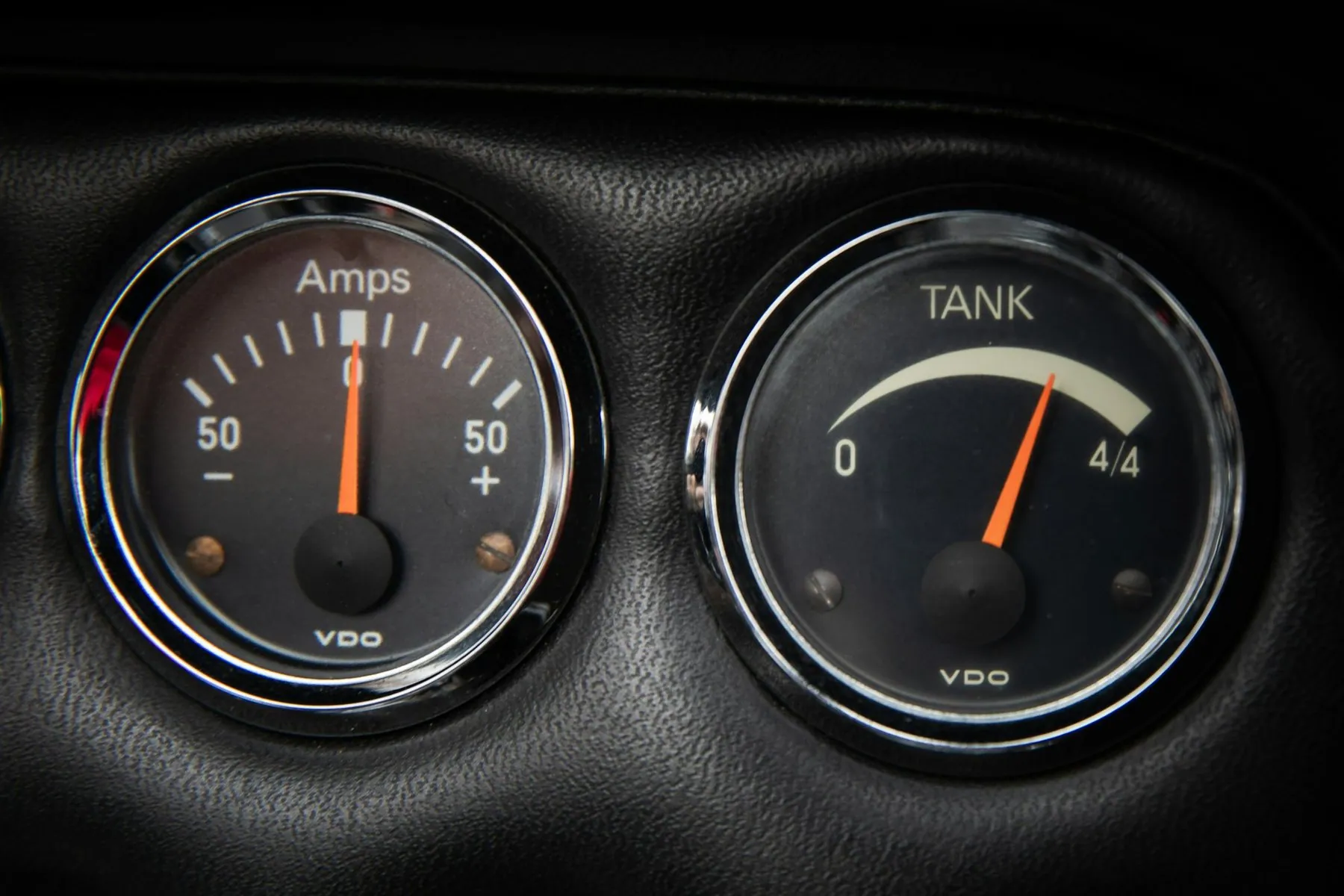
Not as far as you would like, and less than the gauge suggests. Small automatic scooters have crude fuel gauges that read optimistically for most of the tank and then fall off a cliff, and the reserve on a 110cc or 125cc machine is measured in single-digit kilometres in some cases. Cars are more honest, but a hire car handed over with the needle "on full" may not be.
The practical rule for a scooter is to treat the last quarter of the gauge as empty and fill up whenever you pass a station with less than half a tank. It costs nothing to do and it removes the whole problem. On a long rural ride — the mountain roads of the north, the emptier parts of Isaan, the coastal roads between towns — fill up at the last town rather than the next one.
Where stations actually thin out
- Mountain roads in the north. The gaps between stations on the loops around Mae Hong Son and Pai are long, and the terrain eats fuel. The Mae Hong Son loop is the classic case.
- Rural Isaan. Long, straight, empty roads with villages that have a shop and a bottle rack but no forecourt.
- The islands. Koh Chang, Koh Phangan and the smaller islands have stations, but not many, and not always open late.
- After dark, anywhere rural. Small stations close earlier than you expect; the big 24-hour PTT and Bangchak sites on main highways do not.
Use the big highway stations. The large 24-hour forecourts on the main highways are a genuinely good facility — fuel, clean lavatories, coffee, a convenience store and somewhere to sit in air conditioning. On a long drive they are worth planning around rather than treating as a stop of last resort. Service areas and rest stops on Thai highways covers what to expect.
Carrying spare fuel
For a normal trip, do not bother. For a long tour on quiet roads, a small approved fuel can strapped somewhere sensible is reasonable. Do not carry petrol in a soft-drink bottle in a rucksack on a motorbike — the heat, the vibration and the consequences of a spill in a crash all argue against it, and it is not worth the two litres.
Frequently asked questions
Is the petrol sold in bottles at the roadside safe to use?
For a small scooter, generally yes, and it is what rural Thailand runs on. Use it to reach a proper station rather than to fill up, buy from somewhere that is clearly selling regularly, and do not put it in a hire car or in anything with a diesel engine.
How far will a scooter go on reserve?
Less than you think, and it varies by machine. Treat the bottom quarter of the gauge as empty and fill up at the last town before a long empty stretch.
What fuel goes in a rental scooter?
Petrol, never diesel. Ask the shop which grade and check the filler flap. If you get no clear answer, the highest-octane non-ethanol grade available is the safe choice.
I put the wrong fuel in a hire car. What now?
Do not start the engine, and if it is already running, stop as soon as it is safe. Call the rental company immediately. Wrong fuel is excluded from the standard damage waiver on the published terms of the major rental brands, so it will be chargeable — but the bill grows every minute the engine runs on it.
Can I run out of fuel on an expressway?
You can, and it is a genuinely dangerous place to stop. Call 1543 option 1 on an EXAT expressway or 1586 press 7 on a motorway, get out and get behind the barrier, and do not walk along the carriageway. See breaking down on an expressway or motorway.
Are petrol stations open 24 hours?
The large branded stations on main highways generally are. Small rural stations are not, and they close earlier than a visitor expects. Fill up before dark on a rural route.