Take the automatic. Almost every hire car in Thailand is one, almost every rental scooter is twist-and-go, and in a country where you are already adapting to left-hand traffic, unfamiliar priority conventions and a great deal of stop-start city driving, deleting the gearbox from your list of things to think about is a straightforward gain. If you only ever drive a manual at home, this is one adjustment you can simply skip.
The exceptions are narrow but real: long descents on northern mountain roads, and the small manual motorcycles that are still common outside the tourist areas. Both are covered below.
- Thai hire car fleetOverwhelmingly automatic
- Rental scootersTwist-and-go automatic, with some semi-automatics
- Where manual still helpsSteep, sustained mountain descents
What is actually on the rental forecourt
The Thai private-car market went automatic years ago. The cars you will be offered — Toyota Yaris and Vios, Honda City and Jazz, Nissan Almera, Mitsubishi Attrage, Toyota Fortuner and Hilux at the larger end — are automatics as standard, and a manual is a special request that most desks cannot fill at all. Booking sites will occasionally list a manual at a lower daily rate; treat that as a listing quirk rather than a plan, and confirm before you rely on it.
That is good news for anyone from continental Europe, where manuals still dominate, because it removes the single most awkward part of driving on the other side of the road. Changing gear with your left hand while your right hand does the steering is the adaptation drivers describe as taking longest to feel natural. You will not have to make it. What you do have to remember is that the pedals do not swap: the accelerator is still on the right. The classic error in the first hour is reaching for a clutch with your left foot and finding the brake.
Rest your left foot on the floor and leave it there. If you normally drive a manual, park your left foot flat against the footwell and consciously do not use it. Braking with the left foot in an automatic — a reflex that surfaces under stress — produces a much harder stop than you intended, at the worst possible moment.
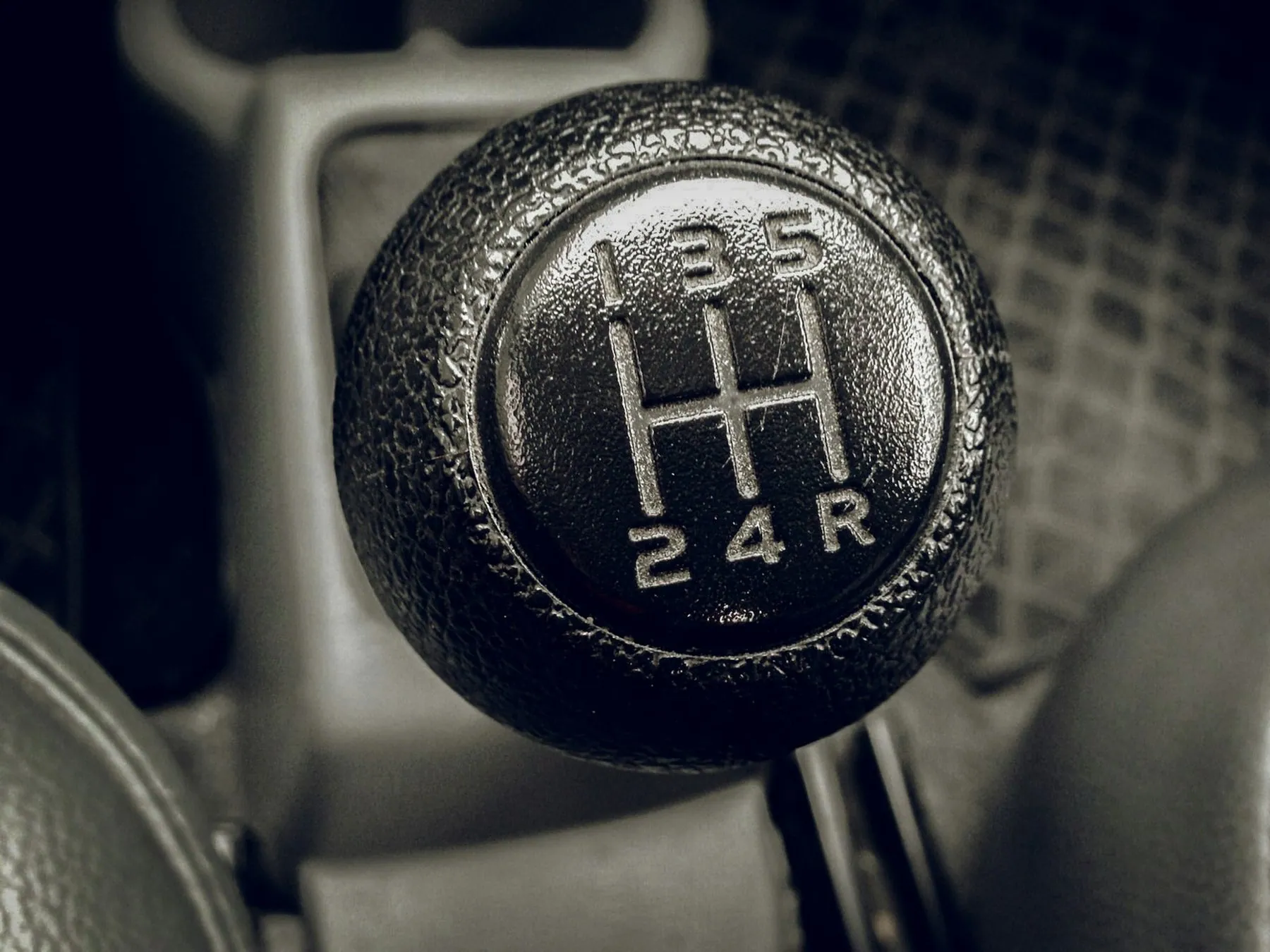
Why an automatic is genuinely better here, not just easier
The case is not only about comfort. Thai driving conditions play to an automatic's strengths in three ways.
Traffic density. City driving here is a great deal of creeping forward a car's length at a time. Bangkok's arterials in the evening peak are exactly that for an hour or more at a stretch, and so, to a lesser degree, are Phuket's beach roads in high season and Chiang Mai's moat in the afternoon. A clutch in that environment is simply work. Bangkok rush hour gives a sense of what you are signing up for.
Attention budget. Everything about the road here is new — the U-turn system, the motorbikes filtering past both sides, the signage, the negotiated priority. Attention spent on gear selection is attention not spent on the scooter about to emerge from a soi. In your first days, that trade matters.
Hill starts on a slope with traffic behind you. Steep, narrow lanes with vehicles stopped nose to tail are common in Phuket, Koh Samui and the northern towns, and an automatic with a handbrake and a torque converter makes that a non-event.
The case for manual, and where it still applies
Engine braking is the real argument. On the long descents of the north — the road down from Doi Inthanon, the mountain sections of the Mae Hong Son loop, the run between Chiang Mai and Pai — riding the brakes all the way down heats them until they fade, and fade on a hairpin is a serious matter. A manual makes it obvious what to do: pick a low gear at the top and let the engine hold the car.
The good news is that you can do exactly the same in an automatic, and most drivers simply do not know it. Thai hire cars have either a gate with 2 and L positions, or a sequential slot, or paddles. Any of these will hold a lower gear on a descent. Select it at the top of the hill, before you need it, and let the engine do the work with occasional firm brake applications rather than continuous light ones.
Do not descend a long mountain road in D with your foot resting on the brake. The pads and fluid heat up, the pedal goes long, and by the time you notice you are already committed to the next bend. Shift down at the top. Mountain roads and hairpin bends covers the technique for both transmissions.
Two wheels: twist-and-go, semi-automatic and manual
Rental scooters in Thailand are almost all fully automatic — a Honda Click, Scoopy or PCX, a Yamaha Nmax or Aerox. There is no clutch and no gear lever. You twist the throttle and it goes, and both brakes are hand levers, which is the arrangement anyone who has ridden a bicycle already understands.
What you will also meet, particularly outside tourist areas and in the cheaper rental shops, is the semi-automatic — the Honda Wave and its equivalents. These have gears operated by a foot lever but no clutch lever: you close the throttle and click up or down with your left foot. They are not difficult, but they are not the same as a twist-and-go, and it is worth ten minutes in the shop's forecourt rather than discovering the difference in traffic.
Genuine manual motorcycles with a clutch lever — anything from a Honda CB300 upwards — are a different proposition again, and shops renting those normally want to see that you can ride before they hand over the key.
Transmission type does not change your licence position. An automatic 110cc scooter is a motorcycle in Thai law and under the road traffic conventions — Thailand declared that it treats mopeds as motorcycles, so there is no lighter category for twist-and-go machines. A car licence does not cover any of them, however small the engine or however simple the controls. See the Thai motorbike licence and engine sizes.
Choosing between the two on a Thai trip
| Your trip | What to take |
|---|---|
| City-based, a few day trips | Automatic car if you drive at all, though in Bangkok itself the better answer is often not to drive. |
| Island stay, short hops | Automatic scooter, if and only if you hold motorcycle entitlement. Otherwise a car or local transport. |
| Northern mountain touring by car | Automatic with a manual gate or paddles. Confirm it has one when you book. |
| Northern mountain touring by bike | A geared motorcycle if you can ride one. Scooter brakes and tyres are not designed for repeated long descents. |
| Long highway distances | Automatic car. Nothing else is worth discussing on a 500 km day. |
| Family with luggage | Automatic car or pickup. See renting a car in Thailand. |
Things to check at the handover
- Find the low-gear positions before you set off, whether that is a gate, a sequential slot or paddles. Try them once on a quiet road.
- Check whether the handbrake is a lever, a foot pedal or an electronic switch. All three exist in the Thai fleet.
- Confirm the fuel grade the car takes, and that you can open the flap. Attendants fill the tank, so you will have to tell them.
- On a scooter, establish whether it is twist-and-go or a semi-automatic with a foot shifter, and ride it in the forecourt before you leave.
- Photograph or film the whole vehicle, damage included, before you drive away.
Still deciding between four wheels and two for the trip as a whole? Scooter or car works through it question by question.
Frequently asked questions
Can I rent a manual car in Thailand at all?
Rarely, and not reliably. The private-car fleet is automatic and most rental desks have no manuals to offer. If you specifically need one, ask before booking and get it confirmed in writing rather than assuming a listing is accurate. Automatic or manual hire car in Thailand covers the booking side.
I only have an automatic-only licence at home. Is that a problem?
Not for a hire car, since the fleet is automatic anyway. It can matter on two wheels: restrictions and categories are recorded on your licence and carried across to your international driving permit, and it is the entitlement on the licence rather than the machine's gearbox that an insurer will look at. Check what categories your licence actually carries before you book anything.
Is a twist-and-go scooter easier to ride than a geared bike?
Easier to operate, yes. Easier to ride safely, not necessarily — small scooter wheels, modest brakes and low weight make them nervous on gravel and poor surfaces, and the absence of engine braking means the brakes do all the work on a descent. Ease of operation is why so many people with no riding experience end up on them, which is a large part of why they feature so heavily in visitor injuries.
How do I hold an automatic back on a long downhill?
Select 2 or L on the gate, or use the sequential slot or paddles, at the top of the descent. Then brake firmly and briefly when you need to slow, rather than resting your foot on the pedal the whole way down.
Are automatics thirstier in Thai traffic?
Marginally, in heavy stop-start conditions, and it is not enough to change the decision. Fuel is comparatively cheap here and modern automatics are efficient.
What is a Honda Wave and should I rent one?
A semi-automatic small motorcycle — foot-operated gears, no clutch lever — and the workhorse of rural Thailand. They are cheap, tough and pleasant to ride once you have the shift pattern, but if you have never ridden anything with gears, take the twist-and-go instead and learn on something else. Choosing a rental scooter compares the options.