Book an automatic, because that is essentially all there is. The Thai private-car market went automatic years ago, and the rental fleet followed it: the small hatchbacks and saloons that make up most of the hire stock — Toyota Yaris and Vios, Honda City and Jazz, Nissan Almera, Mitsubishi Attrage, Mazda 2 — are automatic as standard, and most rental desks in the country could not produce a manual if you asked.
That is convenient rather than limiting. What it does mean is that if you specifically need a manual, you are placing a special order, you will pay more rather than less for it, and you should have written confirmation before you fly. This page is about the booking: what the fleet actually contains, how a manual is found when one is genuinely required, and what to check at the counter. The driving side — including how to hold an automatic back on a long mountain descent — is covered in automatic or manual: what to drive in Thailand.
- Hire fleetOverwhelmingly automatic across every price tier
- ManualsA special order, dearer rather than cheaper, and often unavailable
- Where manuals survivePick-ups and older cars at small upcountry firms
- BookAn automatic with a low-gear gate or paddles if you are heading north
What is actually on a Thai rental forecourt
| Class | Typical cars | Transmission | Suits |
|---|---|---|---|
| Eco-car / mini | Toyota Yaris Ativ, Mitsubishi Mirage, Nissan Almera | Automatic | Two people, city driving, tight car parks |
| Compact | Honda City, Toyota Vios, Mazda 2 | Automatic | The default hire car; four adults at a squeeze |
| Compact SUV | Honda HR-V, Toyota Corolla Cross, MG ZS | Automatic | Rough surfaces, better view, still parkable |
| Large SUV | Toyota Fortuner, Mitsubishi Pajero Sport | Automatic | Families with luggage; a liability in city car parks |
| Pick-up | Toyota Hilux, Isuzu D-Max, Ford Ranger | Automatic, and the last place manuals persist | Upcountry hire, rough tracks, load carrying |
| Van | Toyota Commuter and similar | Automatic or manual | Groups; usually rented with a driver |
Two things fall out of that table. First, if you are used to a European fleet where the cheap car is a manual and the automatic is an upgrade, discard that instinct entirely — here the automatic is the base product. Second, the manuals that do remain are concentrated at the working end of the market: pick-ups, vans, and older cars in the hands of small provincial firms rather than airport chains.
Why booking sites sometimes show a manual
Comparison sites and broker listings occasionally show a manual at a lower daily rate, which is tempting and usually a listing artefact. The vehicle categories used by international booking platforms are generic, transmission is one of the fields that gets filled in loosely, and the car you are actually allocated is whatever the local operator has in that class on the day.
The practical consequence is minor if you can drive both — you will get an automatic and be perfectly happy. It matters if you specifically need one or the other. Treat a transmission field on a booking site as an indication, and if it is important, get it confirmed by the operator by email and take the email with you.
The same looseness applies to the model. Thai rental listings usually say "Toyota Vios or similar", and "or similar" means it. If a specific feature matters — a low-gear gate, Apple CarPlay, a proper spare wheel rather than a repair kit, three rear seatbelts — ask about that feature rather than about the model name.
If you genuinely want a manual
There are real reasons. Some drivers are simply more comfortable and safer in a car they control directly, particularly on long mountain descents. Some are hiring a pick-up for rough tracks and prefer the manual version. And some people just prefer driving one, which is a perfectly good reason on a holiday.
Where to look, roughly in order of likelihood:
- Pick-up hire, especially upcountry. Manual Hiluxes and D-Maxes are still in service and still rented.
- Small local firms in provincial towns — Chiang Rai, Nan, Kanchanaburi, the Isaan cities — where the fleet is older and turnover slower. See car hire in Udon Thani and Isaan.
- Specialist and long-term hire, where the car is sourced for you rather than pulled off a forecourt; a monthly rental gives an operator time to find something specific.
- Not airport chain desks. Their fleets are new, standardised and automatic, and the answer will be no.
Expect to pay more, not less, and expect a smaller and older choice. Book early, confirm in writing, and have a plan for the fairly likely event that the car is not there when you arrive.
What to check at the counter, whichever you get
Automatics in the Thai fleet differ more than people expect, and the differences matter on a mountain road or in a multi-storey car park. Before you leave the forecourt:
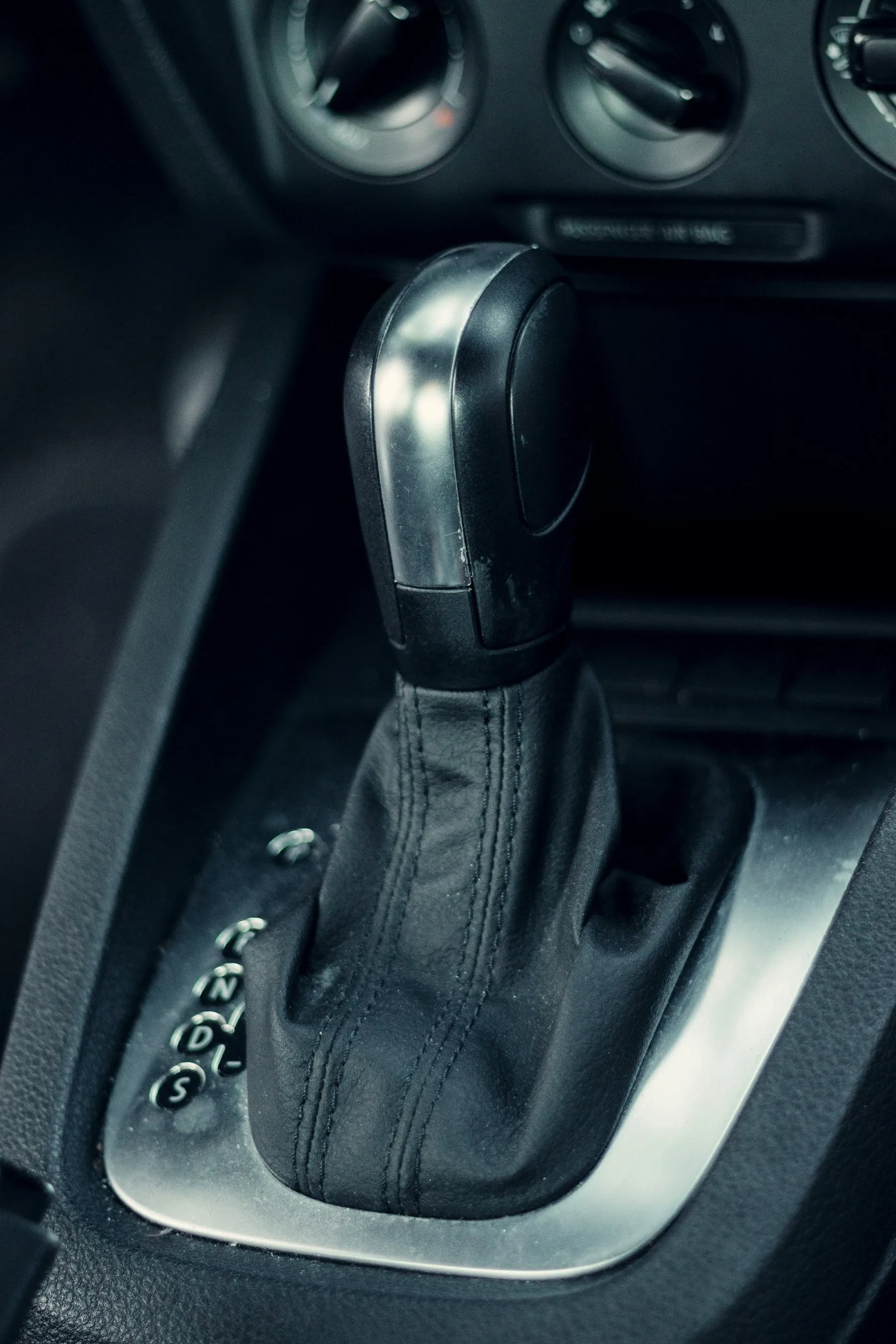
- Find the low gears. Some cars have a gate with 2 and L, some a sequential slot, some paddles behind the wheel. Any of them will hold the car back on a descent — but only if you know where they are before you are on one. Mountain roads and hairpin bends explains the technique.
- Identify the handbrake. Lever, foot pedal and electronic switch all exist in the Thai fleet, and a foot-operated parking brake catches out drivers who have never met one.
- Check reverse and the parking camera. Thai car parks are tight and Thai reversing bays are tighter.
- Confirm the fuel grade on the filler flap, because an attendant will fill the car and you have to tell them what to put in. See car rental fuel policies in Thailand explained.
- Sit in it and adjust everything before you move. If you normally drive a manual, park your left foot flat on the floor and consciously leave it there.
Size matters more than transmission in Thailand. The decision that will actually affect your week is how big the car is. Multi-storey car park ramps, hotel forecourts and village lanes are built around small Japanese hatchbacks, and a large SUV booked because it looked like good value costs you an hour a day in spiral ramps and three-point turns. Take the smallest car your luggage and passengers genuinely require.
The licence question
An automatic-only licence is not a problem for a Thai hire car, since the fleet is automatic anyway. It is worth checking what your licence actually says, though, because restrictions and categories are carried across onto your international driving permit and it is the entitlement on the licence — not the gearbox in the car — that a rental company and an insurer will look at. Which licence can I use in Thailand and the IDP guide cover what carries across.
On two wheels the picture is different, since rental scooters are twist-and-go and semi-automatic Honda Waves are common outside the tourist areas. That is dealt with in choosing a rental scooter. A car licence covers neither, whatever the transmission.
Frequently asked questions
Are hire cars in Thailand automatic or manual?
Automatic, almost without exception. The Thai private-car market is automatic and the rental fleet reflects it, across every price tier and every company.
Can I rent a manual car in Thailand?
Sometimes, with effort. Look at pick-up hire, small provincial operators and long-term rentals rather than airport chain desks, book well ahead, and get the confirmation in writing. Expect it to cost more rather than less.
Is a manual better for Thailand's mountain roads?
It makes the right action obvious, but an automatic will do the same job. Select a low gear at the top of a long descent using the gate, slot or paddles, then brake firmly and briefly rather than resting your foot on the pedal. The failure mode is fading brakes, and it applies to both transmissions.
Will a booking site's transmission field be accurate?
Not reliably. Thai rental listings are generic and the car you are allocated is whatever the operator has in that class that day. Confirm anything that matters directly with the operator.
Does an automatic-only licence limit what I can hire?
Not in practice for cars, since the fleet is automatic. Check what categories and restrictions your licence carries before you travel, because they transfer to your international driving permit and both the rental company and your insurer look at the licence rather than the car.
Should I book a big SUV for a family?
Only if you genuinely need the seats and the luggage space. Thai car parks and hotel forecourts are built around small cars, and a large SUV is harder to park, harder to place on narrow roads and thirstier. A compact SUV is usually the better compromise — see renting a car in Thailand.