Testing for a Thai driving licence comes in four parts: a road-safety and traffic-law session, a set of physical checks, a written theory paper, and a practical test in a marked yard. Most foreign applicants who arrive with a valid licence from home find the written paper the part they have to revise for and the physical checks the part that surprises them — the reaction and colour tests fail more people than the theory does.
The practical test is often waived for holders of a valid foreign licence or International Driving Permit. Often, not always: this is administered office by office, it is reported to have been tightening, and we could not confirm it as a rule. Turn up prepared to sit everything.
- Four partsE-learning session, physical checks, written theory, practical test
- Theory paperReported as 50 multiple-choice questions with a pass mark of 45
- PracticalOff-road in a marked yard. The centre picks 3 exercises from a set of 7
- Usually waived with a foreign licenceThe practical. The theory usually is not — but neither is a rule
The e-learning session
Before testing, applicants sit a road-safety and traffic-law session, normally delivered as video. English versions are available at most offices, and this is one of the details most likely to differ between them — some run it in the office, some accept a certificate from an online module completed beforehand.
You will find confident figures online for how long it lasts: five hours for a new licence, an hour for a conversion, an hour or two for a renewal. Those come from secondary sources, they have changed repeatedly, and we are not going to publish a number. Ask when you book your slot, and plan for it to be the part of the day that takes longer than you expected.
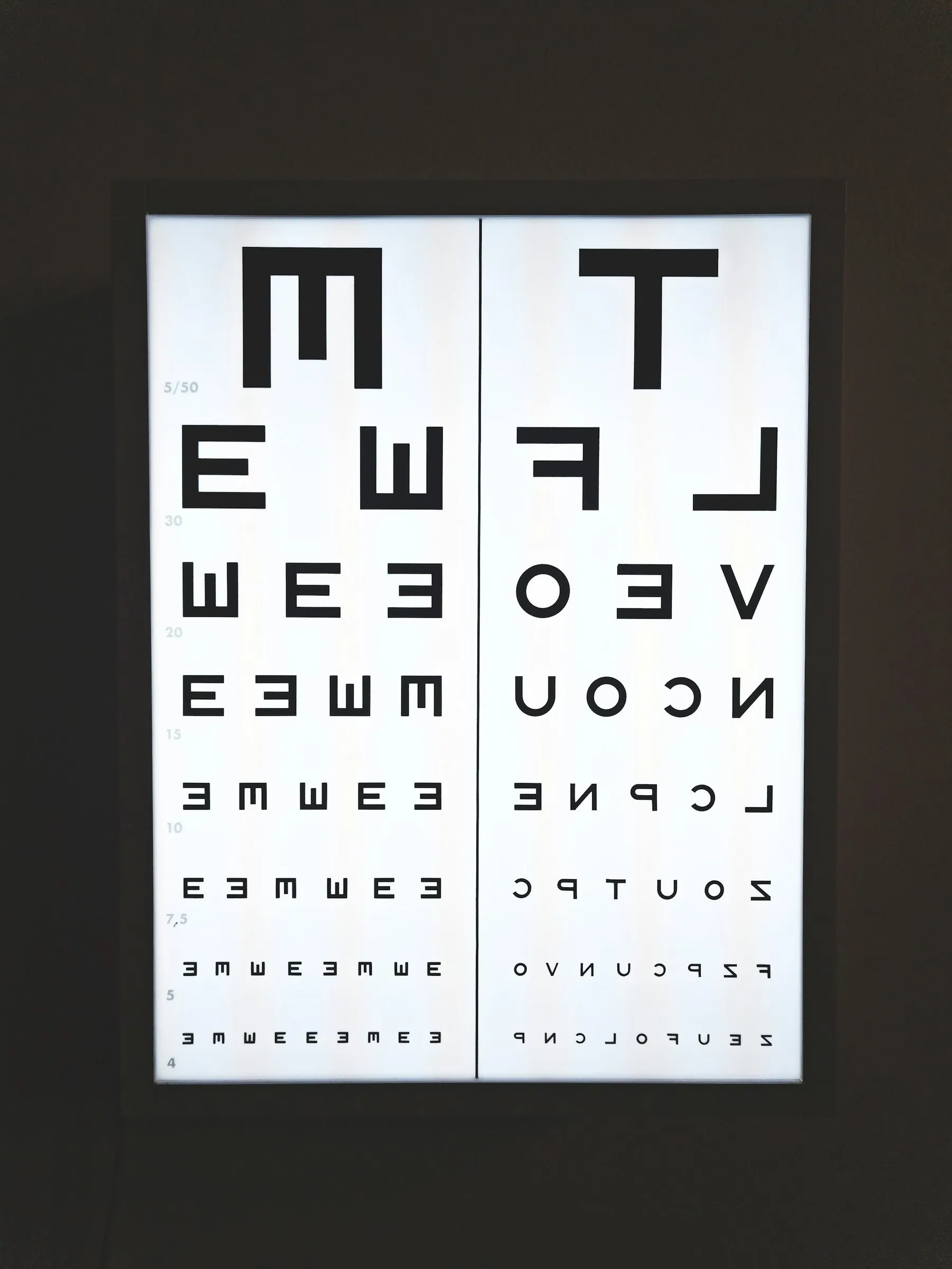
The physical checks
This is the part nobody prepares for and the part where applicants actually come unstuck. The screening covers reaction time, colour perception, depth perception and colour blindness.
- Reaction time. Applicants describe a rig with an accelerator and a brake pedal, measuring how quickly you move from one to the other when a signal changes. The threshold is reported at 0.75 seconds — a figure that comes from a source citing the Department of Land Transport rather than from the Department itself, so treat it as indicative rather than exact.
- Colour perception. Identifying signal colours. Straightforward unless you have a colour vision deficiency.
- Colour blindness. A separate screening check.
- Depth perception. The one visitors most often describe as unfamiliar: judging relative distance at a range, using a control rather than by eye alone.
Why people fail the reaction test
Not because they are slow. Because they are being careful. The rig is measuring the movement from accelerator to brake, and applicants who lift off gently, look for confirmation, or ease onto the pedal record a slower time than their actual reflexes. Move decisively. If you fail it, offices generally allow another attempt — but a second go is another queue.
The written theory test
Reported as 50 multiple-choice questions with a pass mark of 45, normally sat at a screen, with an English version available at most offices. That pass mark is the thing to take seriously: you can afford five wrong answers out of fifty, on a paper written in translated phrasing about a road system you may have been driving on for years without ever reading the rules of.
The questions cover signs, markings, priority, speed, alcohol and the general duties of a driver. Two areas trip up experienced drivers from other countries more than the rest, and both are worth reading before you go:
- Priority rules that differ from home. Thai junction priority has its own logic — including the rule that where a vehicle turning left meets one turning right, the left-turner gives way. See right of way in Thailand.
- Signs and markings. Including kerb colours, which are a real signalling system here rather than decoration. See Thai road signs explained and Thai road markings and kerb colours.
Speed limits and drink-drive limits also come up, and both are covered properly in speed limits in Thailand and drink-driving limits in Thailand.
The English translation is imperfect
Applicants consistently report that some questions in the English version are awkwardly worded or ambiguous. There is no way round this beyond reading each question twice and answering what it is plainly getting at rather than arguing with the phrasing. If English is not your first language either, some offices offer other languages — ask.
The practical test
Thailand's practical driving test is not conducted on public roads. It takes place in a marked yard at the test centre, and the centre selects three exercises from a set of seven — so you do not know in advance which three you will be asked for, and you prepare for all of them.
The exercises are set out at the test centre itself, and a driving school in your area will know which ones your particular centre favours. If you have not driven in Thailand before, an hour with a school at the centre you will be tested at is a reasonable investment; they will have the layout and the marking practice.
The motorcycle test is separate, in its own yard, and is required for a motorcycle licence regardless of what your car licence says — see the Thai motorbike licence and engine sizes.
Two practicalities to sort out before the day. Find out whether the centre provides a vehicle or expects you to bring one — practice varies, and turning up on the assumption that a car will be waiting is a wasted trip. And if you are applying for both a car and a motorcycle licence, expect to do both practical tests.
What a foreign licence does and does not exempt you from
Sources agree on the shape of it: the practical test is usually waived for holders of a valid foreign licence or International Driving Permit; the theory test usually is not. Both statements come with the same caveat, which is that offices administer this differently and requirements have been tightening. We could not confirm either as a rule, and neither should you.
Bring your national licence and your International Driving Permit if you hold one, with a certified English translation if the licence is not in English. Assume you may be sitting the practical anyway, and treat a waiver as a pleasant surprise rather than a plan.
If you fail something
Retakes are normal and offices are used to them. What you will lose is time rather than money — but note the trap: your residence certificate and medical certificate are only good for 30 days from issue, so a retake pushed several weeks out can mean replacing both. If you fail on the day, ask when you can come back before you leave the building.
The rest of the process — the paperwork, the queue system and the fee — is in how to get a Thai driving licence, step by step.
Frequently asked questions
Is the Thai driving test hard?
Not conceptually, but the pass mark on the theory paper is high — reported as 45 out of 50 — and the physical checks catch people who have not thought about them. The practical is in a controlled yard rather than on the road, which most experienced drivers find easier than a road test at home.
Can I take the test in English?
The theory test is available in English at most offices, as is the e-learning session. Provincial offices vary. Ask when you book rather than when you arrive.
How many questions are in the theory test?
Reported as 50 multiple-choice questions with a pass mark of 45. That figure comes from sources citing the Department of Land Transport rather than from the Department directly, so confirm at your office.
Will I have to take the practical test if I hold a UK or US licence?
Usually not, but this varies by office and is not something we could verify as a rule. Take your licence and permit, and be prepared to sit it.
What is the reaction time test?
A rig with an accelerator and a brake pedal that measures how quickly you move from one to the other when a light changes. The threshold is reported at 0.75 seconds. Move decisively rather than carefully — hesitation, not slow reflexes, is what fails people.
Do I need a driving school?
Not as a requirement. It is worth an hour or two if you will be sitting the practical test, because schools know the layout and marking at the local centre. A school certificate is not on the Department of Land Transport's document list.
Can I retake a test I have failed?
Yes, and it is common. Watch the 30-day expiry on your residence and medical certificates — a retake far enough in the future means replacing both.