For roughly a week around Songkran in April and another week around New Year, Thailand puts checkpoints on main roads across the country and breath-tests drivers at them in numbers it does not attempt at any other time of year. The campaign is known locally as the seven dangerous days, and if you are driving or riding during either period you should plan on being stopped rather than treat it as bad luck.
Nothing about the law changes in those weeks. The limits are the same — 50 mg% generally, 20 mg% for drivers under 20, provisional licence holders, anyone driving a category their licence does not cover and anyone driving unlicensed. What changes is the probability of meeting a breathalyser, and the fact that the roads themselves are at their worst.
- SongkranThai New Year, 13–15 April, with travel either side
- New YearThe turn of the calendar year, similar pattern
- LimitsUnchanged: 50 mg%, or 20 mg% for the lower-limit group
- What changesCheckpoint density, traffic volume and road risk
Why these two weeks
Both holidays produce the same pattern: the country moves. Bangkok empties as people travel back to home provinces, the same journeys reverse a few days later, and in between there is a great deal of drinking at family gatherings and at street celebrations. Long-distance driving, unfamiliar routes, night travel and alcohol arrive at once, on the two occasions a year when the roads are fullest.
The official response is a concentrated enforcement and prevention campaign, and drink-driving checkpoints are its most visible element. They are set up on national and provincial highways, at provincial boundaries, on the approaches to towns, and on the routes out of nightlife districts — the same places used the rest of the year, but many more of them and staffed for longer.
We do not publish casualty figures for these periods. The numbers reported each year come from different counting bases and are widely misquoted; what Thailand's road death statistics really say deals with them properly rather than picking a headline.
What a holiday checkpoint is like
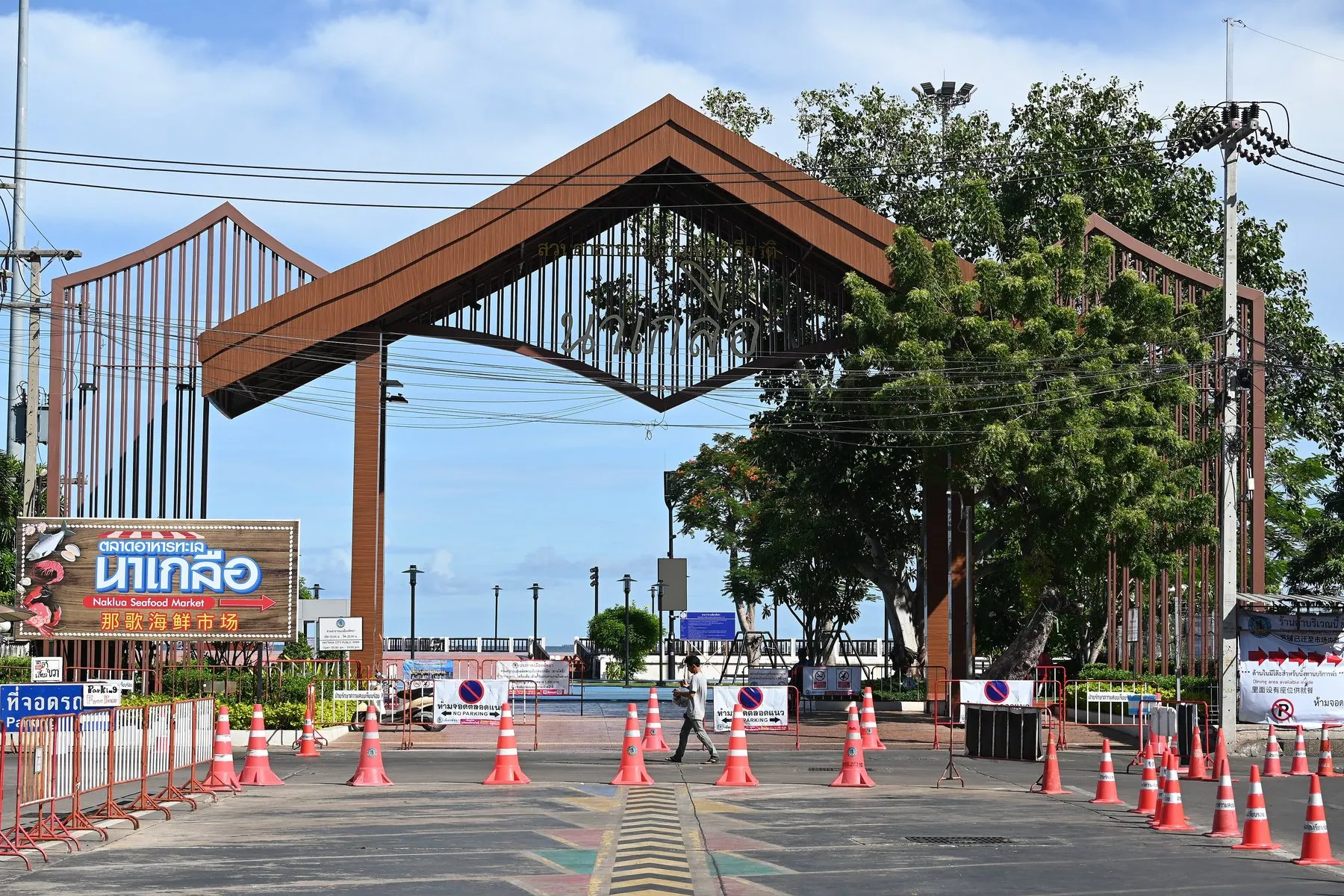
Much the same as an ordinary one, and ordinary Thai checkpoints are undramatic. You will see cones, a marked vehicle and often a temporary awning from a long way off. Traffic funnels into one lane. An officer waves most vehicles through and pulls some in — motorbikes disproportionately, and foreign drivers disproportionately in tourist areas, which is widely reported by visitors even though it is not something anyone publishes.
If you are pulled in, the sequence is short: helmet off or window down, licence produced, sometimes a look at the vehicle's documents, and during these campaigns a breath test. One breath, a few seconds, and you are waved on if you are clear. Police checkpoints in Thailand covers the general routine and what Thai police can and cannot ask you for covers the documents.
- Slow down early and pull in where directed rather than choosing your own line.
- Take your helmet off before you reach the officer, and take sunglasses off.
- Have your licence and permit in a pocket, not buried in a bag under the seat.
- Keep the engine off while you are stopped and both hands visible.
- If language becomes a problem, the tourist police on 1155 will translate.
Refusing at a holiday checkpoint
The same rule applies as at any other time, and it is worth carrying into the week rather than working out on the spot. If an officer has reasonable ground to believe a driver is intoxicated and the driver refuses a test without reasonable justification, the Act presumes the drink-driving offence was committed. The officer may also detain the driver until the test is completed, and a driver who then consents and tests negative must be released without delay. Refusing a breath test in Thailand sets out the mechanics; the short version is that refusal is the worse option in every direction.
The bigger risk is not the checkpoint
Being breath-tested is a minor inconvenience if you have not been drinking. The genuine hazard in these two weeks is everyone else on the road, and it takes a specific shape.
Long-distance traffic at unfamiliar hours. Overnight driving increases sharply, on routes people drive twice a year. Fatigue is a major factor — see fatigue on long drives and rides in Thailand.
Overloaded pickups. Families travelling with people in the load bed is normal during holidays. It is a safety matter rather than a settled point of law, and it is dealt with in seatbelt law in Thailand.
Motorbikes carrying more than they should. Two adults, luggage and a child on a 110cc scooter, at night, on a highway, is a common holiday sight. Children on motorbikes in Thailand is the honest page on that.
Water, during Songkran. Between 13 and 15 April, and often for days either side in Chiang Mai and on the islands, you will be soaked while riding. Water is thrown at moving vehicles from the roadside and from the backs of pickups, sometimes from buckets, sometimes iced. On a motorbike that means a sudden loss of vision, cold shock, and a soaked helmet visor — at exactly the moment you cannot see the person who threw it. Wet roads and wet brakes follow.
If you ride during Songkran, ride as if you will be blinded at any moment. Keep the visor down and accept the reduced vision, keep speeds low enough that a two-second blackout does not matter, stay out of the left-hand gutter lane where the throwing is concentrated, and put anything electronic in a sealed bag. Many riders simply do not ride in the water zones for those three days, which is the sound answer.
One Thai media summary of the 2022 amendment lists a penalty of up to 10,000 baht for driving through standing water in a way that splashes other people. It appears in a single source, so we flag it as reported rather than state it as settled law — but it is a useful reminder that the water goes both ways, and that soaking a rider from a moving vehicle is not a joke either party enjoys.
Planning around it
The decision that removes almost all of this is choosing not to drive on the peak travel days. The heavy movements are the two days before each holiday and the two days after, and they are predictable enough that a hire car booked for the middle of the week avoids most of it.
If you are staying put and celebrating, leave the vehicle where it is. Grab runs through both holidays, though surge pricing and waiting times are at their annual worst; motorbike taxis keep working; and in the water zones, walking is often faster than anything with wheels. If you are driving between provinces, start early, break the journey rather than pushing through, and treat the last hour of a long day as the dangerous one.
Practical detail on the roads themselves — closures, water zones, which routes clog and when — is in driving during Songkran and New Year in Thailand.
Frequently asked questions
Are the drink-drive limits lower during Songkran?
No. The limits are set by the 2024 ministerial regulation and do not change for holidays: 50 mg% generally, 20 mg% for the lower-limit group described in Thailand's lower drink-drive limit. Only the enforcement effort changes.
Do checkpoints operate during the day as well?
During these campaigns, yes. Outside them, breath-testing is concentrated at night. The daytime checkpoint you meet the rest of the year is usually a licence-and-helmet check.
Can I be tested if I have been drinking at a Songkran party but am only riding 500 metres?
Yes. Distance is irrelevant to the offence, and short hops between a party and a guesthouse are precisely what the roadblocks on the exit routes catch.
Should I avoid renting a motorbike over Songkran altogether?
It is worth thinking about seriously if you are a new or occasional rider. The combination of wet roads, thrown water, heavy traffic and a lot of impaired road users is the hardest riding environment Thailand produces. Renting a car instead, or using Grab for three days, is a reasonable call rather than an overcautious one.
Is the traffic really that much worse?
On the main inter-city routes, yes, particularly Highway 2 towards Isaan and the routes south. Journey times on the peak days can run to double the normal, and that changes the arithmetic of a long drive — you arrive tired, in the dark, having planned for daylight. See driving at night in Thailand for why that matters here more than at home.
What happens if I am stopped and I am over the limit?
The same as at any other time of year: it cannot be dealt with by ticket, the case goes to an inquiry officer and then to court, and the penalties are those in drink-driving penalties in Thailand. Holiday periods do not create a fast-track or a discount.